Skip to content
Cart

Your cart is empty

Continue shopping

Gainer

Do you aspire to sculpt your body, gain size, or boost your muscle mass? Discover our Gainers, the key to turning your goals into reality. Designed for demanding athletes and fitness enthusiasts, our innovative blend combines premium carbohydrates with high-quality proteins, ensuring uncompromising muscle growth. Ideal for those struggling to increase their weight or looking to significantly develop their muscle mass while preserving the quality and health of their muscles. With our Gainers, take your fitness journey to the next level by nourishing your body with what it truly needs to excel.

2 products

Save 5% QNT 3000 Muscle Mass Gainer vanilla 1.3 kg, protein gainer for mass gain powder
Sale price21,42 € Regular price22,55 €
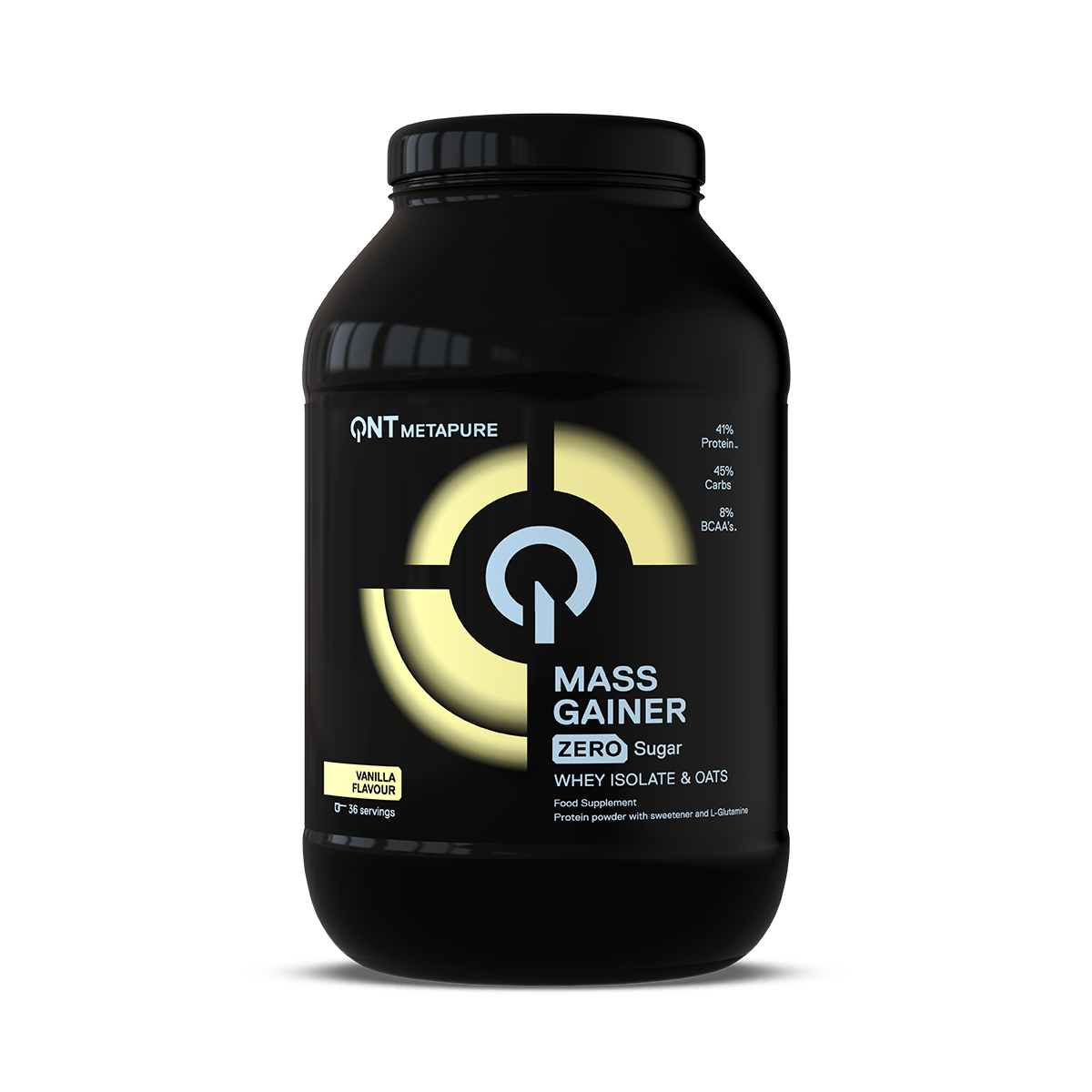
Save 5% QNT Metapure Mass Whey Protéine Isolate Gainer vanilla 1815 g, protein gainer for mass gain powder
Sale price50,54 € Regular price53,20 €
Filters
Sort by
Price
to
QNT Gainers: muscle gain made simple

What is a gainer and what is it for?

A gainer (or mass gainer) is a calorie-dense supplement that combines protein and carbohydrates in a single shake. Its job is straightforward: it helps you hit a calorie surplus when your meals alone are not enough to cover what your body needs for building muscle.

Putting on muscle takes energy. Without enough calories, training does not show up on the scale or as size under your t-shirt. That is where a gainer becomes a practical ally: one shake delivers protein and carbs fast, where otherwise you would have to cook and get through several meals.

In practical terms, a gainer helps you:

  • top up your daily calorie intake without forcing down huge plates of food,
  • support muscle growth when paired with regular training,
  • save time when your appetite or your schedule will not cooperate.

It is a food supplement, not a miracle product: it works alongside a structured diet, not in place of one.

Mass gainer, lean gainer, hard gainer: which one to choose?

The word "gainer" actually covers several profiles, set apart mainly by their protein to carbohydrate ratio:

  • Hard gainer: very high in carbs (often 70 to 80 percent), built for fast metabolisms that struggle to gain weight.
  • Classic mass gainer: balanced, generally around 30 percent protein and 60 percent carbs, for solid, no-nonsense weight gain.
  • Lean gainer: higher in protein (up to 50 percent), aimed at leaner gains with fewer carbs.

Rather than going by the marketing name, look at the formula (aim for a gainer low in simple sugars). At QNT you have two clear options:

  • the 3000 Muscle Mass Gainer, energy-dense and carb-rich, built for serious calorie surpluses when gaining weight is hard,
  • Metapure Mass, a gainer built around whey isolate, higher in protein, for more quality-focused mass gain.

The right choice comes down to your metabolism and your goal: fast volume, or leaner muscle.

Who is it for? Ectomorphs, hardgainers and small appetites

A gainer is first and foremost for the people who struggle to gain weight, despite training seriously.

You might recognise yourself here:

  • you are more of an ectomorph, naturally slim, with a fast metabolism that burns through calories quickly,
  • you already eat a lot but the scale will not budge,
  • your appetite does not keep up with what you need (a small stomach, busy days, little time to cook).

For a hardgainer, the bottleneck is not the training, it is the calories. A gainer shake delivers easy-to-digest, easy-to-drink calories in a few minutes, where a solid meal would feel like too much.

On the other hand, if you put on weight easily or you are chasing sharp muscle definition, a standard whey backed by a well-planned diet will often suit you better than a gainer. A gainer is a surplus tool: useful precisely when a surplus is what you are missing.

Does a gainer make you gain weight? Calories and surplus, no spin

It is a very common question, and the honest answer is yes: a gainer does make you gain weight, and that is exactly the point. It provides a calorie surplus, and calories are what move the scale.

So the real question is not "does it make me gain weight" but "what kind of weight do I want to gain". With regular strength training and enough protein, the surplus drives muscle gain. Without training, a large surplus mostly turns into body fat.

A few useful reference points for managing your calories:

  • aim for a sensible surplus (often 300 to 500 kcal a day) rather than a massive excess,
  • think in terms of the week: one higher-calorie day, like a cheat day, will not undo your progress as long as the weekly average stays on track, and a one-off cheat meal barely registers against a mass-gain goal,
  • treat your everyday food as the foundation of solid meals, with the gainer filling in the calories you are missing,
  • match the dose to your real appetite and needs rather than blindly following the scoop,
  • always pair the gainer with training to steer the gain toward muscle.

A gainer is still a food supplement, meant to fit into a balanced diet and an active lifestyle.

How and when to take your gainer

A gainer is easy to use: shake the dose recommended on the pack with water or milk (milk adds calories and a creamier texture).

The most practical moments:

  • after training, to deliver protein and carbs when your muscles need them,
  • between meals, as a snack, to push your daily calories higher,
  • at breakfast or before a workout if you are short on energy.

A few tips to get it right:

  • if a large dose sits heavily, split it into two smaller shakes across the day,
  • keep the gainer as a complement to your meals, not a routine replacement,
  • adjust the amount based on how your weight actually changes, week by week.

To go further, many people stack their gainer with creatine to support training performance. Consistency over several weeks does far more than any single day's dose.

Muscle gain for women and gainers

Building muscle is not just for men. More and more women want to gain muscle, add shape, or simply put on weight gradually when they are naturally slim.

The principle is the same: to build muscle, you need a slight calorie surplus, enough protein and the right training. A gainer can help you reach that surplus when your appetite will not stretch to extra large meals.

A few practical points:

  • there is no need to aim for huge doses: a portion matched to your needs is often enough,
  • a higher-protein option like Metapure Mass works well for leaner mass gain,
  • resistance training stays the key factor for steering the gain toward muscle.

Gaining strength and shape is a perfectly legitimate goal, and a gainer is just one tool among several to get there, within a balanced diet.

Frequently Asked Questions

Your health and results are our top priority. This FAQ answers the essential questions about QNT products, so you know exactly what you’re buying and how they support your goals.

What is the dosage for 3000 Muscle Mass: how many servings a day?

One large serving a day is enough for most people, since 3000 Muscle Mass is very calorie-dense. You can go up to two servings if you genuinely struggle to hit your surplus, and skip it on days your meals already cover your calories. Always follow the scoop guide on the pack.

What is the difference between 3000 Muscle Mass and Metapure Mass?

3000 Muscle Mass is very high in carbohydrates and calorie-dense, ideal when gaining weight is hard and you want a large surplus. Metapure Mass is built around whey isolate, so it is higher in protein and lower in sugar, for leaner mass gain. The choice comes down to your metabolism and your goal.

Can you take a gainer without working out?

Yes, but the weight you gain will mostly be body fat, because without resistance training the calorie surplus is not steered toward muscle. If your only goal is to put on weight, a gainer is still a practical calorie source. To build muscle, training is essential.

Gainer or whey: which one for mass gain?

Choose a gainer if you struggle to eat enough to reach your calorie surplus, since it delivers protein and carbohydrates in a single shake. Go for a whey if you already cover your calories and mainly want a protein top-up without extra carbs. It depends on what is missing from your diet.