Skip to content
Cart

Your cart is empty

Continue shopping

Glutamine

Glutamine is the most abundant amino acid in the body, essential for muscle recovery and intestinal health. It supports the immune system, helps muscle protein synthesis and plays a role in blood sugar regulation. Glutamine is particularly important for athletes, as it is consumed in large quantities during intense exercise. It occurs naturally in certain foods and is often taken in supplement form to improve sports performance and recovery. Supplementing with it can be beneficial for maintaining optimal balance, especially during rigorous training.

1 product

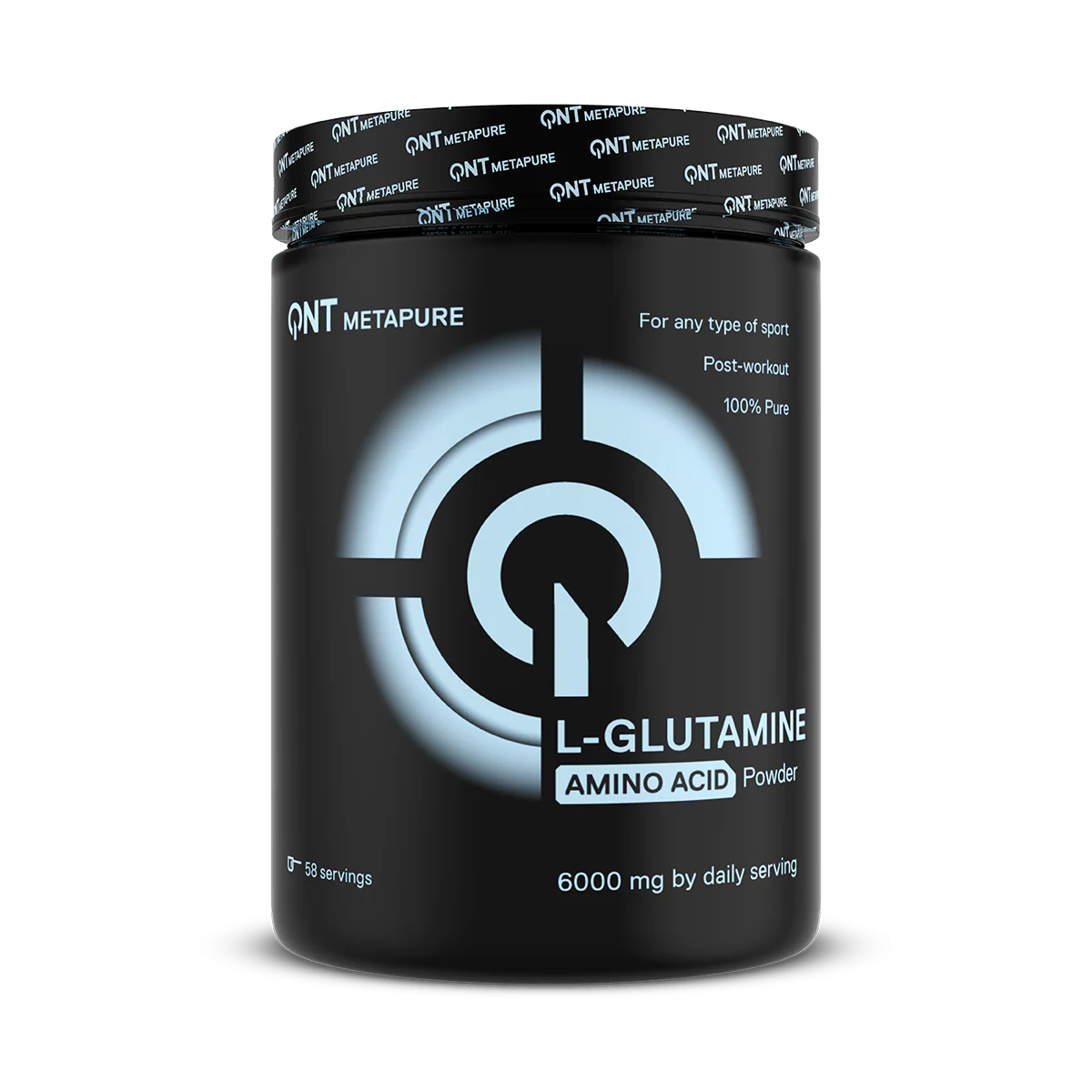
Save 25% QNT L-Glutamine 6000 mg 350 g, L-glutamine powder
Sale price16,50 € Regular price22,00 €
Filters
Sort by
Price
to
QNT L-Glutamine: recovery support and amino acid intake

What is L-Glutamine?

L-Glutamine is an amino acid that occurs naturally in your body, and it is by far the most abundant one: it makes up a large share of the free amino acids stored in your muscles and circulating in your blood. It is described as non-essential, because your body can produce it on its own from other amino acids.

So what does glutamine do that makes it interesting for athletes? In certain situations (intense training, heavy training loads, prolonged stress), your needs can rise and outpace what your body produces on its own. That is why it is sometimes called semi-essential.

QNT L-Glutamine is a 100% L-Glutamine powder with no strong taste, delivering 6 g per serving. It is a simple way to top up your amino acid intake around your sessions, alongside a balanced diet. It is a supplement, never a meal replacement.

The benefits of glutamine for athletes

When you train hard, your muscles draw on their amino acid reserves, glutamine included. That is what drives regular athletes' interest in L-Glutamine, valued above all for the phase that follows a workout.

Here is what people appreciate about a glutamine intake:

  • Recovery support: topping up your amino acid intake after intense or closely spaced sessions.
  • Targeted intake: helping replenish part of the amino acids called on during training.
  • Convenience: a neutral powder that is easy to add to a shake or a large glass of water.

Glutamine does not do all the work on its own. It fits into a bigger picture: enough sleep, protein spread across the day, hydration and well-balanced training. Think of it as one building block in your recovery routine, not a miracle fix.

Glutamine and post-workout recovery

Recovery is the moment when your body absorbs the work done in training and gets ready for the next session. The more frequent and intense your workouts, the more that window matters, and the more your amino acid needs can climb.

This is exactly where many athletes place their L-Glutamine: right after exercise, when muscle reserves have been drawn down. The goal is to top up your amino acid intake at the point where your body needs it most.

A few useful pointers for recovering well:

  • Pair glutamine with a post-session protein intake (whey or a complete meal).
  • Look after your sleep: it is the number one lever for recovery.
  • Keep consistent rest periods between two sessions targeting the same muscle group.

Glutamine helps support this routine, especially during high-load phases or intense preparation. This also speaks to a common question, how does glutamine improve performance: indirectly, by helping you stay on top of recovery so you can keep training consistently.

When and how to take L-Glutamine

QNT L-Glutamine is built for simplicity. The reference dose is 6 g per day, mixed into a large glass of water or fruit juice. The powder is fine and almost neutral in taste, so it dissolves with no effort.

When should you take it?

  • After training: the most common timing, when reserves have been drawn down.
  • In the morning or evening on rest days, depending on your routine and preferences.

During very heavy periods, some athletes split their intake across the day. Keep it simple: start with a single regular daily serving, because consistency is what counts most.

Glutamine pairs well with other QNT essentials: your whey or casein for protein, your BCAAs around training, and creatine during strength phases. Do not exceed the recommended dose, and keep a varied diet as your foundation.

Glutamine, BCAAs or creatine: how to choose?

These three supplements often come up together, but they do not play the same role. There is no need to pick one against the other: they are complementary.

  • BCAAs (leucine, isoleucine, valine): three branched-chain amino acids, used around training.
  • Creatine: the go-to for short, intense efforts and strength phases.
  • L-Glutamine: the most abundant amino acid in the body, valued above all for topping up amino acid intake during heavy training periods.

How do you find your way? If you are starting out, begin with the foundations: enough protein (whey or casein) and, depending on your sport, creatine. Glutamine comes in as a complement when your training volume goes up and you want to look after your recovery.

For a quality glutamine, look for a transparent formula: QNT L-Glutamine is 100% L-Glutamine, with no needless additives and a clear 6 g dose.

Who is glutamine for?

L-Glutamine suits a wide range of athletes, men and women, beginners and seasoned alike, as soon as the training load is substantial. On the men's side, it is often high-volume bodybuilders who take an interest first, which is where the "glutamine benefits for men" and "glutamine benefits bodybuilding" questions come from, but the rationale is exactly the same for anyone stacking sessions back to back.

It is especially relevant for:

  • Bodybuilding enthusiasts who string sessions together and want to look after their recovery.
  • Endurance athletes (running, cycling, triathlon) with high training volumes.
  • CrossFit fans and intense-sport practitioners, where sessions come thick and fast.
  • People in a cutting phase or calorie deficit, when food intake tightens up.
  • Vegetarian and vegan profiles, whose diet may supply less glutamine than diets rich in plant protein or animal protein.

Glutamine is not a doping product and stays compatible with demanding training. Like any supplement, it goes hand in hand with good lifestyle habits: a balanced diet, hydration and sleep. If you have any doubts, or if you are pregnant or on medical treatment, ask a healthcare professional for advice before supplementing.

Frequently Asked Questions

Your health and results are our top priority. This FAQ answers the essential questions about QNT products, so you know exactly what you’re buying and how they support your goals.

Should I take glutamine on an empty stomach or with a meal?

You can take L-Glutamine either on an empty stomach or with a meal, whichever suits you. Since it is a neutral, soluble powder, many people simply add it to their post-workout shake or a large glass of water. What matters most is taking it consistently, not the exact timing around meals.

Can you take more than 6 g of glutamine per day?

The reference dose for QNT L-Glutamine is 6 g per day, and taking more does not add any extra benefit. There is no need to increase the amount: stick to the stated dose and keep a varied diet as your foundation. Do not exceed the recommended dose.

Is glutamine useful for endurance training or during a cut?

Yes, glutamine is also relevant for high-volume endurance athletes (running, cycling, triathlon) and people in a cutting phase. When your diet tightens up or sessions stack back to back, it helps top up your amino acid intake. It supports your routine without replacing a suitable diet.

Is glutamine suitable for vegetarians and vegans?

Yes, QNT L-Glutamine is a 100% L-glutamine powder suitable for vegetarian and vegan diets. It is often valued by this group, since a plant-based diet may supply less glutamine than one rich in animal protein. Always check the product label against your own needs.