





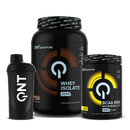

What to Eat Before a Workout: The Complete Pre-Workout Guide
Table of contents
- Introduction
- The golden rule: timing comes first
- The 3 macronutrients: what they do before training
- What to eat before a workout based on your goal
- Homemade pre-workout or supplement: which to choose?
- The 5 mistakes to avoid
- Hydration: the forgotten pillar
- Special case: pre-workout for sport-specific athletes
- Real-food examples: 4 tested pre-workout snacks
- Conclusion
- Sources

Introduction
You have 90 minutes before your workout and you're not sure whether to eat a full meal, a snack, a shake, or nothing at all. That hesitation costs energy, performance, and sometimes results. In this guide we answer the only real question: what to eat before a workout, depending on your goal and how much time you have left. No vague lists, no generalities. A clear matrix, real-food examples, and the science behind every recommendation. Made in Belgium since 1992, QNT has been formulating sports supplements for over 30 years, and this question keeps coming back.
The golden rule: timing comes first
Quick answer: the ideal pre-workout window is 30 minutes to 4 hours before training. The closer the session, the lighter, more liquid, and lower in fat and fibre the snack should be to avoid digestive discomfort.
The composition of your pre-workout meal depends first on the time available. The earlier you eat, the more complete the meal can be. As the workout approaches, the snack must be lighter, more liquid, and lower in fat. This logic is documented in the International Society of Sports Nutrition position stand on nutrient timing (Kerksick et al., 2017), which confirms that carbohydrate intake 30 to 60 minutes before exercise improves performance for sessions longer than 60 minutes.
Decision matrix by time window
| Time before session | Meal type | Carbs | Protein | Fats | Real-food example |
|---|---|---|---|---|---|
| 3 to 4 hours | Full meal | 1 to 2 g/kg | 0.3 to 0.4 g/kg | Moderate OK | Basmati rice, chicken breast, vegetables, olive oil |
| 2 hours | Moderate meal | 0.8 to 1 g/kg | 0.3 g/kg | Low | Sweet potato, turkey, courgettes |
| 60 to 90 minutes | Solid snack | 0.5 g/kg | 0.2 g/kg | Very low | Oats, low-fat quark, banana |
| 30 minutes | Liquid or fast snack | 0.3 to 0.5 g/kg | 0.2 g/kg | None | Whey shake + banana, applesauce, dates |
| Less than 15 minutes | Liquid only | Simple carbs | Optional | None | Sports drink, gel, ripe fruit |
Legend: the g/kg amounts are per kilo of bodyweight. For a 75 kg person, that gives: at 3-4 h, 75 to 150 g of carbs, 22 to 30 g of protein and 22 to 30 g of fat; at 2 h, 60 to 75 g of carbs, 22 g of protein and about 15 g of fat; at 60-90 min, 37 g of carbs, 15 g of protein and under 8 g of fat; at 30 min, 22 to 37 g of carbs, 15 g of protein and 0 g of fat; at under 15 min, 20 to 30 g of simple carbs and 0 g of fat. Scale to your own bodyweight.
Key takeaway: as the clock approaches, you move from solid to liquid, from complex to fast carbs, and you cut fats and fibre to avoid digestive discomfort.
The 3 macronutrients: what they do before training
Quick answer: each macronutrient has a role and a timing-based amount. Carbs: your main fuel, 1 to 4 g/kg 1 to 4 h before, then 0.3 to 0.5 g/kg in the final half-hour. Protein: primes muscle protein synthesis, 0.2 to 0.4 g/kg whatever the window. Fats: support a balanced meal, only at distance (3 h or more), zero in the last hour.
Carbohydrates: your primary fuel
Role: replenish muscle and liver glycogen, your preferred fuel source during intense effort. Without carbs, strength drops, endurance collapses, and the session becomes painful.
Amount by timing: 1 to 4 g/kg of bodyweight 1 to 4 hours before exercise for a session longer than 60 minutes (Kerksick et al., 2017), then 0.3 to 0.5 g/kg in the final half-hour. For a 75 kg person, that is roughly 75 to 300 g of carbs depending on the window, and 20 to 40 g right before the session. For shorter, intense sessions (under 45 minutes) a smaller intake is enough.
Choose complex carbs (oats, brown rice, sweet potato) for windows of 2 hours or more, and switch to fast carbs (banana, applesauce, honey) as the clock ticks down.
Protein: muscle foundations
Role: provide amino acids available during and after the session, which can support muscle protein synthesis (Jäger et al., 2017, ISSN position stand on protein).
Amount by timing: 0.2 to 0.4 g/kg of bodyweight, or 15 to 30 g for a 75 kg person, whatever the pre-workout window. A meta-analysis (Schoenfeld et al., 2013) showed that the anabolic window before/after training is wider than once believed, but a reasonable intake around the session remains beneficial.
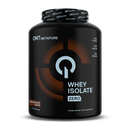
For early-morning sessions where preparing a meal is impractical, a shake of Metapure Whey Isolate or Light Digest Whey (more digestible) is a reliable option.
Fats: dose with precision
Role: contribute to a balanced meal and satiety, but they slow gastric emptying and digestion.
Amount by timing: from a distance (3 hours or more), moderate fats (0.3 to 0.4 g/kg, about 20 to 30 g for a 75 kg person) pose no problem. As the session approaches, they can cause heaviness, bloating, and discomfort. Simple rule: zero added fat in the last hour before training.
What to eat before a workout based on your goal
Quick answer: mass gain = high-carb surplus (1 to 2 g/kg) ; cutting = light, protein-led snack ; endurance = carbs first, 1 to 4 h before ; fasted morning cardio = black coffee or BCAA is enough.
The right pre-workout meal also depends on what you're trying to accomplish. Here is the goal-based matrix.
Mass gain
You want to build muscle. Priority is high caloric and carbohydrate intake. The ISSN position stand on diets (Aragon et al., 2017) recommends 1.4 to 2 g/kg/day of protein and a caloric surplus of around 200 to 300 kcal per day (roughly 10 to 15 % above your maintenance intake) to optimise muscle gains while limiting fat gain.
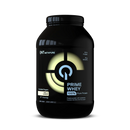
Typical pre-workout meal (90 min before): 80 g of oats, 1 banana, 30 g of Prime Whey, 1 spoon of honey. If you struggle to eat that much in solid form, a mass gainer shake remains a practical liquid alternative.
Cutting / fat loss
You want to lose fat while preserving muscle. Timing becomes critical: enough energy to train hard (so muscle is preserved) without sabotaging the calorie deficit.
Typical pre-workout meal (60 to 90 min before): 40 g of oats, 150 g of low-fat quark, half a banana, 1 black coffee. Low-calorie, high-protein, enough carbs for an hour of strength training.
Endurance
You run, ride, or swim longer than 60 minutes. Carbs become the priority. The ISSN position stand recommends 1 to 4 g/kg of carbs 1 to 4 hours before prolonged effort (Kerksick et al., 2017).
Typical pre-workout meal (3 hours before): 100 g of whole-wheat pasta, 100 g of chicken, vegetables, 1 fruit. At 30 minutes: an isotonic drink or an energy gel to top off glycogen.
Fasted morning cardio
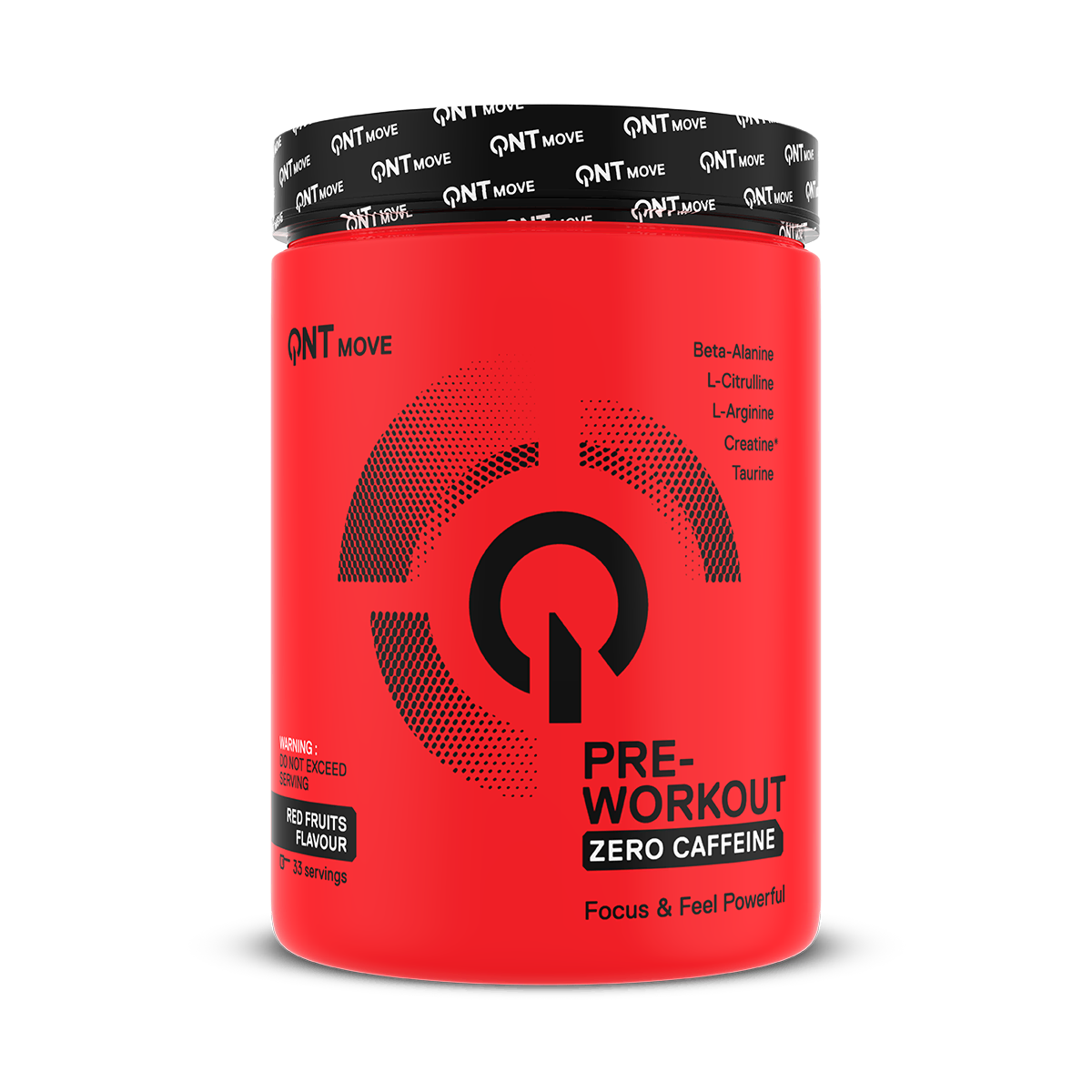
For moderate cardio in a cutting phase, the "nothing at all" option remains valid. That's the topic of our complete guide on fasted training. If you prefer to play it safe, a simple cup of black coffee or 5 g of BCAA 4.1.1 + Glutamine is enough to limit muscle catabolism without breaking the energy deficit.
Homemade pre-workout or supplement: which to choose?
Quick answer: solid food fits 2 to 3 h before, a liquid snack (whey + banana) between 30 and 90 min, and a pre-workout supplement (caffeine 3 to 6 mg/kg) tops off 20 to 30 min before. The three are complementary, not competing.
This question keeps coming back. The honest answer: both have their place, at different times.
Solid food
Advantages: natural, low-cost, provides vitamins and minerals supplements don't, more satiating. Disadvantages: slower digestion, planning required, sometimes heavy if the clock approaches.
Best for sessions planned 2 to 3 hours in advance.
Liquid snack
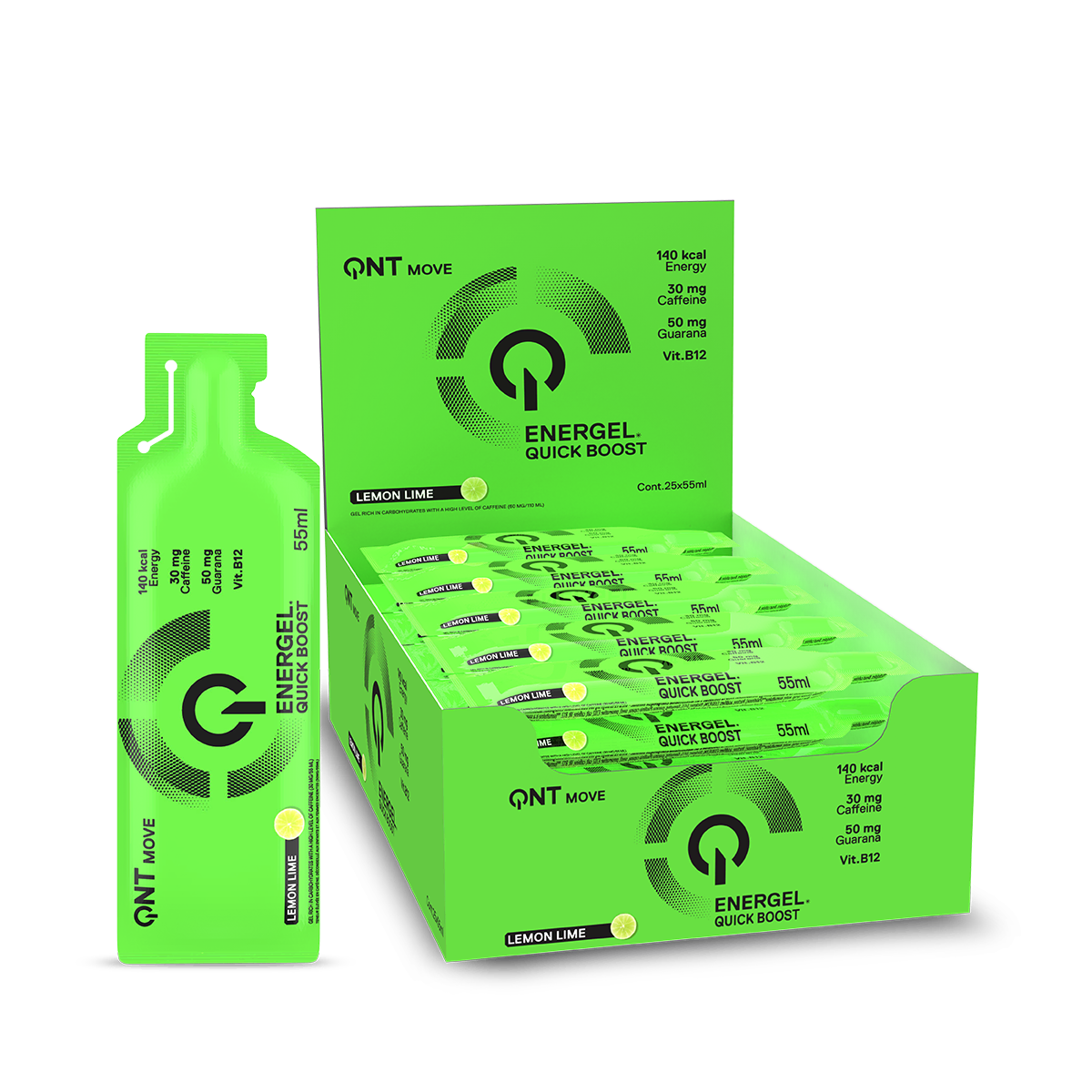
A whey + banana + oats shake digests in 30 to 45 minutes and covers the basics without discomfort. An isotonic drink or an energy gel takes over for long sessions. Carbo Load is an option if you want concentrated pre-effort carbs.
Best for sessions 30 to 90 minutes after the snack.
Pre-workout supplements (caffeine + amino acids)
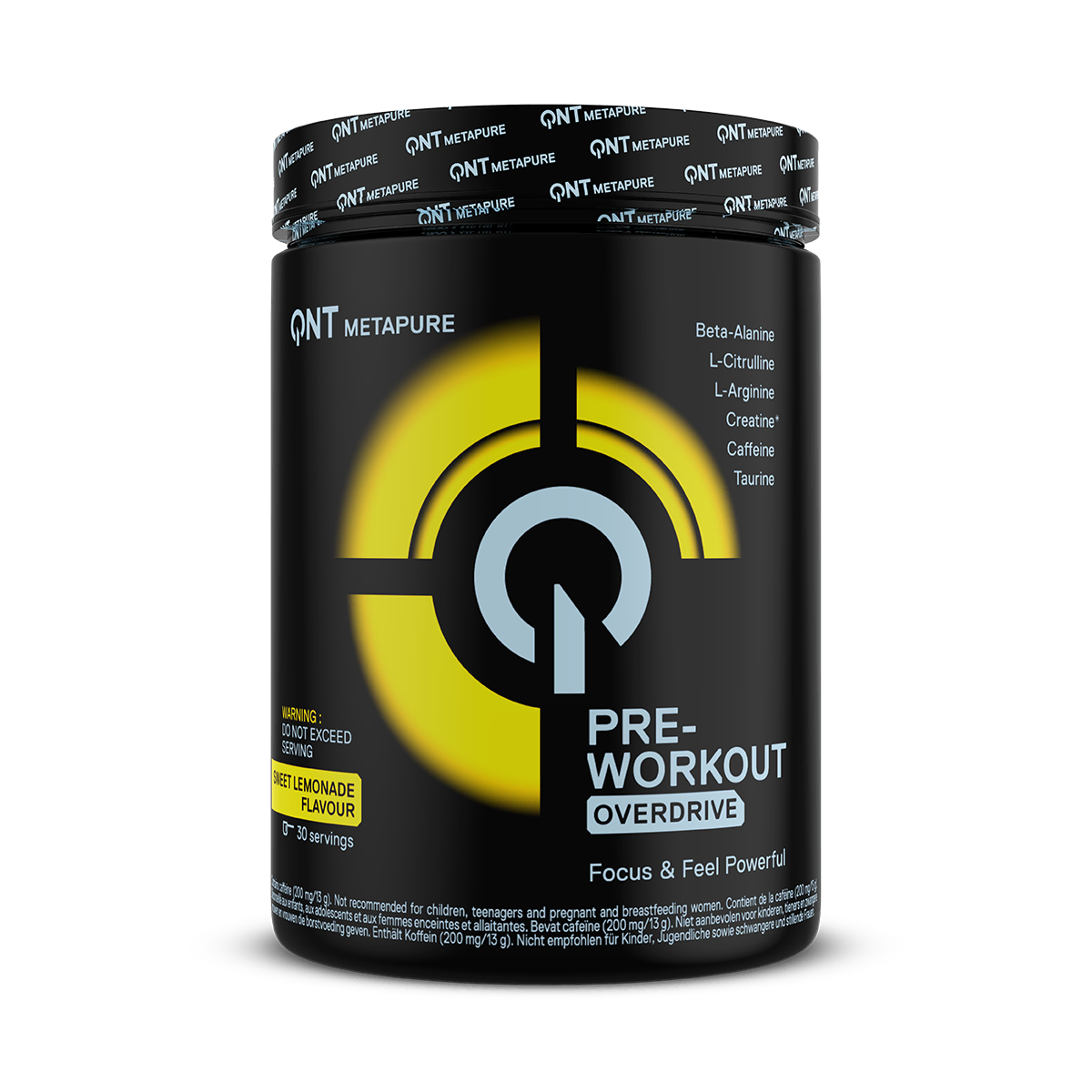
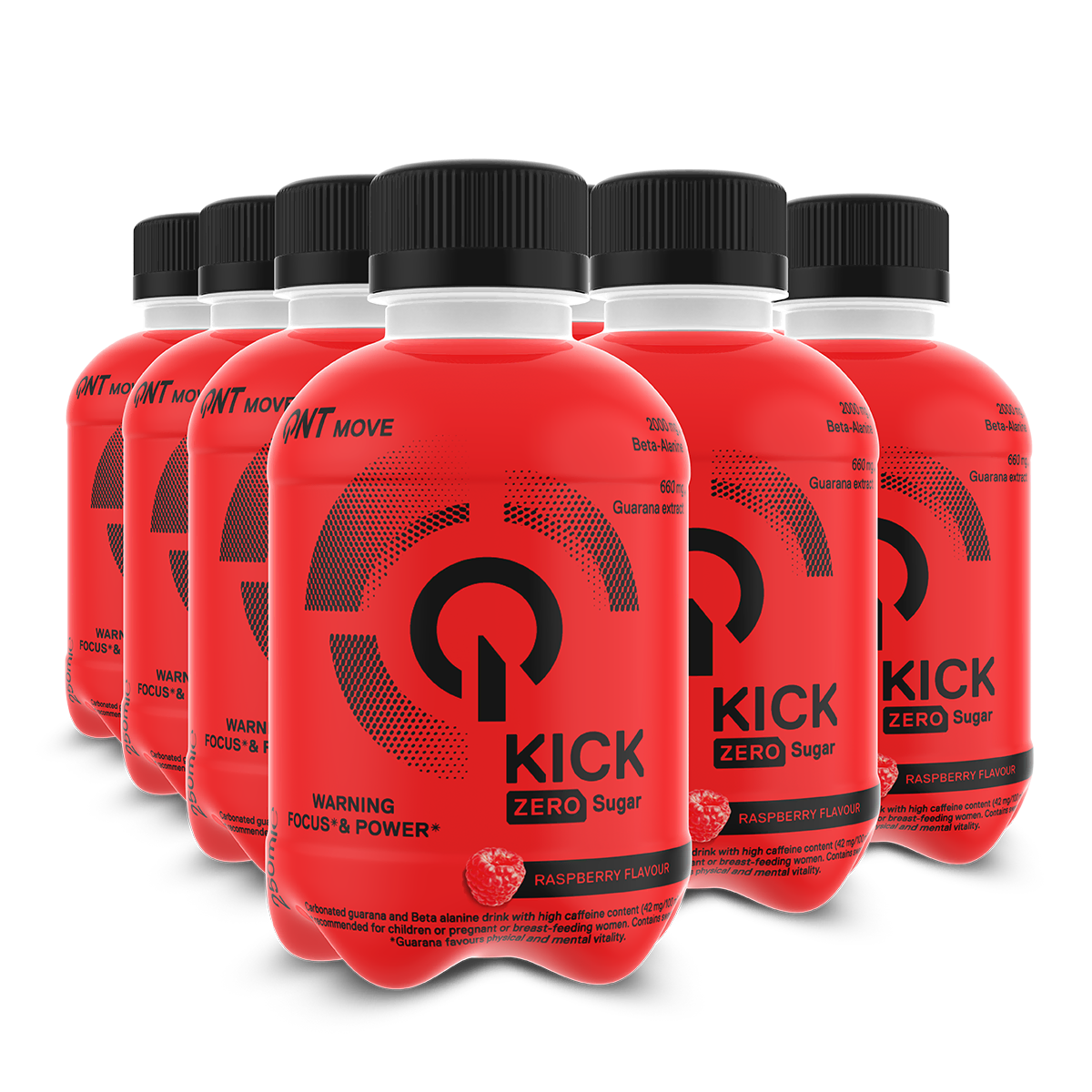
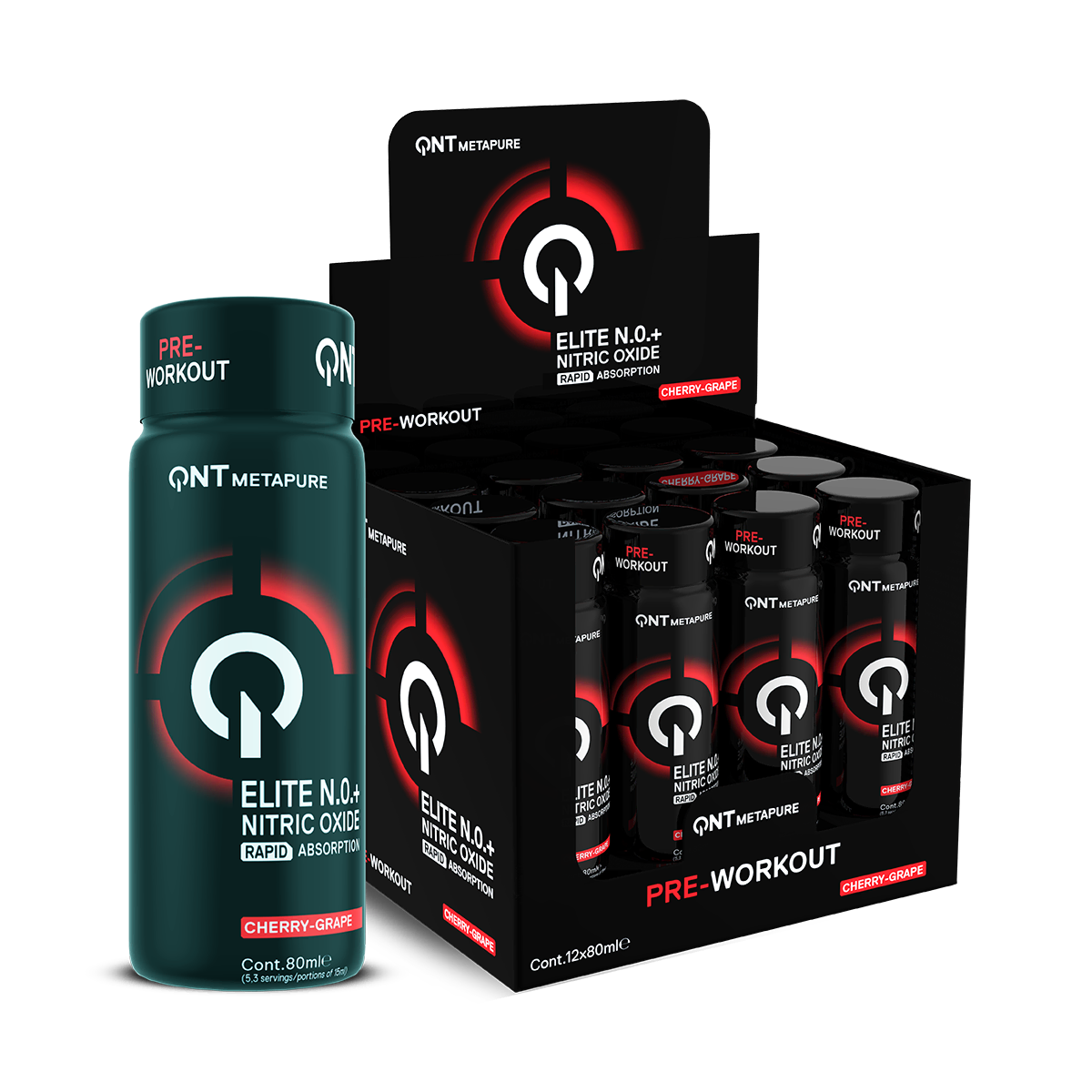
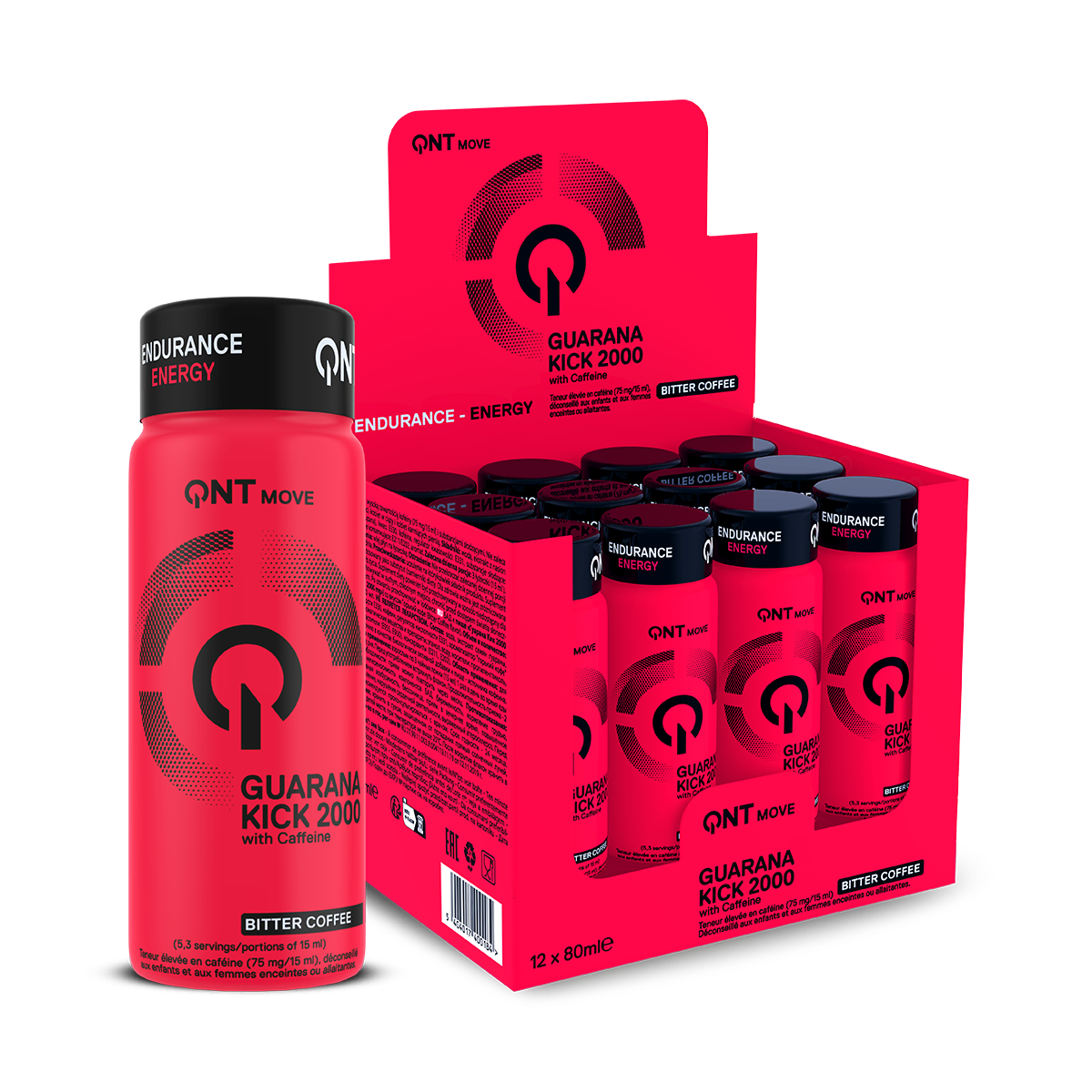
Pre-workouts like Metapure Overdrive, Kick Pre Workout or Pump RX do not replace a meal. They complement it. Their main interest is caffeine (3 to 6 mg/kg, ISSN position stand Goldstein et al., 2010) and sometimes beta-alanine, citrulline or creatine. For beta-alanine specifically, see our beta-alanine guide.
Ideal combination: a light meal 60 to 90 minutes before + a liquid pre-workout 20 to 30 minutes before.
The 5 mistakes to avoid
- Eating fatty just before training. Fats slow gastric emptying. Avoid fried foods, hard cheeses, and cold cuts in the hour before training.
- Trying a new food on the day. Never experiment with a new bar, gel, or dish before an important session. Always test in training before competition.
- Too much fibre. Legumes, brassicas, large salads: great daily, counter-productive before sport. Save them for non pre-workout meals.
- Skipping the meal out of fear of "feeling stuck". Skipping may seem practical, but in strength and prolonged endurance, performance drops. Prefer a light snack over nothing.
- Confusing pre-workout with pure energy. A coffee and a caffeine dose don't replace carbs. Without an energy substrate, caffeine masks fatigue but doesn't improve cellular energy production.
Hydration: the forgotten pillar
Quick answer: drink 400 to 600 ml of water in the 2 h before training, then another 150 to 250 ml 15 min before. A 2 % bodyweight dehydration is enough to degrade performance.
For long sessions or hot conditions, an isotonic drink delivers electrolytes (sodium, potassium, magnesium) on top of hydration.
Special case: pre-workout for sport-specific athletes
Depending on your discipline, the pre-workout meal adapts. Check our detailed guides:
- Football nutrition for intermittent team sports
- Running nutrition for distance runners
- Volleyball nutrition for repeated-jump sports
- Swimming supplements for swimmers
And if your main goal is weight loss, also see our weight loss after 40 guide.
Real-food examples: 4 tested pre-workout snacks
What to eat 30 minutes before a workout? (quick answer)
At 30 minutes before training, choose a liquid or fast-digesting snack delivering 20 to 40 g of fast carbs and 15 to 25 g of protein: 1 ripe banana + a Light Digest Whey shake, or 1 unsweetened applesauce + 30 g of oats with a spoon of honey. Skip fibre, fats and meat.
4 ready-to-go pre-workout snacks (timing + macros):
- Banana + oats + honey, 60 to 90 min before: ~50 g carbs, 7 g protein. Ideal for a morning lifting session.
- Applesauce + Light Digest Whey shake, 30 min before: ~25 g fast carbs, 22 g protein. Perfect when the clock is tight.
- Whole-wheat pasta + chicken + vegetables, 3 h before: 70 to 100 g carbs, 30 g protein. For a long or demanding session.
- Black coffee + 5 g BCAA 4.1.1 + Glutamine, 20 min before: zero calories, caffeine + amino acids. For fasted morning cardio or cutting.
Conclusion
The "right" pre-workout meal doesn't exist in the absolute. It exists relative to your goal, your time window, and your personal digestive tolerance. Remember the matrix: 3 hours = full meal, 90 minutes = solid snack, 30 minutes = liquid. Adapt the macros to your goal (mass, cutting, endurance). And remember: performance never depends on a single meal, but on consistency across the entire week. Discover our whey protein collection, our pre-workouts and our creatine monohydrate, formulated in Belgium since 1992.
Sources
- Kerksick, C.M. et al. (2017). ISSN position stand: nutrient timing. https://doi.org/10.1186/s12970-017-0189-4
- Aragon, A.A. et al. (2017). ISSN position stand: diets and body composition. https://doi.org/10.1186/s12970-017-0174-y
- Jäger, R. et al. (2017). ISSN Position Stand: protein and exercise. https://doi.org/10.1186/s12970-017-0177-8
- Goldstein, E.R. et al. (2010). ISSN position stand: caffeine and performance. https://doi.org/10.1186/1550-2783-7-5
- Schoenfeld, B.J. et al. (2013). The effect of protein timing on muscle strength and hypertrophy. https://doi.org/10.1186/1550-2783-10-53
- Examine.com. Pre-Workout Nutrition. https://examine.com/topics/pre-workout-nutrition/

Frequently asked questions
What to eat 30 minutes before a workout?
Should I eat before a morning workout?
Is a banana enough as a pre-workout?
Does coffee count as a pre-workout?
How much protein before a workout?
Can I eat an energy bar before the gym?
Keep reading
 Improve Performance
Fasted training: benefits, risks and optimal protocol
Is fasted training good for muscle? Science-backed guide covering fat oxidation, muscle preservation, and supplement protocol. Expert guide by QNT ...
 Improve Performance
Beta-alanine: benefits, dosage, and side effects
Does beta-alanine really boost performance? Discover ISSN-backed benefits, optimal dosing protocol, and the truth about the tingling. Expert guide ...
Superset workout: the complete guide to building muscle and saving time
What is a superset workout? Learn types, science-backed benefits, 3 complete programs and nutrition tips. Expert guide by QNT Sport, 30+ years expe...
 Improve Performance
Running nutrition: the complete runner's fueling guide
Running nutrition explained: pre-run carbs, in-race gels, hydration, recovery, and iron for female runners. Evidence-based guide by QNT Sport.


