
Skip to content

PROTEIN DAYS -15%

LET'S GO !
LET'S GO !
Cart

Your cart is empty

Continue shopping

AAKG

AAKG: arginine, nitric oxide and the muscle pump

What is AAKG? Arginine, the next generation

AAKG stands for arginine alpha-ketoglutarate: a salt that pairs the amino acid L-arginine with alpha-ketoglutarate. Lifters favour this form because it dissolves and absorbs more easily than L-arginine on its own.

The difference from plain L-arginine comes down to exactly that pairing: binding arginine to alpha-ketoglutarate aims for better bioavailability, whereas free L-arginine is known to be less well absorbed. That is what makes AAKG popular with lifters who want a concentrated arginine source that is easy to dose.

Two components, two complementary roles:

  • L-arginine is a precursor of nitric oxide (NO), the molecule behind the sensation of the pump;
  • alpha-ketoglutarate plays a part in the Krebs cycle, the pathway that produces cellular energy, and acts as a precursor of glutamine, an amino acid found in high concentrations in muscle.

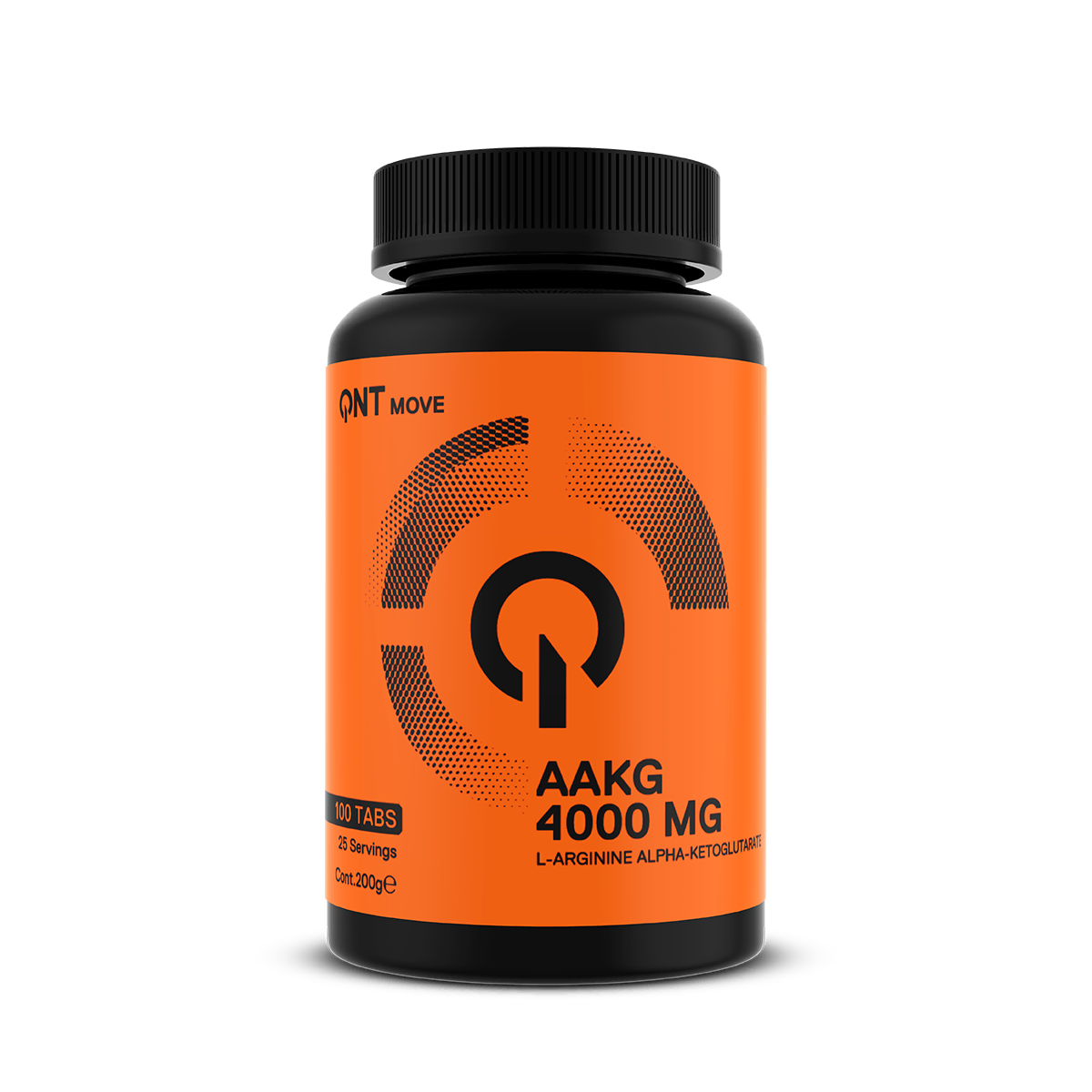
In this collection you will find QNT AAKG (1000 mg per tablet, 100 tablets), dosed and built for strength-training enthusiasts who want a simple, concentrated arginine source. It is the go-to supplement when you specifically want arginine alpha-ketoglutarate, without a full pre-workout formula wrapped around it.

Nitric oxide, vasodilation and the muscle pump

If AAKG has become a gym-bag staple, it is down to the muscle pump: that tight, full feeling many lifters simply call the pump. When people look up the benefits of AAKG, this is almost always the sensation they have in mind. The idea is easy to grasp.

L-arginine serves as a substrate for the production of nitric oxide in the body. Nitric oxide contributes to vasodilation, meaning the widening of the blood vessels. Wider vessels mean blood can flow more freely toward the muscles you are working.

In practice, many lifters describe the following during a session:

  • a feeling of full, well-supplied muscles;
  • more visible veins on longer sets;
  • a pump that holds through the workout.

AAKG does not replace training or a suitable diet: it is a supplement that supports the work you put in under the bar, especially on high-volume sessions with plenty of reps and sets.

Who is it for? The ideal AAKG profile

AAKG is aimed first and foremost at strength-training and fitness enthusiasts who want to work on the pump and dial in how their sessions feel.

It may be worth a look if:

  • you train for hypertrophy, with longer sets and a high training volume;
  • you enjoy feeling a strong pump during your sessions;
  • you want a targeted arginine source, without reaching for a full pre-workout loaded with stimulants;
  • you build your own supplement routine and prefer to dose each ingredient separately.

On the other hand, if what you really want is a caffeine kick before training, a full pre-workout will suit your needs better. AAKG stays a niche product, designed for arginine and the pump rather than nervous energy. If you are on medication or unsure, ask your doctor or pharmacist before adding it to your routine.

Dosage and timing: how to use AAKG tablets

AAKG is taken mainly before training, so you get the arginine on board when you need it most.

Practical pointers:

  • When: roughly 30 to 45 minutes before your session, the window most commonly recommended.
  • How much: always follow the dose stated on the label. The tablet format keeps dosing simple, with no scoop or scale needed.
  • With what: a large glass of water is enough. Some lifters take AAKG on an empty stomach, others with a light snack.
  • On rest days: the benefit is tied mainly to training, so concentrate your intake on your workout days.

Keep it simple and consistent: start with the recommended dose, see how you feel over a few sessions, and stay well hydrated throughout your training. There is no need to stack extra doses to speed things up; consistency matters more than quantity.

When it comes to stacking, AAKG sits easily alongside other training staples: many lifters take it with their usual creatine, with each ingredient keeping its own dose.

AAKG: dangerous or safe? What you should know

"AAKG danger" is one of the most common searches, so let us set the record straight. Arginine is an amino acid that occurs naturally in the body and in many protein-rich foods.

The common-sense points to remember:

  • Stick to the recommended dose: as with any supplement, very high amounts can cause digestive discomfort in sensitive people.
  • AAKG is not a substitute for a varied, balanced diet or a healthy lifestyle.
  • Medical advice: if you are on medication, have a particular condition, or are pregnant or breastfeeding, talk to a healthcare professional before you start.
  • Keep out of reach of children and store the product in good conditions.

Used as directed, as part of a training routine, QNT AAKG is a simple supplement to work in. Made in Belgium by QNT, it meets a clear quality standard: a concentrated, easy-to-dose source of arginine alpha-ketoglutarate.

Frequently Asked Questions

Your health and results are our top priority. This FAQ answers the essential questions about QNT products, so you know exactly what you’re buying and how they support your goals.

AAKG or L-arginine: which one should I choose?

Both deliver L-arginine. AAKG binds arginine to alpha-ketoglutarate, giving a more soluble form that is easy to dose as a tablet. Pick AAKG if you want a concentrated, convenient arginine source without weighing powder. Plain L-arginine stays an option if you prefer a classic powder format.

Can I take AAKG with a pre-workout that already contains arginine or citrulline?

Yes, you can, but check the total arginine in your pre-workout so you do not stack overly high doses. If your formula already packs a lot, AAKG becomes redundant. AAKG is most useful when your pre-workout is low in arginine, or when you build your stack one ingredient at a time.

Does AAKG boost growth hormone or testosterone?

No, AAKG is not a hormonal product and should not be chosen for that reason. It is a source of arginine, the amino acid precursor to nitric oxide linked to the pump sensation. Lifters use it for the pump during training, not to act on any hormone.

Why is QNT AAKG in tablets rather than powder?

The tablet format locks in a precise dose of arginine alpha-ketoglutarate (1000 mg per tablet), so you need no scale or scoop. Arginine powder also tends to taste quite bitter, which the tablet avoids. It is the practical choice for carrying your pre-workout dose and keeping intake consistent.