















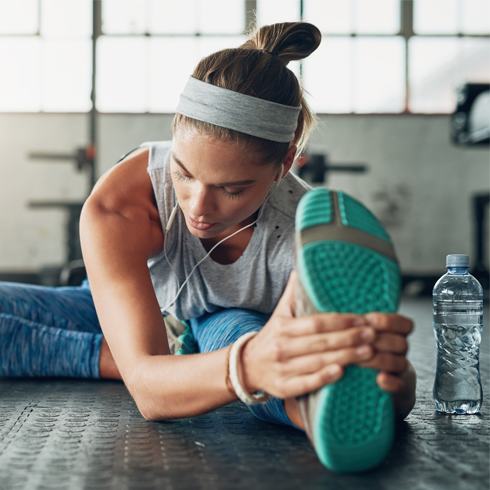
How to train flexibility?
The way to train flexibility is often highly controversial. Depending on the sports you practice, you work differently. A dancer and an athlete train differently, as well as a boxer and a gymnast. Everyone thinks they are right... but where is the truth?
It is necessary to know beforehand that the flexibility of a joint is limited by physical factors such as the contact between the bones but also the tendons and the ligaments. The shape of the joint, the position of the ligaments and tendons genetically determine the flexibility in an individual. Women are generally more flexible than men.
There are many different methods and different opinions on how to proceed. The only thing that seems to be unanimous is the exercises.
Some people advocate cold stretching, others demand that they never do so. When you want to achieve a certain result, I have always been told to look to the category of people who have achieved this result. The athletes who have the most flexibility are the classical dancers. They are used to warm up, then stretch before each training, and often to re-stretch afterwards. The gymnasts are also very flexible and do the same. In athletics too, there is preparation before training or performance. Sudden high amplitude movements can lead to breakdown or tearing if they are not prepared properly.
Stretching is also used for this purpose: To avoid injuries: a softer muscle will withstand tension much better than a stiff muscle. It is the same principle if you stretch an elastic or a string of the same section. The string will break at a given tension, where the elastic will still be able to be stretched stronger.
It has often been told that musculation stiffens the muscles, yet high-level athletes can easily overcome this poblem. It is therefore rather a factor related to work than to sport itself. The bodybuilder who relaxes and works in full amplitude will remain supple, but if he does not work his stretches and does only half-movements, he may not keep a good flexibility. It is certain that if flexibility is not trained, it will gradually disappear with age. But if age is a factor that decreases flexibility, one can easily counter the wear of time with a little bit of daily work.
Athletes from sports such as football, jogging, rugby, basketball or sports where speed is important, are often reputed to be steep. It is certain that many coaches neglect the flexibility during training in a sport where the muscles make a lot of small sudden movements of short amplitude. This attitude towards flexibility is often transmitted to players from an early age and often makes that at some point breakdown or tearing ends a season because of a muscle too quickly stretched in a movement Abrupt of great amplitude.
So how to work that flexibility. First, there are passive static stretches: These are the best known: In a given position, one relaxes and one lets the weight of the body act. Fits well after every sport session. Stretching can also be helped with extra weight on the area to be stretched or with the help of a partner, if one is attentive and knows how to relax.
Activo-passive or tenso-active stretches are also found: A mixture of active and passive static stretches, this type of stretching is to be performed between sets of effort or at the end of training. They include muscle contraction (10 seconds), followed by relaxation and then stretching of the same muscle group (20 seconds). Or, stretching is done by contraction of the antagonist group. If you contract your quadriceps for example, this will stretch your hamstrings. Lengthen both legs and make sure to bring your toes to you. You will feel your quadriceps contract and a pleasant feeling of stretching in your ischios.
The activo-dynamic stretches are probably, with the ballistic method, the most effective stretches for exercise preparation. They consist of stretching a muscle placed in stretching position and then chain on a series of dynamic exercises of the same muscle group. They in-crease strength.
• Stretch the muscle slowly to the point of tightness
• Tighten the muscle (6-8 seconds)
• Release and chain on a phase of active exercises for about ten seconds (jumping, scissor movements)
In the ballistic method (dynamic stretching active with impulses), the stretches are made in the form of impulses (throwing of legs, heel-buttocks, swing of the arms). The contraction of a muscle group causes a movement that will stretch the opposite muscle chain. This type of stretching can cause a contraction of the stretched muscle (protective myotomic reflex) and, depending on the violence of the movement, its lesion. Avoid them if you are fragile or do not master this type of stretching.
Contracted-Released (CR or CRE) or myotensive consists in contracting, releasing and then stretching the same muscle group. Place the muscle in the stretch position and perform:
• Passive stretching: tensioning the muscle (elongation) to the extreme position
• Muscle contraction (6-8 seconds)
• Release (2 to 3 seconds)
• Extra stretch (6 to 8 seconds)
This method is particularly effective in making progress.
These are the main methods of stretching. I do not think cold stretching is a good idea, because it leads to an injury. Do not stretch either an injured muscle. Wait until you have recovered. If you are feeing stiff, just postpone your stretching for later. In any case, do not forget to do a minimum of stretching after sports.
Keep in mind that a lot of back pain comes from a lack of flexibility of the ischios.
Read more

Cyclos du Cœur 2026: QNT at the Cormet de Roselend for Télévie
Cyclos du Cœur 2026: QNT at the Cormet de Roselend for Télévie From 1 to 4 July 2026, QNT joins the Cyclos du Cœur on the Cormet de Roselend in sup...
 Training
Group classes more effective than classroom work?
This is a question that is often asked: which is more effective? Group classes or individual gym programs?
 Our Tips
Summer body edition for men: How to prepare your body?
Summer body: exercise, balanced nutrition, motivation and practical tips to transform your physique before summer, even starting from scratch.
 Training
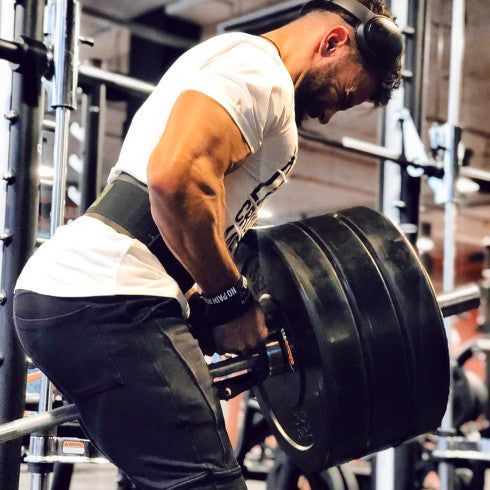
SHOULD YOU USE A WEIGHT BELT FOR LIFTING?
The next person you see in the squat cage with 20 kg on the bar and a big belt, maybe you can make a comment after reading these few lines.
 Dietary Supplements
Why take turmeric?
There are hundreds and hundreds of spices with different properties and turmeric is obviously one of them! It is a spice that is generally quite we...
 Our Tips
Fasting and sport: 9 tips for training during Ramadan.
Working out during Ramadan is not easy. Not eating from sunrise to sunset is a major challenge for athletes wishing to continue their activities. T...
 Our Tips
Summer holidays: How to limit the damage?
On holiday, we often tend to let ourselves go. Unless you're a hardcore sportsman, you tend to abandon your trainers and indulge in a lot of dietar...
 Health
How to preserve your joints?
We have a total of about 400 joints located throughout the body. We therefore quickly understand why joint problems are quite common. You don't hav...
 Our Tips
9 good reasons to do sport.
Sometimes the urge to exercise is not always there. And although we always tell ourselves that this year will finally be the right one to get back ...


