



Mass gainer: what it does and how to use it for muscle gain
Table of contents

A mass gainer is a high-calorie powder designed to help you gain weight when food alone is not enough. It is mainly aimed at people who do strength training and struggle to eat slightly more than they need every day, a necessary condition for building muscle.
This guide explains what a mass gainer contains, how it differs from whey, how much to take and when, and how to make sure that most of the weight you gain is muscle.
Key points in 30 seconds
• A mass gainer mainly provides carbohydrates, and therefore calories, in addition to protein.
• It is only useful if food alone does not allow you to eat slightly more than you need.
• The aim is to gain 0.25 to 0.5% of body weight per week, alongside regular strength training.
What is a mass gainer?
A mass gainer is a food supplement that combines carbohydrates, such as maltodextrin or oats, with protein, most often whey and casein. Protein provides the building blocks needed to build muscle, while carbohydrates provide energy for training and recovery.
To build muscle, you need to eat slightly more than your body burns. This small excess is called a calorie surplus. It is calculated from your maintenance intake, which is the calorie intake at which your weight stays stable [1]. A mass gainer serves the same purpose as a large meal, but it adds several hundred calories in a single shake, making it easier to maintain the surplus week after week.
Mass gainer, whey or isolate: what is the difference?
The figure below compares a QNT gainer, whey protein and isolate, each at its reference serving.

Figure 1. Calories per serving of a QNT mass gainer, whey protein and isolate, split between protein, carbohydrate and fat.
To understand the difference, it helps to know that one gram of protein or carbohydrate provides about 4 kcal, compared with 9 kcal for one gram of fat. In a gainer, the amount of carbohydrate therefore accounts for most of the calories.
The choice then depends on your goal.
- A mass gainer, such as the 3000 Muscle Mass Gainer, is useful when the calorie surplus is hard to reach through meals.
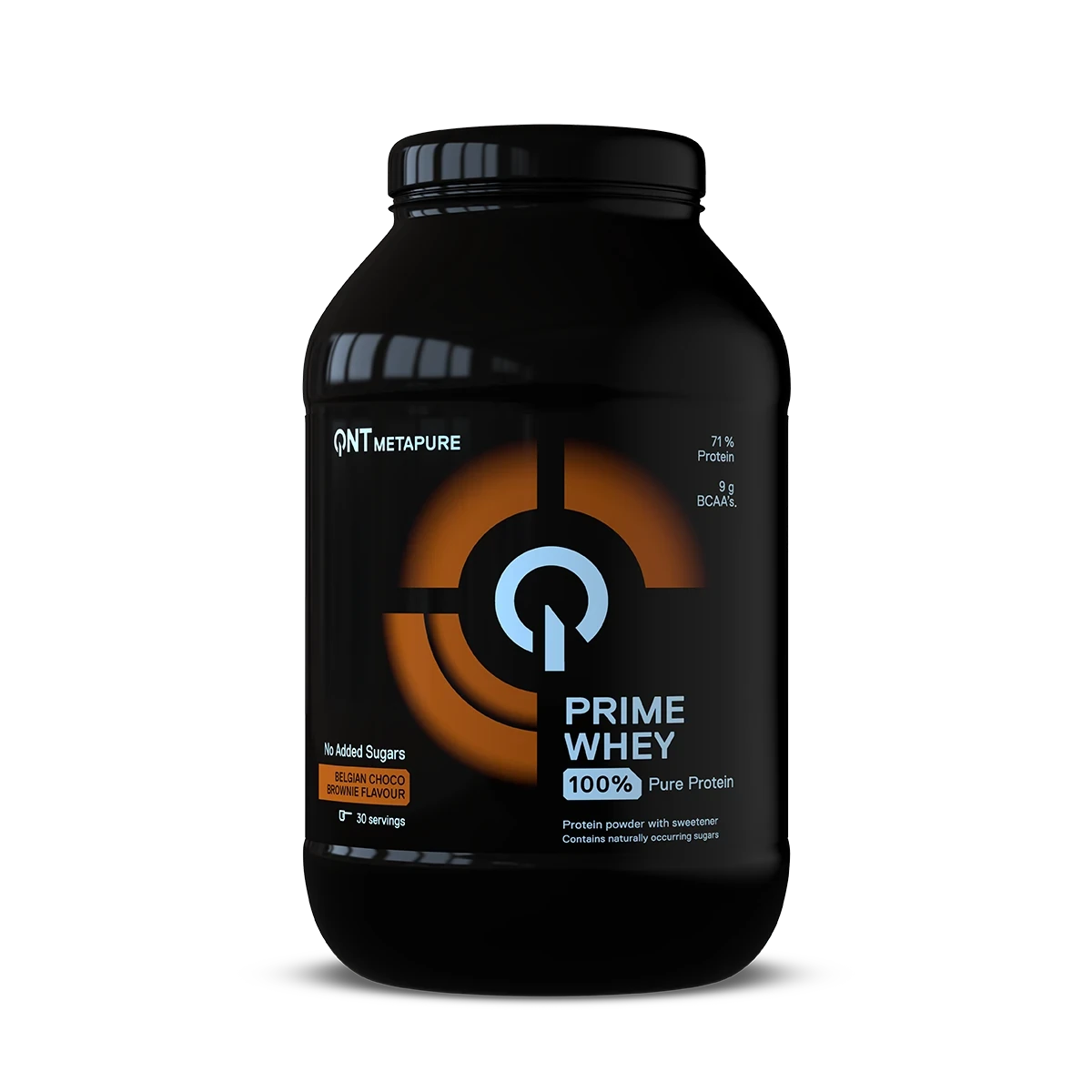
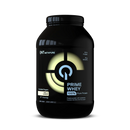
- Whey, such as Prime Whey, is enough when you are already in a surplus and mainly need protein.
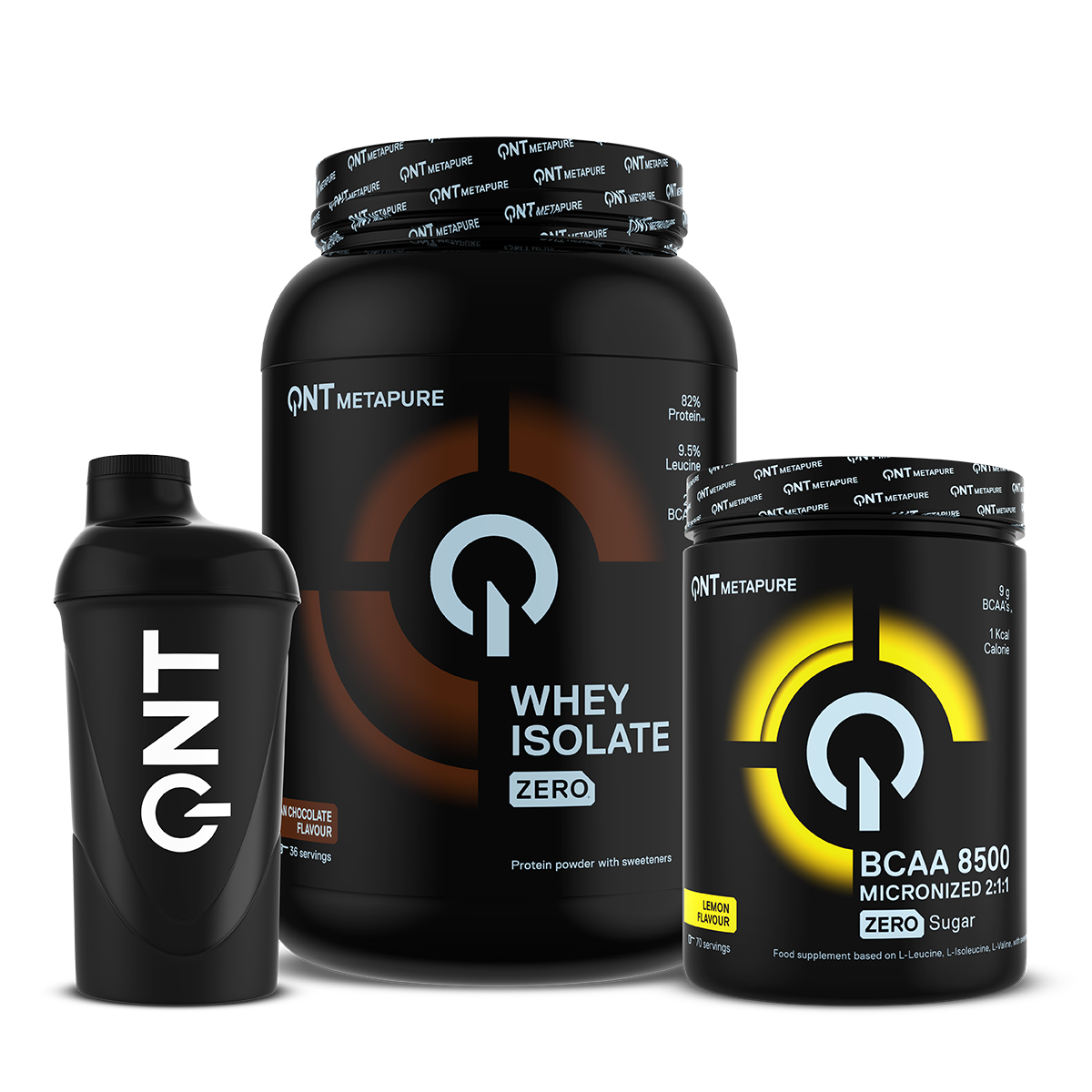
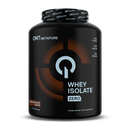
- An isolate, such as Metapure Whey Isolate Zero, provides the same protein with minimal carbohydrates and sugars, for example during a cutting phase.
How to take a mass gainer?
How many scoops per day?
According to the label of the 3000 Muscle Mass Gainer, one 50 g scoop provides about 200 kcal, and the reference serving of three scoops provides 598 kcal. It seems reasonable to start with one or two scoops a day, then adjust according to how your weight changes, rather than taking the maximum dose straight away.

Figure 2. How much mass gainer per day, in 50 g scoops.
With water or milk?
The powder is mixed in a shaker with water for a drink with fewer calories, or with milk to add calories. For example, 250 ml of whole milk provides about 160 kcal. You can also blend the mixture with a banana.
When should you take it?
Timing matters little, since your total intake over the day makes the difference. You can take a gainer at breakfast, between meals or after training. However, it is better to spread your protein intake across three to six servings a day rather than taking it all at once [1]. The guide on when to take whey covers this point in more detail.
How long does it take to gain weight with a mass gainer?
For beginner and intermediate lifters, the recommended surplus is 10 to 20% above maintenance, with weight gain of about 0.25 to 0.5% of body weight per week [1]. A larger surplus does not seem to build more muscle, but it may speed up fat gain [2].
| Body weight | Target weight gain per week |
|---|---|
| 60 kg | 150 to 300 g |
| 70 kg | 175 to 350 g |
| 80 kg | 200 to 400 g |
A well-managed bulk is therefore measured in kilos per quarter rather than kilos per week. The most reliable way to find your maintenance intake is to keep your calorie intake constant for two to three weeks while weighing yourself regularly. If your weight stays stable, that intake is your actual maintenance level.
Practical implications
• It is best to weigh yourself two to three times a week under the same conditions and to track the weekly average rather than each weigh-in.
• If your weight has not changed after two to three weeks, you can add a scoop, and remove one if it rises faster than planned.
• It makes sense to keep eating complete meals, as the gainer complements your diet without replacing it.
Does a mass gainer make you fat?
A mass gainer is meant to help you gain weight, but whether that weight is muscle or fat depends mainly on two factors. First, strength training is decisive, because protein and a surplus promote muscle gain mainly when combined with a demanding training programme [3]. Without training, the extra energy is mostly stored as fat. Second, the size of the surplus matters, since an excessive surplus may speed up fat gain without speeding up muscle gain [2].
As for protein, muscle gains barely increase, on average, beyond an intake of about 1.6 g per kilo of body weight per day [4]. That is about 120 g for a person weighing 75 kg, counting the whole diet.
Do you really need a mass gainer?
A mass gainer is not indispensable, since foods such as pasta, rice, eggs, milk or oil can also provide the extra calories. It becomes convenient when your schedule leaves little time for complete meals or when your diet does not allow you to reach the desired surplus. It is of little use if you already reach your surplus through food or are in a cutting phase.
For a homemade version, a shake made with milk, oats, a banana and a spoonful of peanut butter does the same job.
The QNT selection for muscle gain
QNT Sport, a Belgian brand, has been making food supplements since 1992. Its gainer combines milk proteins and carbohydrates, mainly maltodextrin and dextrose.
- To build a calorie surplus: 3000 Muscle Mass Gainer
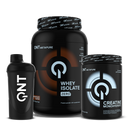
- For protein when the surplus is already reached: Prime Whey
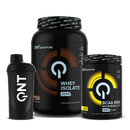
- For whey isolate and BCAAs together: Mass Gainer Pack
Conclusion
A mass gainer's main purpose is to add calories easily when meals are not enough. Results depend primarily on regular strength training, sufficient protein intake and a moderate surplus maintained over time. The 3000 Muscle Mass Gainer can simply help you reach that surplus.
Sources
- Iraki J, Fitschen P, Espinar S, Helms E. (2019). Nutrition Recommendations for Bodybuilders in the Off-Season: A Narrative Review. Sports, 7(7), 154. https://doi.org/10.3390/sports7070154
- Slater GJ, Dieter BP, Marsh DJ, et al. (2019). Is an Energy Surplus Required to Maximize Skeletal Muscle Hypertrophy Associated With Resistance Training. Frontiers in Nutrition, 6, 131. https://doi.org/10.3389/fnut.2019.00131
- Jäger R, Kerksick CM, Campbell BI, et al. (2017). International Society of Sports Nutrition Position Stand: protein and exercise. Journal of the International Society of Sports Nutrition, 14, 20. https://doi.org/10.1186/s12970-017-0177-8
- Morton RW, Murphy KT, McKellar SR, et al. (2018). A systematic review, meta-analysis and meta-regression of the effect of protein supplementation on resistance training-induced gains in muscle mass and strength in healthy adults. British Journal of Sports Medicine, 52(6), 376-384. https://doi.org/10.1136/bjsports-2017-097608
- Règlement (UE) n° 432/2012 de la Commission du 16 mai 2012 établissant une liste des allégations de santé autorisées portant sur les denrées alimentaires. Journal officiel de l'Union européenne. http://data.europa.eu/eli/reg/2012/432/oj
Updated 19 October 2026