





Vegan protein for muscle building: complete guide 2026
Table of contents
Last updated: March 31, 2026
A 2021 meta-analysis involving 266 participants found that plant-based and animal-based proteins produce comparable results for lean mass and strength (Messina et al., 2021). Yet the doubts persist. "Vegan protein is incomplete." "You can't build muscle without whey." At QNT Sport, we've been formulating sports nutrition supplements since 1992. This guide gives you the facts, the studies, and the practical advice to get the most from plant-based protein.
Why Vegan Protein Is Growing in Popularity
Health and digestive tolerance
Approximately 68% of the world's population has some degree of lactose malabsorption. Plant-based proteins offer a lactose-free, dairy-free alternative with often superior digestibility.
Sustainability and ethics
Plant protein production requires significantly less water and farmland than animal protein.
Nutritional diversity
Pea and rice proteins deliver fiber, micronutrients, and bioactive compounds not found in whey.
Main Plant-Based Protein Sources
Pea protein
Rich in BCAAs and lysine. Babault et al. (2015): muscle thickness increases comparable to whey after 12 weeks (DOI). Limitation: Lower methionine.
Rice protein
Rich in methionine and cysteine. Joy et al. (2013): lean mass and strength gains comparable to whey isolate (DOI). Limitation: Earthy taste alone.
Soy protein
Only individual plant protein considered "complete." Tang et al. (2009): whey faster but soy significantly effective (DOI). Limitation: Taste concerns.
Hemp protein
Rich in omega-3/6 and minerals. Limitation: Lower protein content (~50% vs 80-90%).
The "Complete Protein" Challenge
| Limiting amino acid | Deficient source | Complementary source |
|---|---|---|
| Lysine | Rice, hemp | Pea, soy |
| Methionine | Pea, soy | Rice, hemp |
| Leucine (quantity) | All plant sources | Combine pea + rice + BCAAs |
Pea + rice = the plant-based gold standard (Jäger et al., 2017).
Vegan Protein vs Whey: Honest Comparison
| Criterion | Whey | Vegan (Pea + Rice) |
|---|---|---|
| Protein/serving | 24-30 g | 20-25 g |
| Leucine/serving | 2.5-3.0 g | 1.7-2.0 g |
| Total BCAAs | ~5.5 g | ~4.0 g |
| Absorption | Fast (30-60 min) | Moderate (45-90 min) |
| PDCAAS | 1.00 | 0.82-0.93 |
| Lactose | Present | Absent |
| Sustainability | Higher impact | Lower impact |
Morton et al. (2018): protein supplementation increases muscle mass regardless of source (DOI). Whey has a slight leucine edge, but this fades with adequate daily intake.
Who Benefits Most
- Lactose-intolerant (68% of global population)
- Dairy-allergic athletes
- Vegans and vegetarians
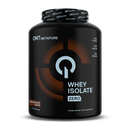
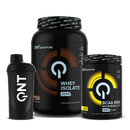
- Athletes seeking variety: QNT offers Metapure Whey Isolate Zero and Vegan Protein
- People with digestive issues
How Much Protein Do Vegan Athletes Need?
ISSN recommends 1.4-2.0 g/kg/day (Jäger et al., 2017).
| Goal | Intake | Example (75 kg) |
|---|---|---|
| Maintenance | 1.4-1.6 g/kg/day | 105-120 g/day |
| Muscle building | 1.6-2.0 g/kg/day | 120-150 g/day |
| Mass gain | 2.0-2.2 g/kg/day | 150-165 g/day |
Tips for Maximizing Results
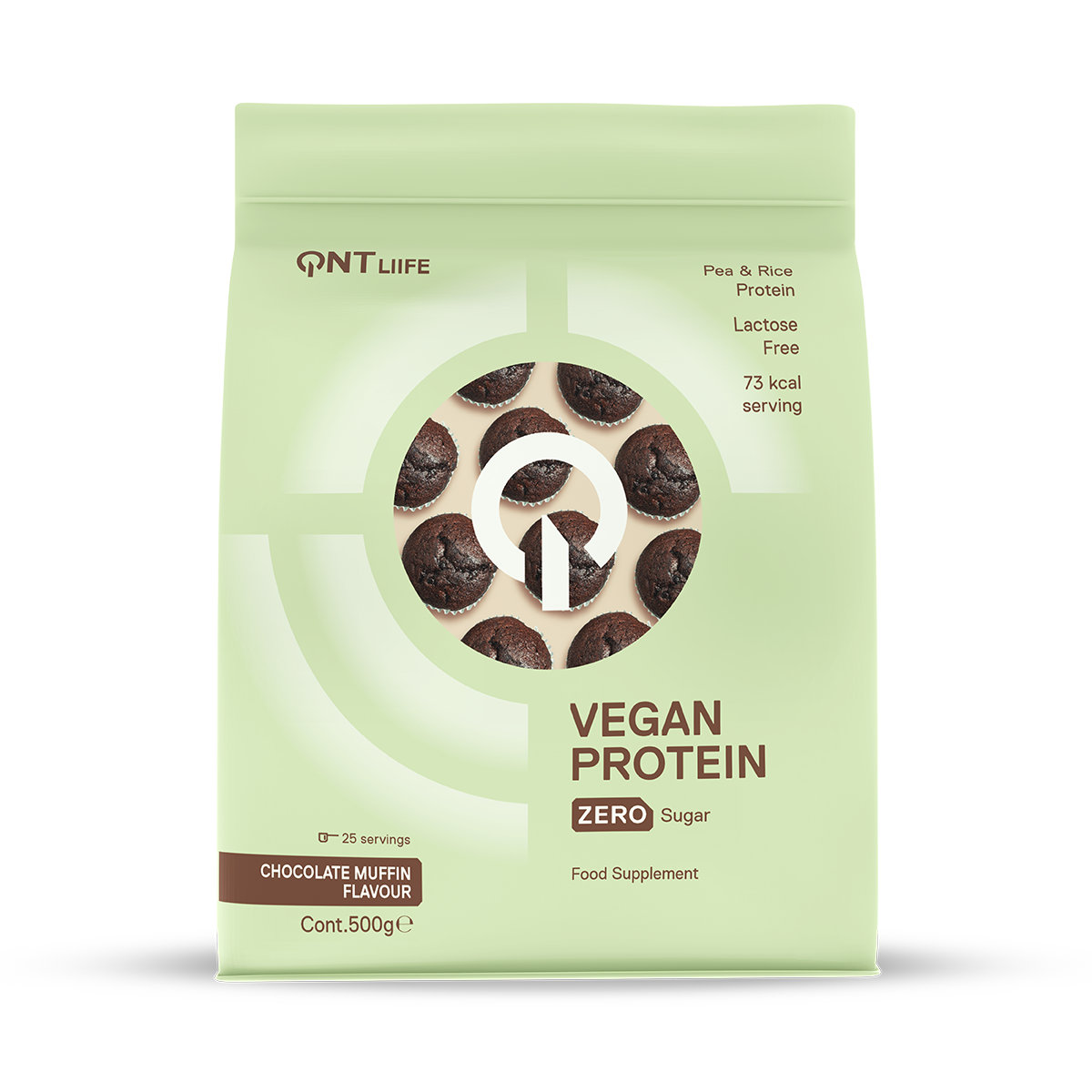
- Combine sources: QNT Vegan Protein: 64% pea + 27% rice
- Strategic timing: Within 2h post-workout with carbs
- Spread intake: 4-5 servings of 25-35 g
- Resistance training: The essential stimulus
- Smart stacking: Creatine, BCAAs, Pre-workout
Myths Debunked
"You can't build muscle on plant protein": False. Morton et al. (2018): no significant impact of source on gains.
"Vegan protein is incomplete": Pea + rice = complete amino acid profile.
"Soy increases estrogen": False. No effect on testosterone in men.
"Must combine in same meal": False. Amino acid pool replenishes over 24h.
QNT Vegan Protein Spotlight
- Pea protein isolate (64%) + Rice protein (27.4%)
- Lactose-free, soy-free, gluten-free, no added sugar
- Flavors: Chocolate Muffin, Vanilla Macaroon, Red Fruit Party
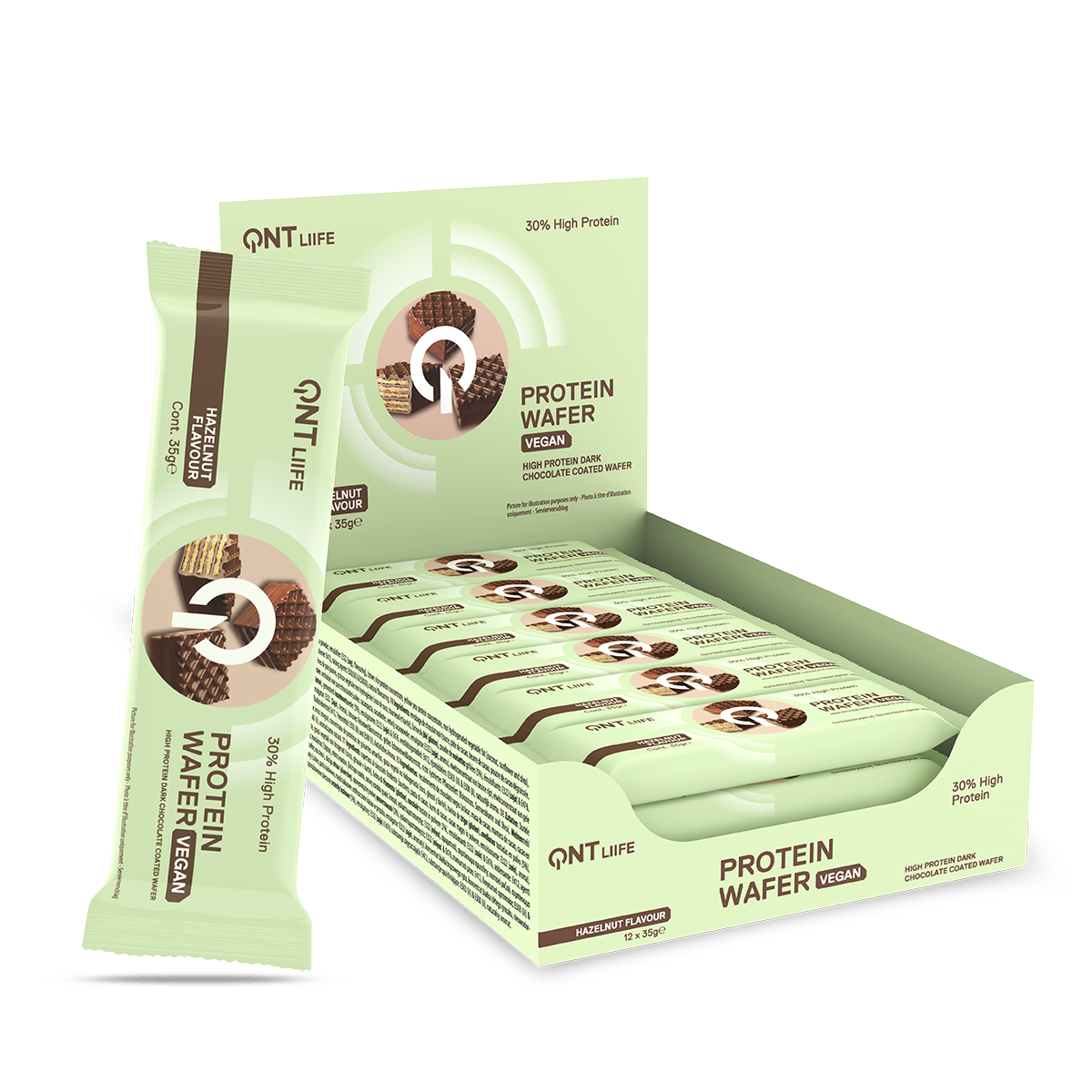
- Also: Vegan Protein Bar with L-Carnitine
- Made in Belgium since 1992
Supplement Stack Integration
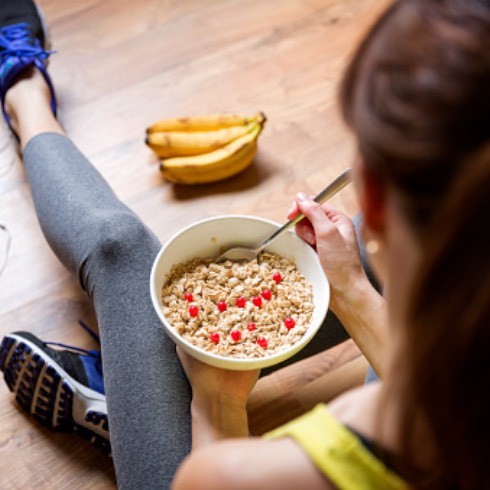
Morning: Vegan Protein + oats + fruit
Post-workout: Vegan Protein + 5g creatine + banana
Snack: Vegan Protein Bar
Pre-workout: Pre-workout for intensity
Explore our complete protein range.
Sources
- Babault et al. (2015). JISSN, 12, 3. DOI
- Jäger et al. (2017). ISSN position stand. JISSN, 14, 20. DOI
- Joy et al. (2013). Nutrition Journal, 12, 86. DOI
- Messina et al. (2021). Nutrients, 13(2), 661. DOI
- Morton et al. (2018). BJSM, 52(6), 376-384. DOI
- Tang et al. (2009). J Applied Physiology, 107(3), 987-992. DOI
By the QNT Sport team, over 30 years of sports nutrition expertise
Keep reading
 Gain Muscle
How to Choose Protein Powder: The Ultimate 2026 Guide
Whey, isolate, casein or vegan? Learn how to choose protein powder for your goal, with a comparison table, the amino acid profile that actually mat...
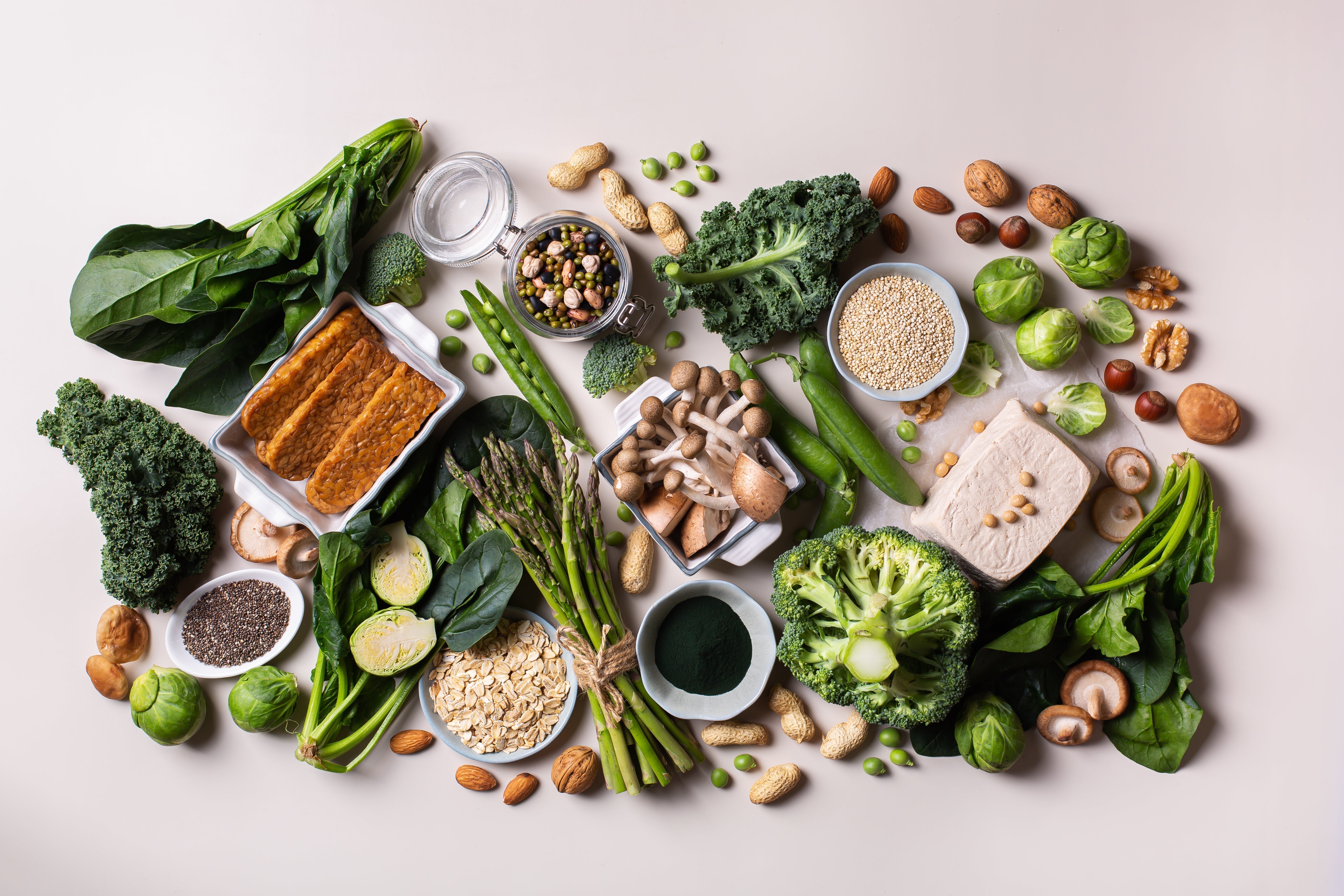
Best Plant-Based Protein Sources: The Complete Guide for Muscle
What are the best plant-based protein sources for muscle? Foods, DIAAS scores, dosing and the pea + rice blend, explained by science. Guide by QNT ...


