






Best Plant-Based Protein Sources: The Complete Guide for Muscle
Table of Content

In a randomised, double-blind, placebo-controlled trial published in the Journal of the International Society of Sports Nutrition, 161 men (aged roughly 18 to 35) followed 12 weeks of upper-limb resistance training, three sessions a week. They were randomly split into three groups: pea protein (2 x 25 g per day), whey or placebo. The results appear to show that the pea protein group gained as much biceps muscle thickness, measured by ultrasound, as the whey group (Babault et al., 2015). The takeaway: chosen well, the best plant-based protein sources hold their own against animal protein. The trick is knowing which ones to prioritise, and how to combine them. Here's what the science says.
What are the best plant-based protein sources?
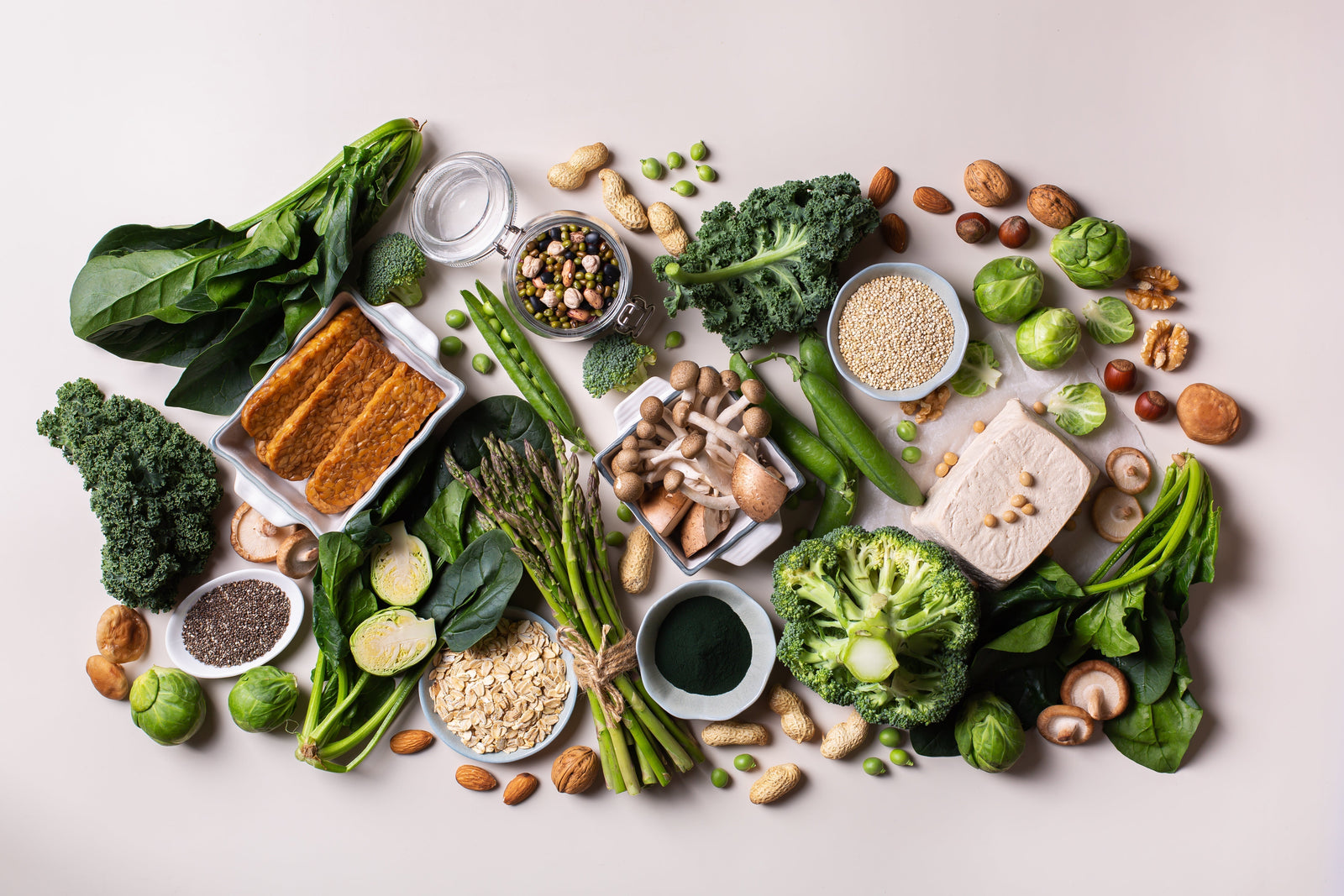
The best plant-based protein sources come from five food families: legumes (lentils, chickpeas, beans), soy and its products (tofu, tempeh, edamame), nuts and seeds (almonds, pumpkin, hemp, chia), whole grains (quinoa, oats, buckwheat), and algae such as spirulina.
Here is the protein content per 100 g of food (dry or raw, unless noted):
| Food | Protein / 100 g |
|---|---|
| Dried spirulina | ~57 g |
| Soybeans | 36 g |
| Hemp seeds | 26 g |
| Pumpkin seeds | 25 g |
| Dry lentils | 25 g |
| Almonds | 21 g |
| Tempeh | 19 g |
| Dry chickpeas | 19 g |
| Chia seeds | 17 g |
| Firm tofu | 12 to 16 g |
| Raw quinoa | 14 g |
Key takeaway: these figures are for the dry or raw food. Once cooked, legumes absorb water and drop to around 9 g of protein per 100 g, which is perfectly normal: just eat generous portions.
The families worth knowing
Legumes (lentils, chickpeas, beans) are the backbone of a high-protein plant diet: cheap, filling and loaded with fibre. Soy and its products (tofu, tempeh, edamame) are among the few plant sources that are naturally complete. Nuts and seeds (almonds, pumpkin, hemp, chia) deliver protein, healthy fats and micronutrients, ideal as a snack or scattered over porridge. Finally, whole grains like quinoa, oats and buckwheat round out your intake while providing lasting energy. The trick isn't to pick one family, but to let them work together across the day.
Plant vs animal protein: what's the difference for muscle?
The difference isn't the amount of protein but its quality, measured by the DIAAS score (digestibility of indispensable amino acids). The higher the score, the better the protein is absorbed and used by muscle.
| Source | DIAAS score |
|---|---|
| Cow's milk | ~1.14 |
| Whey isolate | ~1.09 |
| Beef (red meat) | ~1.10 |
| Chicken breast (white meat) | ~1.08 |
| Soy | ~0.90 |
| Pea | 0.82 |
| Rice (isolate) | 0.42 |
Sources: Herreman et al., 2020; FAO reference values for animal proteins. Quality animal proteins (milk, white and red meat, whey) are still the benchmark, but soy and pea come close. Rice alone scores lower because it's low in lysine, which is exactly where the smartest strategy comes in: complementarity.
If you're still weighing up the main powder families, our guide to choosing the right protein compares whey, casein and plant protein goal by goal. And for overnight recovery, micellar casein follows a different logic entirely: slow release.
The role of leucine and the BCAAs
Of the twenty amino acids, nine are "essential": the body can't make them, so they have to come from food. Three of them form the branched-chain amino acid family, the BCAAs: leucine, isoleucine and valine.
Leucine is the one that "switches on" muscle protein synthesis; it's the main anabolic signal. Isoleucine and valine support it, playing a role that leans more towards energy regulation and recovery; their direct anabolic effect is weaker than leucine's.
Plant sources contain slightly less leucine than whey. The fix is simple: aim for about 2 to 3 g of leucine per serving, which means 25 to 30 g of plant protein per portion (a little more than with whey). Studies appear to show that, at an adequate dose, plant proteins effectively support muscle growth and maintenance (Jäger et al., 2017).
Why combine pea and rice?
This is the trick most guides skip. Pea is rich in lysine but limited in sulphur amino acids (methionine). Rice is the opposite: low in lysine, well-supplied with methionine. Combined, they complement each other to form a complete plant protein with an amino acid profile close to whey's.
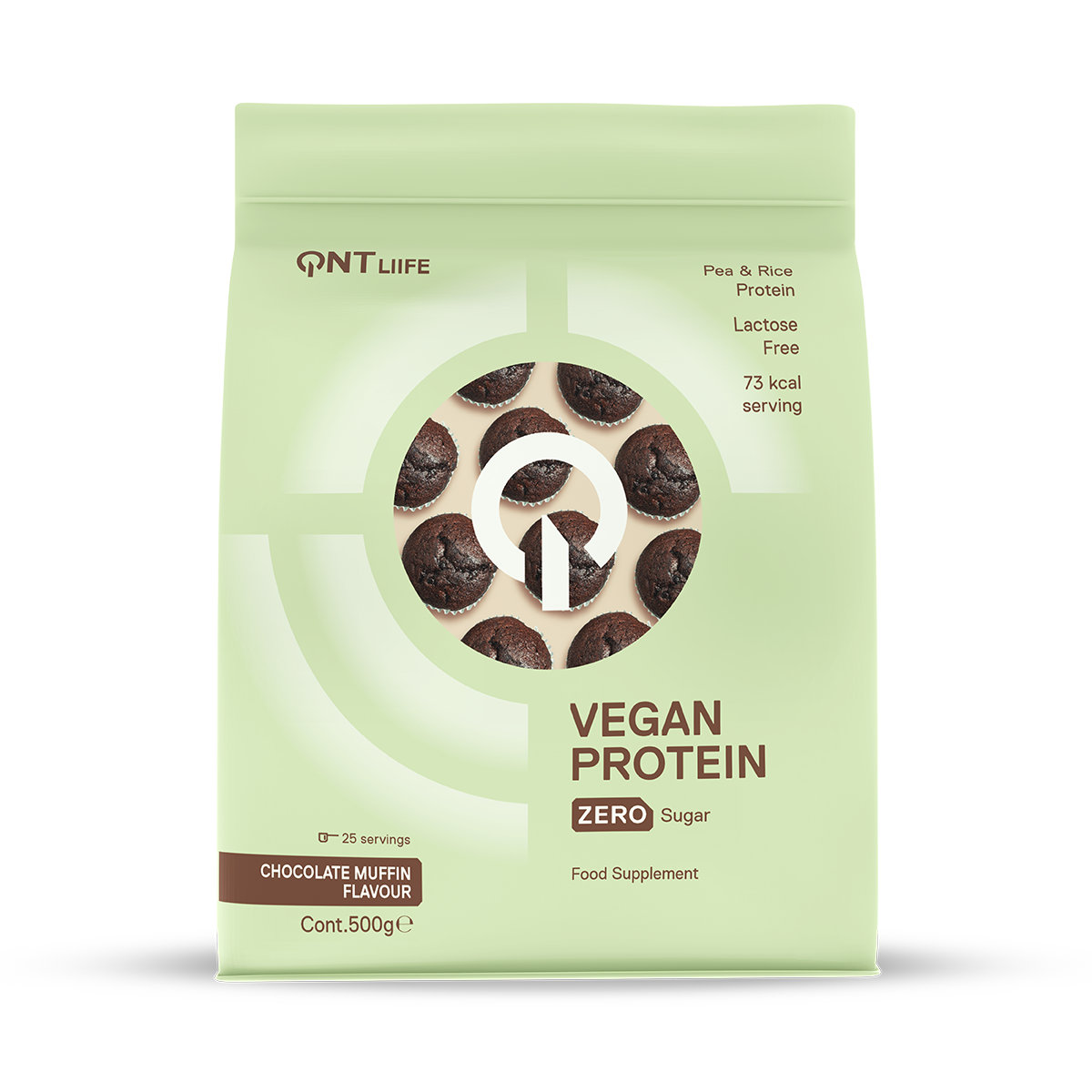
The most-studied ratio sits around 70% pea / 30% rice, exactly the logic behind QNT Vegan Protein: a pea + rice blend, free from lactose, soy, gluten and added sugars. A 20 g scoop mixes with 250 ml of water and delivers the essential amino acids in sensible proportions, a practical whey alternative for vegetarian, vegan or lactose-intolerant athletes.

One useful caveat if digestive discomfort is what's pushing you towards plant protein: the culprit is usually the lactose or the dose, not whey itself. Our 7 proven fixes for whey-related bloating are worth a look before you switch source entirely.
How much protein per day to build muscle?
For an active person aiming to build muscle, the scientific recommendation is 1.6 to 2.2 g of protein per kilo of body weight per day (Morton et al., 2018; Jäger et al., 2017). For a 70 kg person, that's roughly 110 to 150 g of protein daily.
On a plant-based diet, three principles make that target easier to hit:
- Spread intake across 3 to 4 servings through the day.
- Combine grains and legumes at each meal for a complete profile.
- Top up with a protein powder when a meal is low in protein, or after training.

How to add plant protein to your day
No need to overhaul everything. A few habits do the job: lentils or chickpeas in your meals, a handful of almonds as a snack, pumpkin or hemp seeds over salads and porridge, pan-fried tofu or tempeh.
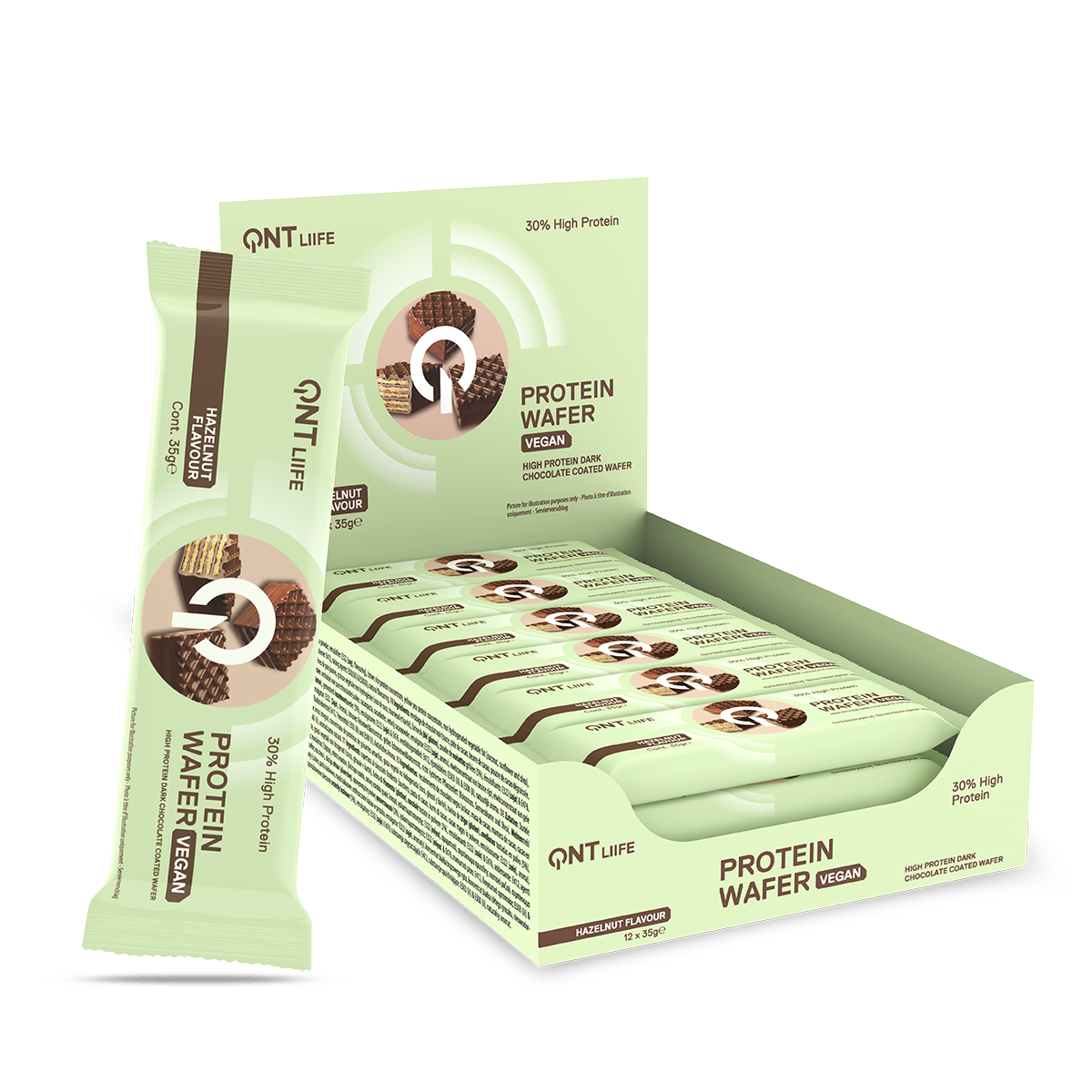
To fill the gap easily, a scoop of Vegan Protein at breakfast or after your session adds a solid protein hit for just 73 kcal. On the go, the Vegan Protein Wafer is a crunchy, convenient snack. Explore the full range in the Vegan Protein collection.
Key takeaway: the best plant-based protein sources for muscle rely on variety and complementarity. The pea + rice duo is the simplest way to a complete profile, exactly like QNT Vegan Protein, a pea + rice blend formulated and made in Belgium.
Common mistakes to avoid
Three traps come up again and again when athletes go plant-based:
- Under-dosing your portions. Because plant proteins are slightly lower in leucine, servings that are too small limit muscle protein synthesis. Aim for 25 to 30 g of protein per serving rather than the usual 20 g of whey.
- Lacking variety. Relying on a single source (only rice, say) creates an unbalanced amino acid profile. Combine legumes and grains consistently, or choose a pre-balanced blend.
- Forgetting vitamin B12. Absent from plant foods, it requires supplementation on a fully plant-based diet: our complete guide to vitamin B12 covers the sources and dosages. Speak to a healthcare professional.
Avoid these pitfalls and plant proteins comfortably cover the needs of an active, training lifestyle.

Beyond muscle: the other benefits
Plant proteins aren't just about building muscle. High in fibre, legumes and whole grains support satiety and digestive comfort, a real asset during a cutting phase. Nuts and seeds bring unsaturated fats and micronutrients (magnesium, zinc, iron). And varying your protein sources fits a more sustainable way of eating. A supplement like Vegan Protein simply complements this food-first base; it never replaces it.
Conclusion
Plant proteins no longer have anything to envy in whey. By prioritising variety, the pea + rice combination and the right dose, you cover all your needs. Explore the QNT Vegan Protein collection: complete plant-based formulas, formulated and made in Belgium.
By the QNT Sport team • Nutrition Expert • QNT Sport
Sources: Babault et al. (2015) : https://doi.org/10.1186/s12970-014-0064-5 · Jäger et al. (2017) : https://doi.org/10.1186/s12970-017-0177-8 · Morton et al. (2018) : https://doi.org/10.1136/bjsports-2017-097608 · Herreman et al. (2020) : https://doi.org/10.1002/fsn3.1809 · Examine.com : https://examine.com/supplements/protein/
FAQ
Can plant protein really build muscle?
What is the best plant protein powder?
How much plant protein per day?
Are plant proteins complete?
Plant protein or whey: which should I choose?
Read more
 Gain Muscle
How to Choose Protein Powder: The Ultimate 2026 Guide
Whey, isolate, casein or vegan? Learn how to choose protein powder for your goal, with a comparison table, the amino acid profile that actually mat...
BCAA benefits, dosage and timing for muscle recovery
What do BCAAs actually do? Studies, dosage, optimal timing and real use-cases for muscle recovery. Expert guide by QNT Sport, 30+ years of expertise.
 Our Tips
Vitamin B12: Cobalamin – Key Benefits, Sources and Essential Supplements.
Discover why vitamin B12, also known as cobalamin, is essential for your health and how to avoid silent deficiencies. This complete article reveals...
 Well-Being
Supplements and Mental Performance: 7 Ingredients That Act on the Athlete's Brain
Which supplements for mental performance really act on the athlete's brain? 7 ingredients, their mechanisms, the evidence level and the doses studied.


