Skip to content
Cart

Your cart is empty

Continue shopping

HMB

QNT HMB: protect your lean muscle

What is HMB and what is it for?

HMB (beta-hydroxy-beta-methylbutyrate) is a natural metabolite of leucine, one of the most important amino acids for muscle. When your body uses leucine, it converts a small part of it into HMB: around 5%. Food alone will not get you to a genuinely useful dose, which is exactly why a targeted supplement makes sense.

Its main role is anti-catabolic: it works on muscle breakdown rather than muscle building. Where whey or leucine mainly drive synthesis (the anabolic side), HMB acts on the other half of the equation, the preservation of lean muscle during the periods when your muscle takes the biggest hit.

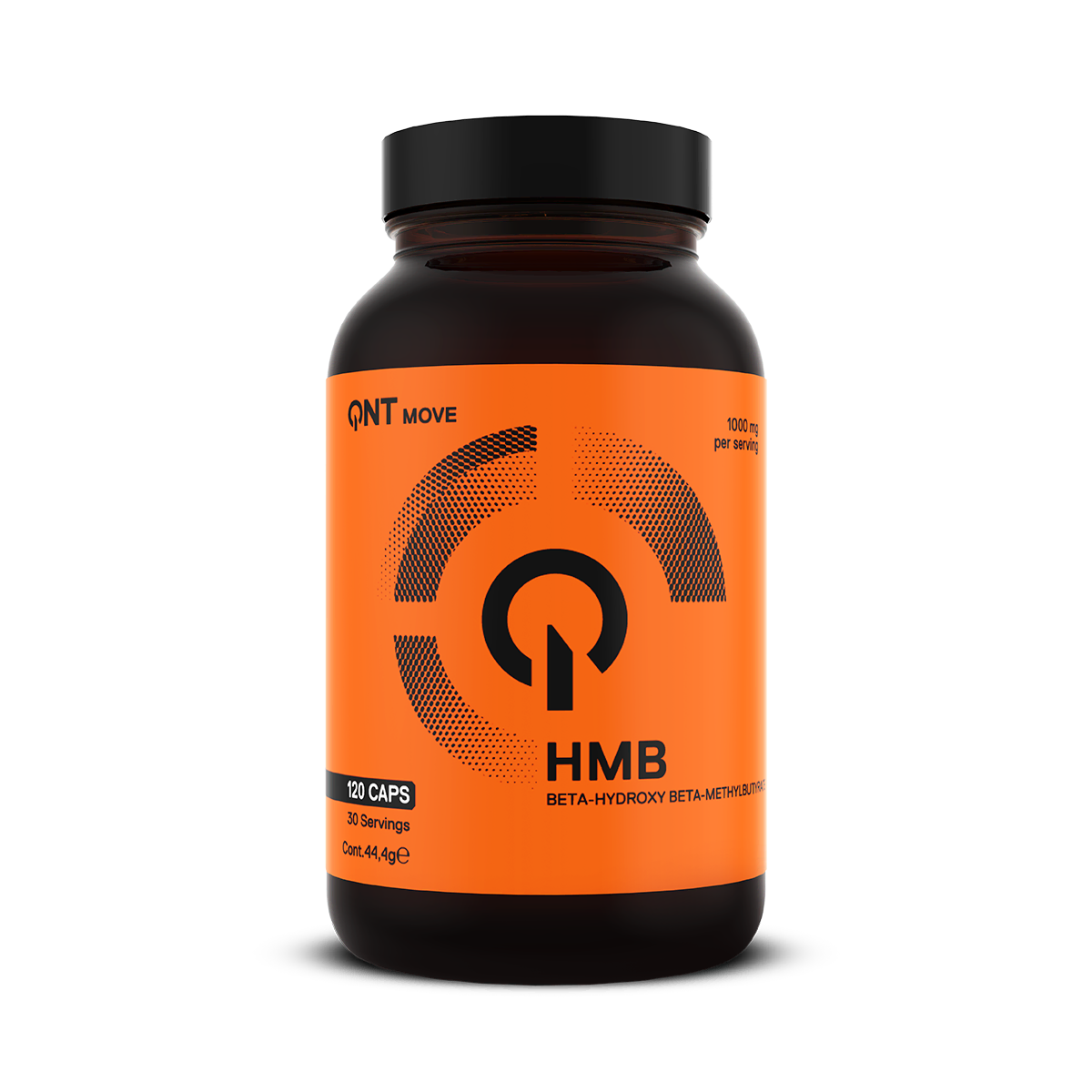
QNT HMB 1000 mg delivers this amino acid in measured capsules that slot easily into your routine. It is a niche supplement built for one specific goal: helping protect the muscle you have already earned, not replacing your protein or your creatine.

HMB and anti-catabolism: protecting your lean muscle

When you train hard, eat in a deficit or stack session after session, your body can pull from muscle for fuel. That is catabolism. This is exactly where HMB earns its place: it has been studied for its action on muscle protein breakdown.

HMB is most relevant in the situations where the risk of losing muscle is highest:

  • Cutting and a calorie deficit, when the goal is to lose fat while holding on to as much lean muscle as possible.
  • Periods of intense training or overload, when micro-damage piles up.
  • Comeback phases after a break, when you want to limit the losses.
  • Overnight, a long window with no intake, often called night-time catabolism.

The takeaway: HMB is not a mass-building product. Its job is to protect existing muscle, not to pile on new kilos in a hurry.

Who is QNT HMB a good fit for?

HMB is not for everyone in the same way. It makes the most sense if you are in a muscle protection mindset rather than chasing pure size.

It may suit:

  • Athletes who are cutting or in a calorie deficit and want to keep their lean muscle.
  • Advanced athletes who train intensely and want to handle the load better.
  • Anyone coming back after a break who wants to limit muscle loss.
  • Endurance athletes facing long, demanding efforts.

If you are a beginner and your daily protein intake is already dialled in, HMB will play a quieter role: the priority stays enough protein, proper rest and steady progress in training. HMB comes on top of those fundamentals, never in their place. It is a finishing tool, for the phases where every gram of muscle counts.

What dose of HMB, and when to take it?

The reference dose of HMB studied in the research is around 3 g per day. With QNT HMB 1000 mg, the maths is simple: 3 g works out to 3 capsules spread across the day.

A practical schedule:

  • 1 capsule in the morning, with a meal.
  • 1 capsule around your training session.
  • 1 capsule in the evening, with a protein source.

Because HMB is anti-catabolic, the key moments are the ones where your body is most likely to break down muscle: during meals, around your session and before a long stretch with no intake (overnight, or an intermittent-fasting window). Taking it with a meal helps digestion.

Consistency matters more than perfect timing: HMB works over time, taken daily and continuously, especially through your cutting or heavy-training phases. There is no point going above 3 g: beyond that, the data shows no clear extra benefit.

HMB vs BCAA, creatine, whey: where does it sit?

HMB is often compared with BCAA because it derives from leucine. The difference is clear: BCAAs give you the raw amino acids, while HMB is the already-converted metabolite, focused on the anti-catabolic side. So the two do not play exactly the same role.

To place HMB in your routine:

  • Whey / protein: your base for daily intake and building. Essential, and HMB does not replace it.
  • Creatine: for strength and performance on short, intense efforts. Complementary, a different goal.
  • BCAA / amino acids: handy around training; HMB adds the muscle-preservation angle.

So HMB sits as a niche supplement, something you stack on top of already-solid nutrition when your goal is to protect your lean muscle through a demanding phase.

On safety: at the recommended doses (around 3 g per day), HMB is well tolerated by athletes. Like any supplement, it belongs within a varied, balanced diet and should not be taken above the recommended portion. QNT HMB is made in Belgium to the brand's quality standards.

Frequently Asked Questions

Your health and results are our top priority. This FAQ answers the essential questions about QNT products, so you know exactly what you’re buying and how they support your goals.

Does HMB have any side effects?

At the studied doses, around 3 g per day, HMB is well tolerated by athletes. As with any supplement, stay within the recommended portion and keep it inside a varied diet. If you are pregnant, breastfeeding or on medication, check with a healthcare professional first.

Should you cycle HMB or take it continuously?

HMB is taken continuously, day after day, because its value builds over time rather than in a one-off spike. There is no mandatory on-off cycle. Focus your intake on the phases where you need it most, such as a cutting phase or a heavy-training block.

How long does HMB take to work?

HMB has no instant effect and no kick you feel when you take it. What counts is daily, consistent intake over several weeks, especially during demanding phases. Judge it on holding your lean muscle over time, not on a quick sensation.

Can you take HMB together with creatine and whey?

Yes, HMB combines fine with your whey and your creatine: each targets a different goal, so they do not get in each other's way. You can take a capsule alongside your protein shake and keep your creatine on its own daily routine.