






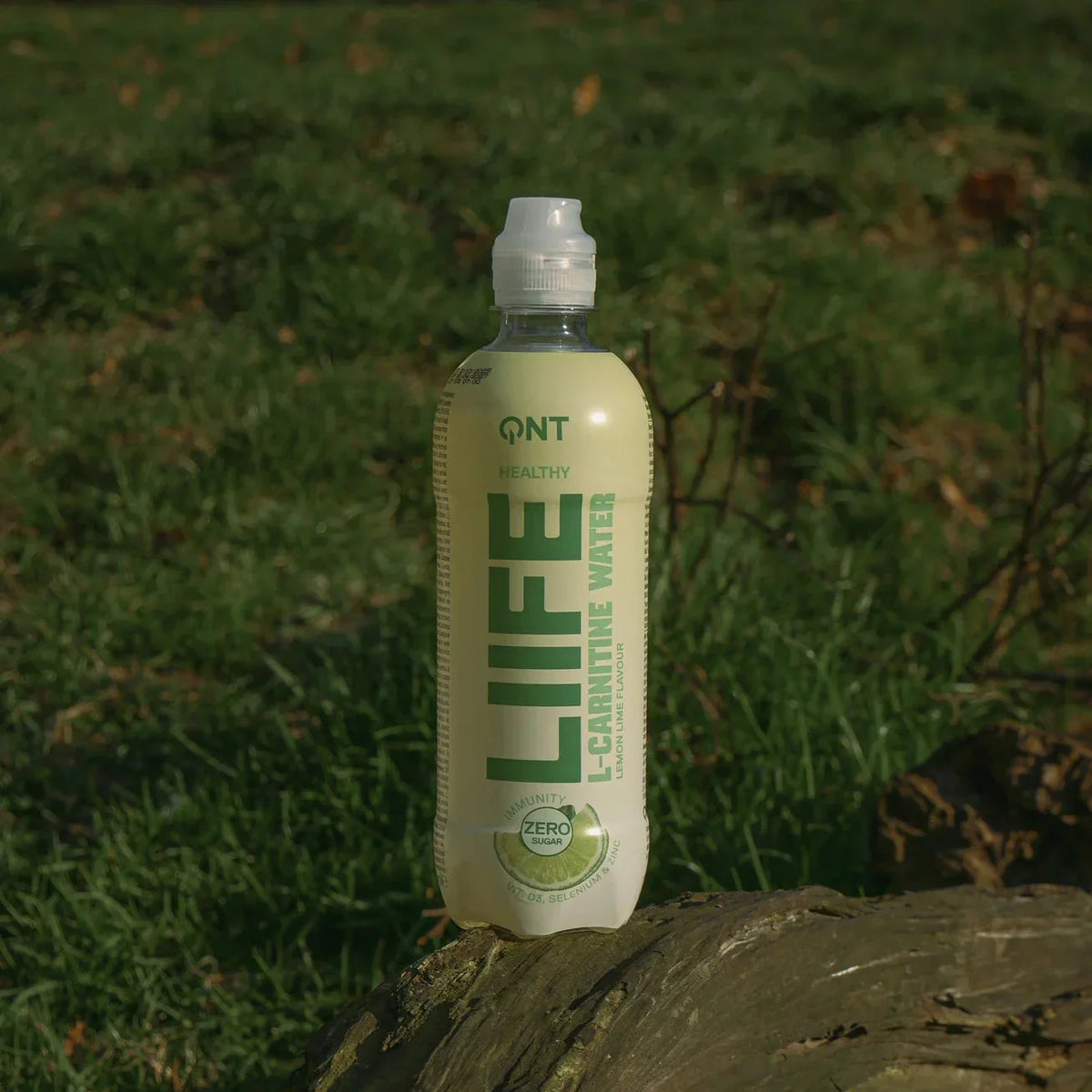
L-Carnitine: when to take it and how it turns fat into energy
Table of contents

By Marius Grek, nutrition expert at QNT Sport, which has been making food supplements since 1992.
L-Carnitine ranks among the best-selling supplements in sports nutrition, yet how it actually works remains poorly understood by most of the people taking it. A large share of users swallow their dose on an empty stomach, which happens to be the condition under which muscle absorbs the least. This article explains what the molecule does inside the cell, what the available studies show, and what can reasonably be expected from it, drawing on seven scientific publications.
⚕️ Medical disclaimer: this article is for informational purposes and does not replace professional medical advice. Medical advice is recommended before any prolonged L-Carnitine supplementation, particularly in cases of thyroid disorder, anticoagulant therapy, kidney disease, pregnancy or breastfeeding.
What is L-Carnitine?
L-Carnitine is a compound the body produces from two amino acids, lysine and methionine, and which the diet supplies mainly through red meat, dairy products and poultry. The commercial label of fat burner describes its actual function poorly, since the molecule destroys no fat and merely transports it to the place where it is broken down.
That transport concerns long-chain fatty acids, which have to move from the cell fluid into the mitochondria. The complete guide to L-Carnitine and weight loss places this function within a broader body-composition strategy.
Mitochondria, where energy is made
Every cell contains hundreds, sometimes thousands, of small structures called mitochondria. These compartments convert nutrients, fatty acids and glucose in particular, into ATP, the molecule that powers every bodily function from muscle contraction to tissue repair.
Key takeaway: mitochondria convert nutrients into ATP. Anything that improves their fuel supply influences, at least in theory, energy production.
The carnitine shuttle: how fat enters the mitochondrion
The inner mitochondrial membrane is impermeable to long-chain fatty acids, which means these fats cannot cross into the compartment where they would be burned. L-Carnitine acts as the vehicle, binding to the fatty acid on the outside, carrying it across the membrane through three transport proteins working in sequence, then releasing it once inside. The fatty acid is then broken down, and the products of that breakdown feed ATP production (Longo et al., 2016).
The delivery-truck image captures the principle well enough. Without the truck, raw materials sit outside the factory and never get processed, while the truck itself manufactures nothing.
That is also where the comparison ends, and the limit deserves stating plainly. Adding trucks increases deliveries only if trucks were the shortage in the first place, whereas muscle carnitine stores in a healthy person already sit close to their maximum. Carnitine is moreover recycled with each passage, and the rate at which fat enters depends chiefly on an internal metabolic signal rather than on how much transporter is present. Supplementation therefore does not mechanically increase fat oxidation, which explains the modest effects reported in the literature (Stephens et al., 2007).
What the studies show
Wall et al. (2011), in The Journal of Physiology, followed fourteen men over twenty-four weeks. The supplemented group received 2 g of L-Carnitine L-Tartrate with 80 g of carbohydrate twice daily, amounting to 4 g of carnitine and 160 g of carbohydrate per day. After twenty-four weeks, muscle carnitine had risen by 21 %, glycogen use at low intensity was 55 % lower than in the control group, and work output in a performance trial improved by 11 % from baseline. No significant effect appeared before that point, which sets the relevant time scale from the outset.
Fielding et al. (2018), in Nutrients, report improved recovery markers and reduced muscle damage after exercise.
Ho et al. (2010), in Metabolism, observe that L-Carnitine L-Tartrate lowers certain biochemical markers of muscle disruption following intense exercise in middle-aged adults.
Taken together, these findings describe a supplement acting on metabolic efficiency rather than on alertness. Unlike caffeine, which produces a noticeable effect within the hour, L-Carnitine provides no immediate sensation, and the documented benefits concern endurance and recovery after several weeks of consistent intake.
When to take L-Carnitine
| Goal | When | Dosage | Take With | QNT Product |
|---|---|---|---|---|
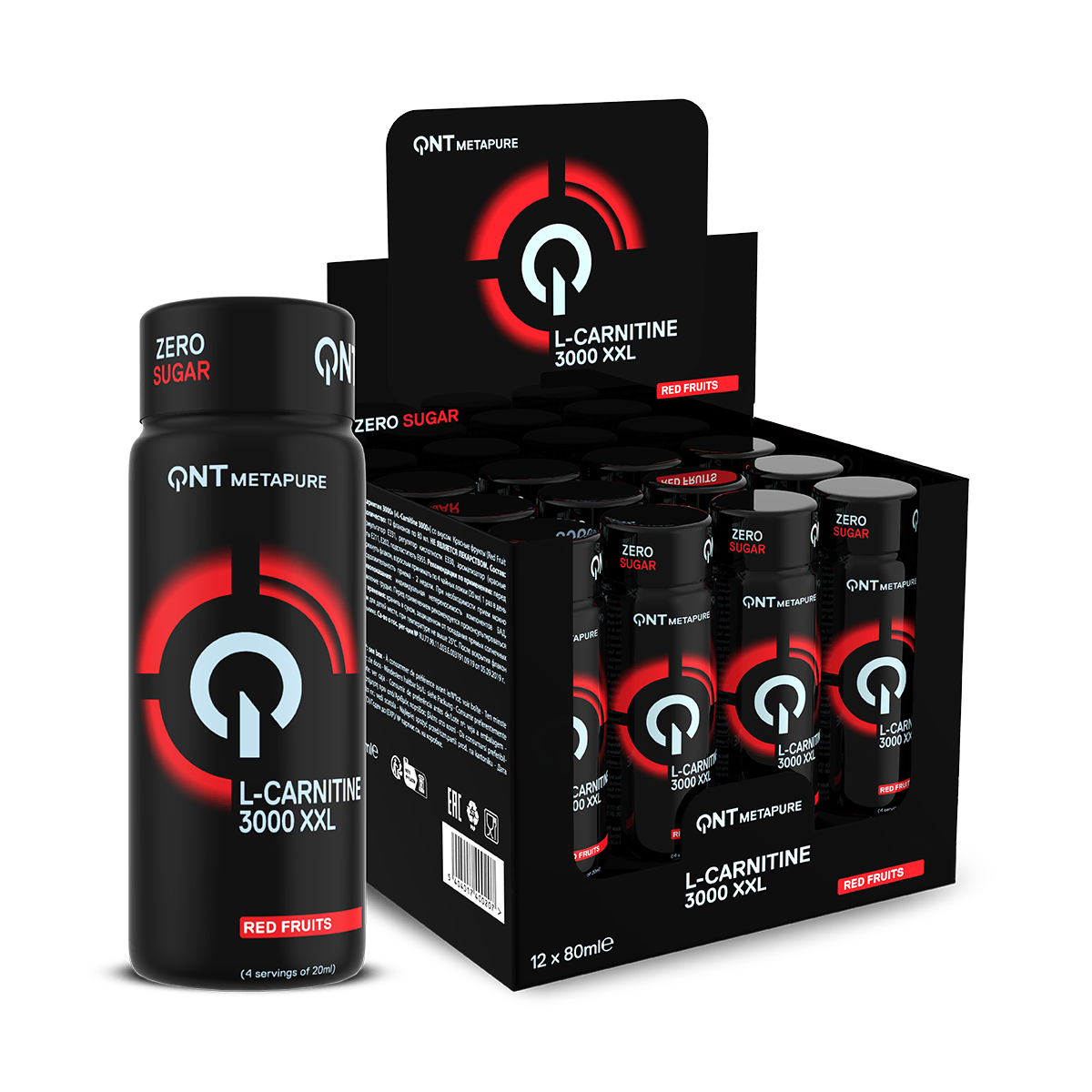
| Pre-workout | 30-60 min before | 1,000-2,000 mg | Carbs (banana, juice) | L-Carnitine 3000 shots |
| Post-workout | Within 30 min after | 1,000 mg | Carbs + protein meal | L-Carnitine 2000 |
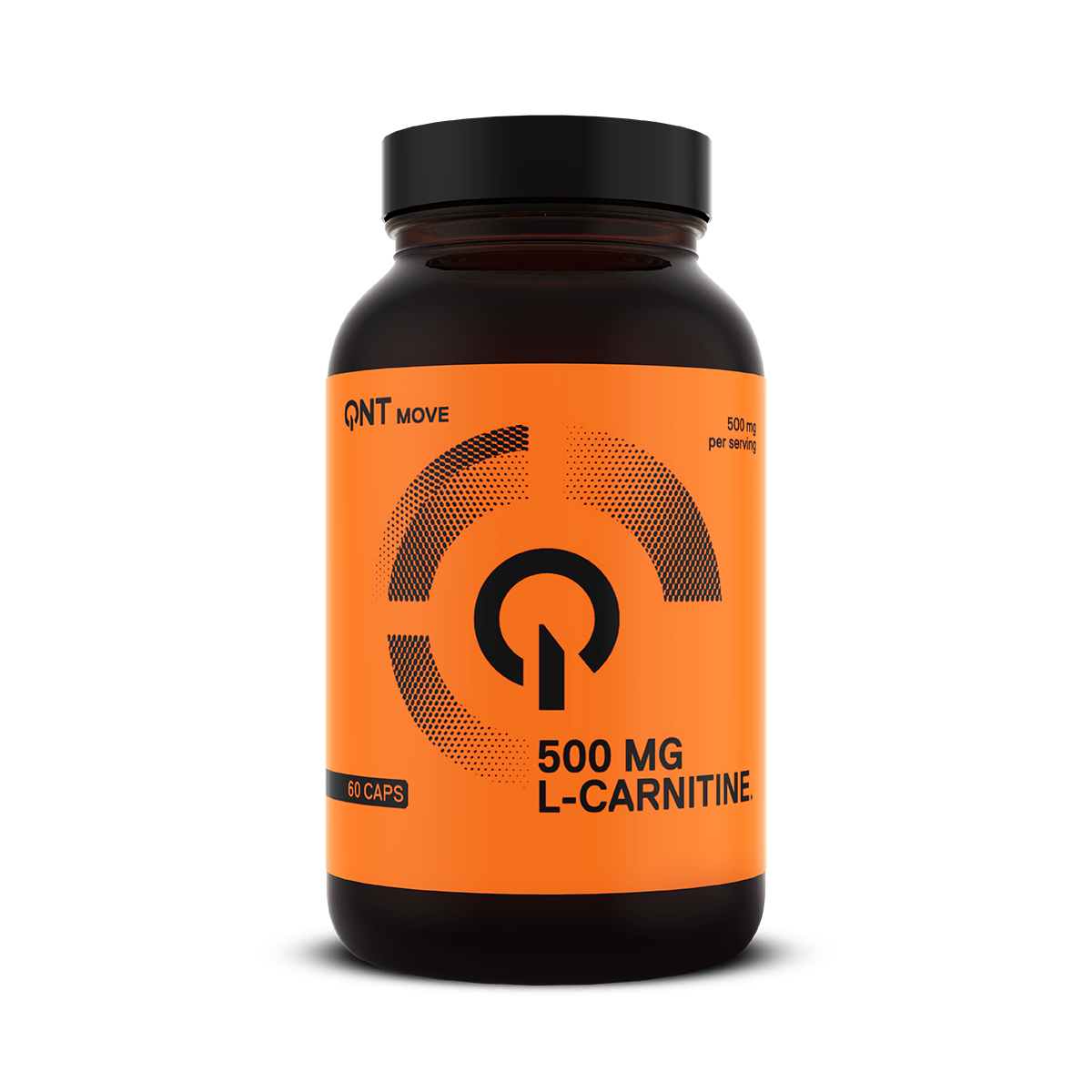
| Morning (rest days) | With breakfast | 1,000 mg | Full meal | L-Carnitine 500mg capsules |
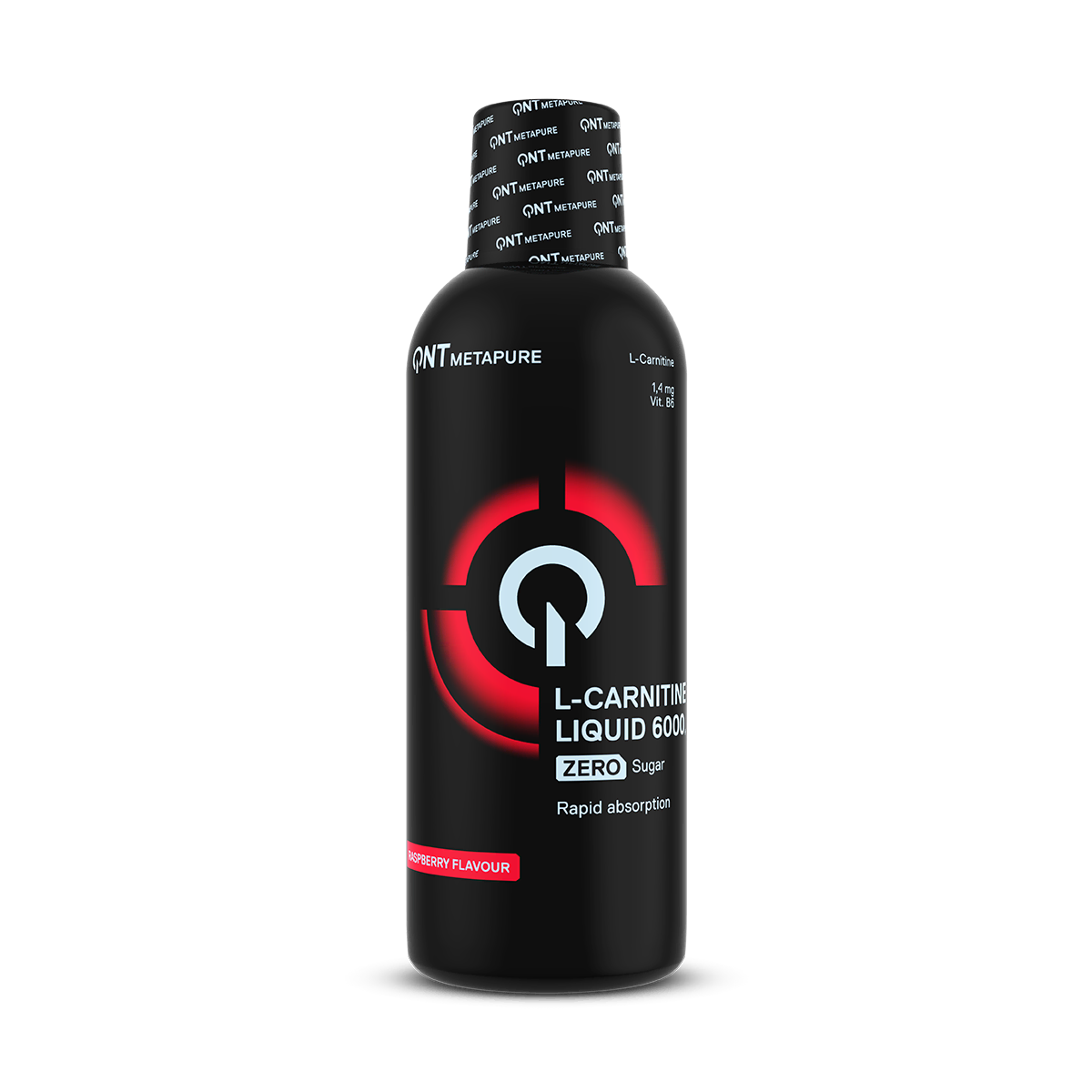
| Long endurance | 60 min before + during | 2,000-3,000 mg | Isotonic drink | L-Carnitine Liquid 6000 |
Two things make this table readable. First, every slot listed coincides with a meal containing carbohydrate, because the insulin released after eating promotes carnitine uptake into muscle (Stephens et al., 2007), whereas a fasted dose triggers no such signal. Second, peak plasma concentration occurs roughly three and a half hours after ingestion (Reuter & Evans, 2012), so none of these timings aligns a blood peak with the session itself.
The conclusion is less dramatic than the table suggests. The exact moment of intake matters little compared with consistency, since the documented effects come from muscle stores built over several weeks. The table therefore offers anchors for a daily habit rather than a window that must not be missed.
The different forms of L-Carnitine
| Form | Common use | Why | QNT Product |
|---|---|---|---|
| L-Carnitine L-Tartrate (LCLT) | Pre-workout | Form used in the recovery studies | L-Carnitine 3000 shots |
| L-Carnitine base | Daily, with meals | Versatile, well documented | L-Carnitine 2000, 500mg capsules |
| Acetyl-L-Carnitine (ALCAR) | Morning | Crosses blood-brain barrier | Not in QNT range |
| L-Carnitine Fumarate | Daily | Combined with fumarate | Not in QNT range |
The choice of form remains secondary to dose and consistency, as no direct comparison between forms has established the superiority of any one of them for performance.
Practical implications
A few directions follow from the above, to be adjusted to individual circumstances.
- Pair the dose with a carbohydrate-containing meal rather than taking it fasted. Published protocols used around 80 g of carbohydrate per intake, closer to a full meal than to a light snack.
- Consider a daily dose of 1,000 to 2,000 mg, bearing in mind that Wall and colleagues used 4,000 mg per day for twenty-four weeks.
- Allow a trial period of at least four to six weeks before judging, since nothing measurable appears over a few days.
- Expect no immediate sensation, as the absence of a felt effect signals nothing here about the absence of action.
Conclusion
L-Carnitine holds a well-identified function in fat metabolism, without producing the dramatic effects its commercial positioning sometimes implies. The available studies describe real but modest benefits, obtained after several months of daily intake alongside carbohydrate, which shifts the question from the right hour to sustained consistency.
Explore the L-Carnitine collection. QNT, a Belgian brand, has been making food supplements since 1992.
Sources
- Fielding R., Riede L., Lugo J.P., Bellamine A. (2018). l-Carnitine Supplementation in Recovery after Exercise. Nutrients, 10(3), 349. 10.3390/nu10030349
- Ho J.Y., Kraemer W.J., Volek J.S., Fragala M.S., Thomas G.A., Dunn-Lewis C., Coday M., Häkkinen K., Maresh C.M. (2010). l-Carnitine l-tartrate supplementation favorably affects biochemical markers of recovery from physical exertion in middle-aged men and women. Metabolism, 59(8), 1190-1199. 10.1016/j.metabol.2009.11.012
- Longo N., Frigeni M., Pasquali M. (2016). Carnitine transport and fatty acid oxidation. Biochimica et Biophysica Acta (BBA) – Molecular Cell Research, 1863(10), 2422-2435. 10.1016/j.bbamcr.2016.01.023
- Pooyandjoo M., Nouhi M., Shab-Bidar S., Djafarian K., Olyaeemanesh A. (2016). The effect of (L-)carnitine on weight loss in adults: a systematic review and meta-analysis of randomized controlled trials. Obesity Reviews, 17(10), 970-976. 10.1111/obr.12436
- Reuter S.E., Evans A.M. (2012). Carnitine and Acylcarnitines: Pharmacokinetic, Pharmacological and Clinical Aspects. Clinical Pharmacokinetics, 51(9), 553-572. 10.1007/BF03261931
- Stephens F.B., Constantin-Teodosiu D., Greenhaff P.L. (2007). New insights concerning the role of carnitine in the regulation of fuel metabolism in skeletal muscle. The Journal of Physiology, 581(2), 431-444. 10.1113/jphysiol.2006.125799
- Wall B.T., Stephens F.B., Constantin-Teodosiu D., Marimuthu K., Macdonald I.A., Greenhaff P.L. (2011). Chronic oral ingestion of L-carnitine and carbohydrate increases muscle carnitine content and alters muscle fuel metabolism during exercise in humans. The Journal of Physiology, 589(4), 963-973. 10.1113/jphysiol.2010.201343
Further resource: Examine.com, L-Carnitine


Frequently asked questions
Is it better to take L-Carnitine in the morning or the evening?
Can L-Carnitine be taken on an empty stomach?
How long before L-Carnitine takes effect?
Does L-Carnitine give energy the way caffeine does?
Should it be taken every day?
Can L-Carnitine and creatine be combined?
Does L-Carnitine work without exercise?
Keep reading
 Lose Weight
L-Carnitine for Weight Loss: Results After 1 Month and Dosage
Does L-Carnitine really help you lose weight? Discover what clinical studies show, the right dosage, and how to use it effectively for fat loss.

Spring Shredding Guide: How to Maximize Fat Loss for Your Best Summer Body
Winter is over. The layers are coming off. And if you're reading this, you already know the clock is ticking: summer is around the corner, and it's...
 Improve Performance
Creatine before or after workout? Optimal timing guide
When should you take creatine, before or after your workout? Science-backed timing guide with rest day protocol and absorption tips.


