




Healthy aging: 10 supplements weighed against the evidence
Table of contents

By Marius Grek, nutrition expert at QNT Sport, which has been manufacturing food supplements since 1992.
Last updated: August 25, 2026
After 40, muscle mass and strength decline gradually. Bone density follows a few years later, and collagen-rich tissues renew more slowly. This age-related process picks up speed in the fifties, when hormones shift. In women, menopause is the permanent end of periods and the drop in estrogen that comes with it. In men, andropause refers to the slow, continuous decline in testosterone. Even though they do not replace a balanced diet, supplements can fill the intakes that become hard to cover from food alone. The question is which ones actually deliver. This guide puts the ten supplements most often suggested at this age under scrutiny and sets out, for each of them, what the trials have really shown. The level of evidence varies widely from one active ingredient to the next, and one of them calls for caution at high doses.
Why aging changes your nutritional needs
The hormonal shift of the fifties
This hormonal shift does not present the same way in women and in men. In women it takes the form of a break concentrated into a few years. In men it spreads over several decades.
In women, estrogens hold back the breakdown of bone tissue. Their fall at menopause therefore releases a brake on that breakdown. The SWAN cohort followed 862 women through the transition. Its results indicate that bone loss would begin one year before the last period and slow down two years after, without stopping altogether. Over ten years, lumbar spine bone mineral density fell by 10.6%, most of that loss concentrated in those three years (Greendale et al., 2012).
In men, there is no equivalent break. Testosterone, which supports the maintenance of muscle mass, declines slowly and steadily. The Baltimore Longitudinal Study of Aging measured that decline in 890 men, year after year. It affected the free fraction of the hormone even more, that is, the share directly available to tissues (Harman et al., 2001).
Both changes are physiological, not pathological. What they do change is the conditions under which the body maintains its muscles and its bones. That is what makes protein, calcium and vitamin D intakes more decisive at this age than at thirty.
Sarcopenia, a loss of both mass and strength
Sarcopenia is the gradual, age-related loss of muscle mass and strength. It stems in part from the hormonal shift described above. From the thirties onwards, the same dose of protein triggers a weaker muscle-building response than it did at twenty, because of a phenomenon known as anabolic resistance. It therefore takes slightly more protein to send the same signal.
Recommendations are indeed revised upwards with age. The PROT-AGE expert group puts the requirement for healthy adults over 65 at 1.0 to 1.2 g of protein per kg of body weight per day, against a reference intake of 0.8 g for adults in general. It raises that to at least 1.2 g in those who take regular physical activity (Bauer et al., 2013). The expert group of the European Society for Clinical Nutrition and Metabolism (ESPEN) keeps the same range and recommends pairing it with daily physical activity (Deutz et al., 2014).
Those reference points apply to the older population in general. For the physically active adult, the International Society of Sports Nutrition (ISSN) proposes a higher intake, 1.4 to 2.0 g per kg of body weight per day (Jäger et al., 2017). It is that second range that concerns the reader who trains, and it is the one the summary table picks up.

Declining bone density
Bone is a tissue that renews itself continuously. Two processes work against each other without pause: osteolysis, which breaks down old bone, and bone formation, which builds new bone. This physiological mechanism keeps bones healthy by replacing aged tissue with new tissue. With age, and markedly after menopause, bone breaks down faster than it rebuilds. When that loss crosses a certain density threshold, it is called osteoporosis. Three levers work together against it: calcium, the vitamin D that governs its absorption, and the mechanical loading of resistance training.
Rising oxidative stress
Metabolism constantly produces unstable molecules called free radicals, normal by-products of cellular respiration. The body neutralizes them using its own antioxidant enzymes and nutrients supplied by food. That balance is physiological and even useful, since these molecules also act as signals in training adaptation. With age, production rises while the defenses lose efficiency. That imbalance is what is called oxidative stress. A steady intake of vitamin C, vitamin E and selenium helps hold that balance. High doses, by contrast, are counterproductive: they also neutralize the free radicals that act as a signal for training adaptation. In 54 young men and women followed through eleven weeks of endurance training, 1000 mg of vitamin C and 235 mg of vitamin E a day held back the adaptations measured in the muscle (Paulsen et al., 2014). The reference points given further down in this article stay well below those amounts.
Slower collagen renewal
Collagen is the structural protein of skin, tendons and cartilage. It is what lets these tissues take the forces they are put under. In tendon it resists the pull the muscle exerts with every contraction, while in skin it resists stretch and in cartilage it takes compression instead. Like bone, it renews itself continuously: fibroblasts build new fibers while the old ones are broken down. With age, production slows while breakdown continues, and the tissue becomes both less supple and slower to repair. That is why a tendon takes longer to recover from an unusual load at fifty than at twenty.
The 10 supplements under scrutiny
The ten sections below are built the same way: what the nutrient does in the body, what the trials that tested it found and in whom, then everyday reference points. Doses used in studies are flagged as such and are not recommendations. Where the evidence is weak, null or contested, the section says so rather than leaving it to the table.
1. Protein (whey and casein): the foundation against sarcopenia
Whey is rich in leucine, the amino acid that triggers muscle protein synthesis, and it is digested quickly. Casein is slower and releases its own over several hours. Two laboratory trials in young men illustrate the difference. With six subjects per group, whey stimulated muscle protein synthesis more strongly than casein or soy (Tang et al., 2009). In sixteen others, 40 g of casein before bed supported overnight recovery after an evening session (Res et al., 2012).
In healthy adults, the meta-analysis by Morton et al. pooled 49 trials and 1,863 participants. Protein supplementation appeared to increase gains in lean mass and strength, provided it accompanies resistance training. Its effect on lean mass also weakened as participant age rose (Morton et al., 2018).
Two trials speak directly to older adults. In 62 frail older people averaging 78 years, 15 g of protein twice a day across 24 weeks of training increased lean mass, which stayed flat on placebo, while strength improved in both groups (Tieland et al., 2012). The PROVIDE trial followed 380 sarcopenic older adults for 13 weeks on a supplement enriched with whey, leucine and vitamin D. Its two primary outcomes did not separate from placebo, and the benefit showed only on secondary outcomes, among them appendicular muscle mass (Bauer et al., 2015).
Everyday reference points are in the summary table, which carries the physically active adult range. What these two trials show above all is that the supplement only works alongside the sessions. In the QNT range, whey is found in Metapure Whey Isolate Zero and in Prime Whey Protein.

2. Collagen: joints, skin and tendons
Hydrolyzed collagen is broken into short fragments before absorption. Those fragments appear to stimulate the cells that build the matrix of cartilage and tendons, the very cells whose activity slows with age.
In 147 college athletes with activity-related joint pain, 97 of whom could be analysed, 10 g a day for 24 weeks reduced pain compared with placebo (Clark et al., 2008). In 53 elderly sarcopenic men averaging 72 years, 15 g a day across 12 weeks of resistance training improved body composition and strength more than training alone (Zdzieblik et al., 2015). That second trial was funded by a collagen manufacturer and one of its authors holds a patent on the substance tested, both disclosed in a 2025 correction to the paper.
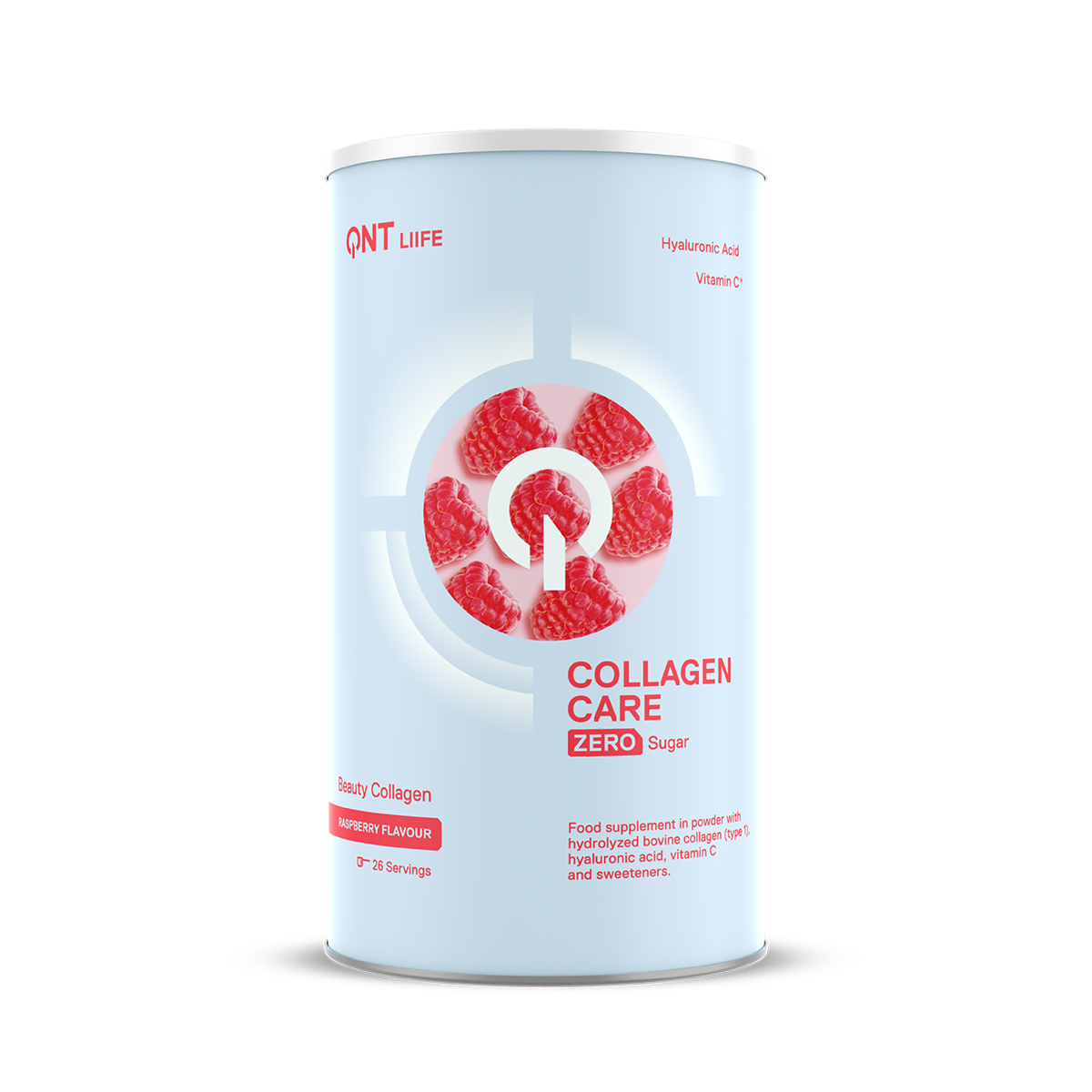
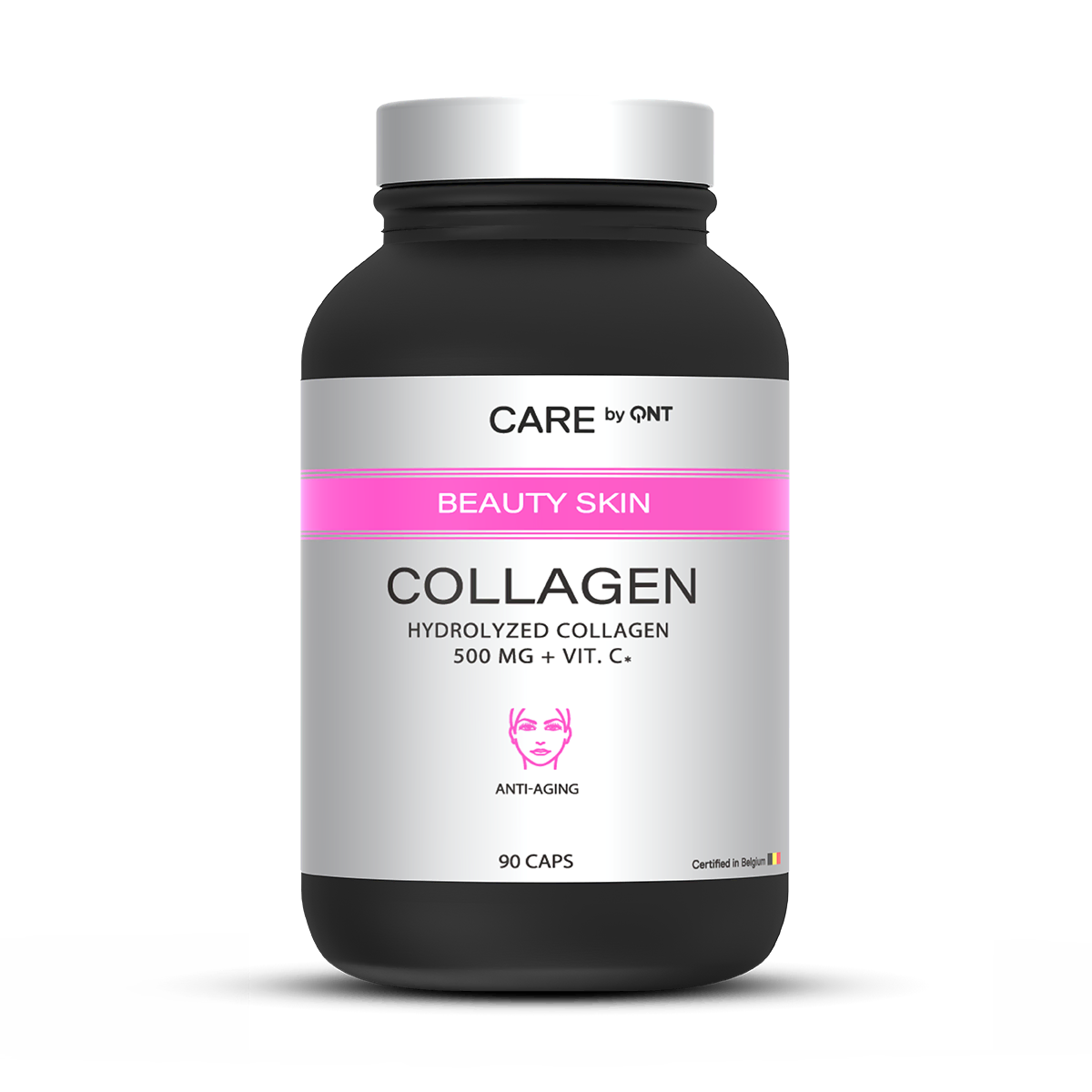
A daily 10 to 15 g, in the morning and alongside vitamin C, sits within the range of those trials. The benefit there always came on top of training, never instead of it. In the QNT range, hydrolyzed collagen is found in Collagen Care, paired with vitamin C, and in Collagen Hydrolyzed 500 mg in capsules.
3. Vitamin D: bones, muscles and immunity
Vitamin D governs how much calcium the gut absorbs, and it plays a part in muscle function. Skin makes it under sunlight, but at northern latitudes the radiation is too weak from October to April to cover requirements.
A meta-analysis of eight trials in people aged 65 and over compared doses against each other. An intake of 700 to 1,000 IU a day was associated with a 19% lower risk of falling, while lower doses did not separate from placebo (Bischoff-Ferrari et al., 2009). The VITAL trial supplies the other half of the picture. In 25,871 adults who had not been selected on vitamin D status, 2,000 IU a day over 5.3 years reduced no category of fracture (LeBoff et al., 2022). The two results converge on one point: the supplement acts where status is low, and not beyond.
The range most commonly used in adults runs from 10 to 20 µg a day, or 400 to 800 IU. Being fat-soluble, vitamin D is absorbed better during a meal containing fat. In the QNT range, vitamin D is found in Vitamin D3 3000 IU, whose capsule sits well above that daily reference and is meant for spaced use or for a documented low status.
4. Omega-3: inflammation and cognition
EPA and DHA are built into our cell membranes and shift the production of the mediators that sustain inflammation. DHA is also a major component of the membranes in the brain and the retina.
In 60 men and women aged 60 to 85, six months of fish oil supplying 1.86 g of EPA and 1.50 g of DHA a day increased thigh muscle volume by 3.6% and handgrip strength by 2.3 kg, compared with corn oil (Smith et al., 2015). On the sport side, a review of omega-3 applications in sport reports signs of better recovery from eccentric exercise. It judges the data insufficient to support a gain in muscle mass during training (Philpott et al., 2019).
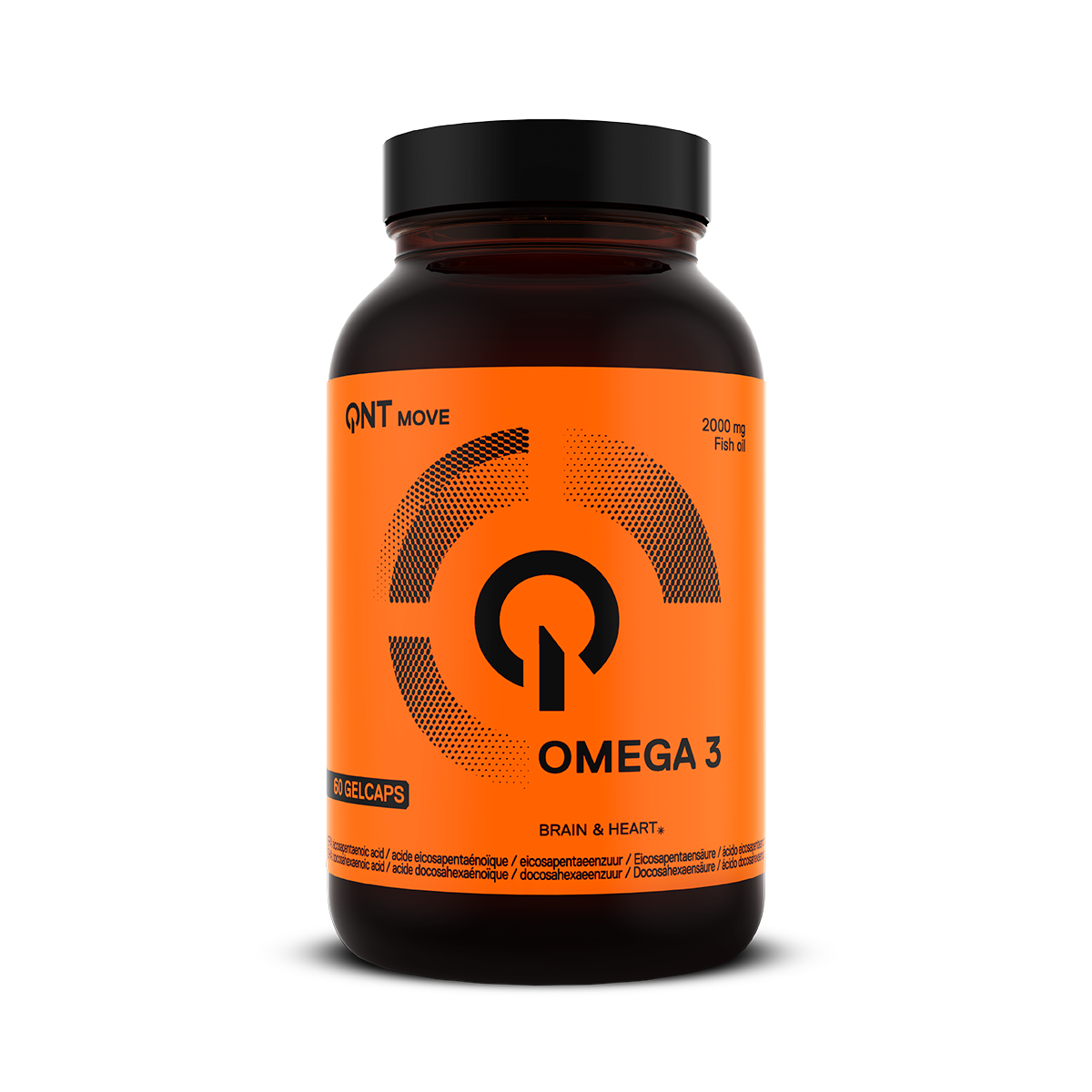
Suggested intakes sit around 1 to 2 g of EPA and DHA combined per day, during a meal. The dose in that trial is two to three times higher: it is a research protocol, not an everyday reference point. In the QNT range, EPA and DHA are found in OMEGA 3 3000 mg.
5. Magnesium: sleep, muscles and energy
Magnesium is a cofactor in a very large number of energy-producing reactions. It also takes part in letting a muscle relax after it contracts, and it dampens how readily a neuron fires.
A small trial compared 500 mg a day of magnesium oxide with placebo in 46 older people with insomnia, over eight weeks. The insomnia score, sleep efficiency and time to fall asleep all improved. Total sleep time did not separate from placebo (Abbasi et al., 2012). The sample is small and the result needs confirmation.
For everyday use, 300 to 400 mg a day of a well-tolerated form such as bisglycinate, taken in the evening, is enough. The 500 mg in that trial belongs to its protocol and is not a recommendation. In the QNT range, magnesium is found in Magnesium Sport, in a ready-to-drink format, and in Calcium-Magnesium-Zinc.
6. CoQ10: cellular energy
Coenzyme Q10 carries electrons along the chain that produces the cell’s energy, and it protects membranes from oxidation along the way. The body makes its own, and that production declines with age.
An analysis of human tissue sampled from one day old to 81 years puts the peak around age twenty in most organs, followed by a steady decline (Kalén et al., 1989). That finding is what underpins the idea of topping the level back up. Supplementation trials in healthy older adults remain few, however, and none currently supports claiming an effect on muscle function or performance.
Suggested intakes run from 100 to 200 mg a day, during a meal containing fat. Ubiquinol is the better absorbed form.
7. Antioxidants (vitamins C and E, selenium)
Vitamin C and vitamin E complement each other: the first works in the watery compartments of the cell, the second within membranes. Selenium is built into the body’s own antioxidant enzymes.
This is the one group on the list where the supplement can do worse than nothing. A Cochrane review of 78 trials and 296,707 participants finds no benefit on mortality. Across the 56 best-conducted trials it records an increase, driven by beta-carotene and by vitamin E (Bjelakovic et al., 2012). The trial by Paulsen et al. cited earlier points the same way for muscle, since high doses there blunted training adaptations.
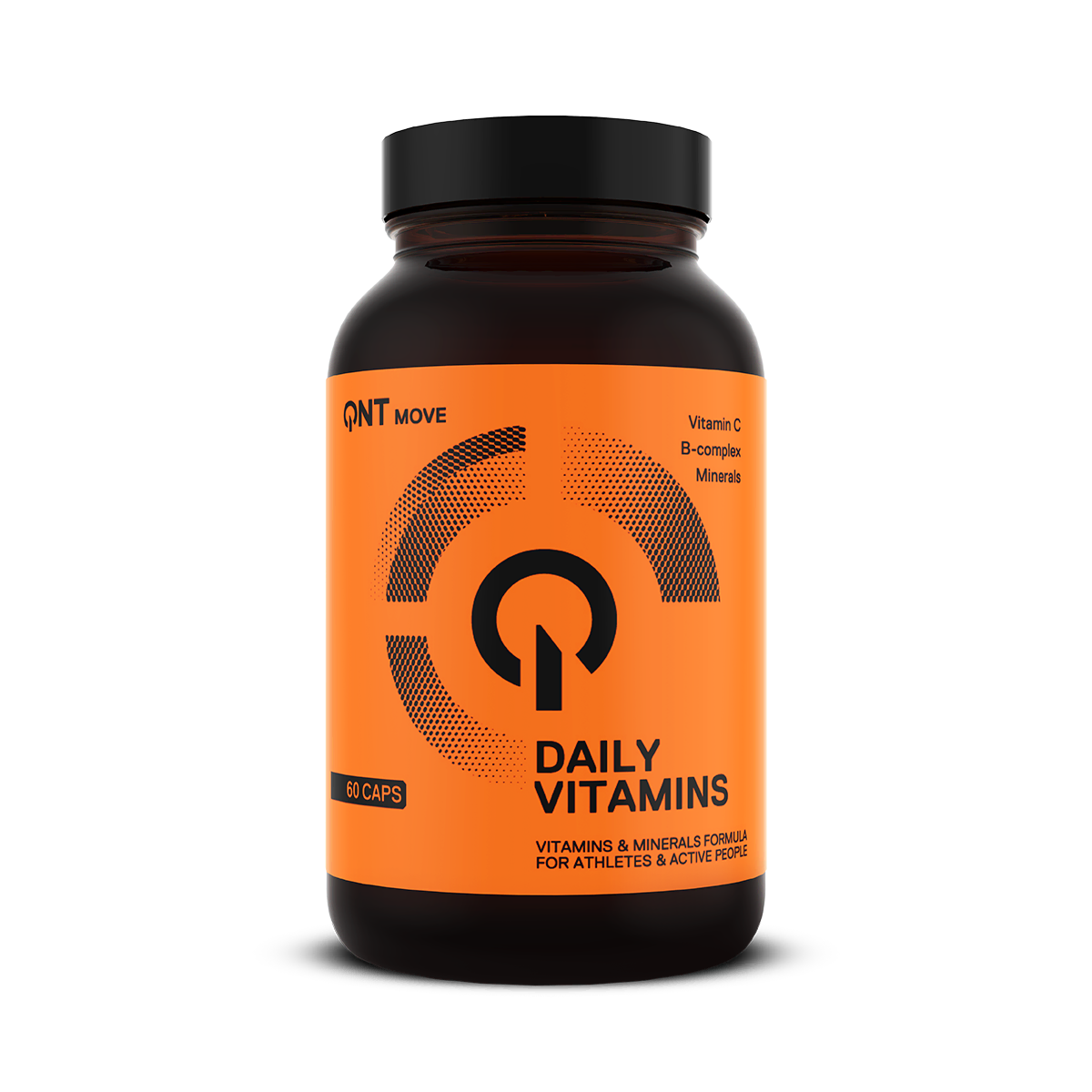
The usual reference points are 200 to 500 mg a day for vitamin C, 15 mg for vitamin E and 55 to 70 µg for selenium. Selenium has a narrow margin between a useful intake and an excessive one, which is reason enough not to stack sources. In the QNT range, vitamin C, vitamin E and selenium are combined in Daily Vitamins.
8. Calcium: the raw material of bone
Calcium is the raw material of bone, but without vitamin D the gut holds on to only a small fraction of what the diet supplies, on the order of 10 to 15%. That is why the two are taken together.
The clearest trial covered 3,270 women averaging 84 years, living in care homes. Over 18 months, 1.2 g of calcium and 800 IU of vitamin D3 a day cut hip fractures by 43% and all non-vertebral fractures by 32%, against a double placebo (Chapuy et al., 1992). That population was elderly, little exposed to sunlight and poorly supplied with vitamin D. The result does not transfer as is to a healthy fifty-year-old.
A 500 to 600 mg daily supplement tops up dietary intake rather than replacing it. It is better split into two doses, since absorption plateaus beyond 500 mg at once. In the QNT range, calcium is found in Calcium-Magnesium-Zinc.
9. B vitamins (B6, B9, B12)
B12 is the one that becomes a problem with age. Releasing it from food depends on stomach acidity and on a protein secreted by the stomach lining, both of which decline over the years. A decent dietary intake therefore no longer guarantees a decent status.
A clinical review devoted to this population puts the deficiency above 20% in older people. It attributes more than 60% of cases to that difficulty in extracting B12 from food rather than to an inadequate intake (Andrès et al., 2004). The most widespread expectation, on the other hand, is not confirmed. A meta-analysis of 11 trials and 22,000 participants shows that B vitamins do lower homocysteine, with no measurable effect on cognitive decline (Clarke et al., 2014).
Daily reference points are 1.5 to 2 mg for B6 and 400 µg for B9. For B12, the 10 to 50 µg range is deliberately wide, since only a small share of the dose is absorbed. In the QNT range, vitamins B6, B9 and B12 are found in Daily Vitamins.
10. Zinc: immunity and wound healing
Zinc takes part in cell renewal and in the immune response, which is what explains its role in wound healing. It uses the same intestinal transporters as iron and calcium, so those two compete with it.
In 50 people aged 55 to 87 followed for twelve months, 45 mg of elemental zinc a day reduced the number of infections and oxidative stress markers compared with placebo (Prasad et al., 2007). The sample is small and the dose high: it exceeds the European upper safe level, set at 25 mg a day from all sources combined.
An intake of 10 to 15 mg a day is enough, in a well-tolerated form such as bisglycinate. Zinc is better taken a few hours apart from a calcium or iron supplement. In the QNT range, zinc is found in Zinc and in Calcium-Magnesium-Zinc.
Summary table
| Supplement | Level of evidence | Dosage | When to take it | Form |
|---|---|---|---|---|
| Protein | Solid in adults, smaller effect with age | 1.4-2.0 g/kg body weight/day (active adult) | After training + meals | Isolate/concentrate |
| Collagen | Moderate, two small trials, one with a conflict of interest | 10-15 g | Morning + vit. C | Hydrolyzed |
| Vitamin D | Conditional, benefit where status is low | 10-20 µg | Meal containing fat | D3 |
| Omega-3 | Preliminary, one muscle trial in 60 people | 1-2 g EPA+DHA | Meal | Fish oil |
| Magnesium | Weak, a single trial in 46 people | 300-400 mg | Evening | Bisglycinate |
| CoQ10 | Not established in healthy older adults | 100-200 mg | Meal containing fat | Ubiquinol |
| Antioxidants | Unfavourable at high doses | Vit. C 200-500 mg / vit. E 15 mg / selenium 55-70 µg | Morning, with a meal | Ascorbic acid, tocopherols |
| Calcium | Solid in institutionalised older people | 500-600 mg | 2x/day | Citrate |
| B vitamins | Mixed, frequent deficiency but nothing on cognitive decline | B6: 1.5 mg / B9: 400 µg / B12: 10-50 µg | Morning | B complex |
| Zinc | Weak, one trial in 50 people at a high dose | 10-15 mg | Away from calcium | Bisglycinate |
Read this table first through its "level of evidence" column, which says what the trials actually showed. It is not the same from one row to the next, and the doses that follow describe common use rather than proven effect. The "when to take it" column is then a matter of absorption and not of convenience. Fat-soluble nutrients need a meal containing fat to cross the intestinal barrier, while minerals sharing the same transporters are better spaced apart. The "form" column follows the same logic and flags, wherever it changes something, the best absorbed or best tolerated version of the nutrient.
5 common mistakes
- Taking calcium without vitamin D. Most of the intake is then wasted, for the reason set out above.
- Assuming protein needs drop with age. They rise, precisely because muscle responds less well.
- Swallowing everything at the same moment. Some minerals get in each other’s way, and a few hours apart settles it.
- Pushing antioxidant doses up. Past the reference points the benefit does not follow, and the safety margin narrows.
- Expecting from a supplement what only training and diet deliver. Almost every favorable trial was run in people who were training alongside.
QNT products for healthy aging
- Muscle: Metapure Whey Isolate Zero and Prime Whey Protein
- Joints: Collagen
- Vitamins: Vitamins & minerals
- Recovery: Amino acids
Sources
- Greendale et al. (2012). Bone mineral density loss around the final menstrual period, multiethnic SWAN cohort. Journal of Bone and Mineral Research. DOI
- Harman et al. (2001). Decline in total and free testosterone with age, longitudinal follow-up of healthy men. The Journal of Clinical Endocrinology and Metabolism. DOI
- Bauer et al. (2013). Recommended protein intake in older people, PROT-AGE expert group position. Journal of the American Medical Directors Association. DOI
- Deutz et al. (2014). Protein and exercise for muscle function with aging, ESPEN expert group recommendations. Clinical Nutrition. DOI
- Jäger et al. (2017). International Society of Sports Nutrition position stand on protein and exercise. Journal of the International Society of Sports Nutrition. DOI
- Paulsen et al. (2014). High-dose vitamin C and E and adaptation to endurance training, double-blind randomised trial. The Journal of Physiology. DOI
- Tang et al. (2009). Whey hydrolysate, casein or soy protein isolate, effects on muscle protein synthesis. Journal of Applied Physiology. DOI
- Res et al. (2012). Protein intake before sleep and overnight recovery after exercise. Medicine and Science in Sports and Exercise. DOI
- Morton et al. (2018). Protein supplementation, muscle mass and strength, meta-analysis of 49 randomised trials. British Journal of Sports Medicine. DOI
- Tieland et al. (2012). Protein supplementation during resistance training in frail older people, randomised placebo-controlled trial. Journal of the American Medical Directors Association. DOI
- Bauer et al. (2015). Vitamin D and leucine-enriched whey in 380 sarcopenic older adults, PROVIDE trial. Journal of the American Medical Directors Association. DOI
- Clark et al. (2008). Hydrolysed collagen over 24 weeks in 147 athletes without established osteoarthritis. Current Medical Research and Opinion. DOI
- Zdzieblik et al. (2015). Collagen peptides combined with resistance training in elderly sarcopenic men, randomised trial. British Journal of Nutrition. DOI
- Corrigendum (2025) to Zdzieblik et al. 2015, declaring funding by a collagen manufacturer and a patent held by one of the authors. British Journal of Nutrition. DOI
- Bischoff-Ferrari et al. (2009). Vitamin D and fall prevention, meta-analysis of randomised trials. BMJ. DOI
- LeBoff et al. (2022). Vitamin D and incident fractures in 25,871 adults, VITAL trial. New England Journal of Medicine. DOI
- Smith et al. (2015). Fish oil omega-3, muscle mass and function in healthy older adults. The American Journal of Clinical Nutrition. DOI
- Philpott et al. (2019). Omega-3 and sport performance, review of applications. Research in Sports Medicine. DOI
- Abbasi et al. (2012). Magnesium and primary insomnia in 46 older people, randomised placebo-controlled trial. Journal of Research in Medical Sciences. PubMed
- Kalén et al. (1989). Age-related changes in tissue lipid composition, including coenzyme Q10 content. Lipids. DOI
- Bjelakovic et al. (2012). Antioxidant supplements and mortality, Cochrane systematic review. Cochrane Database of Systematic Reviews. DOI
- Chapuy et al. (1992). Vitamin D3 and calcium against hip fracture in 3,270 elderly women. New England Journal of Medicine. DOI
- Andrès et al. (2004). Vitamin B12 deficiency in elderly patients, review. Canadian Medical Association Journal. DOI
- Clarke et al. (2014). Homocysteine lowering with B vitamins and cognitive aging, meta-analysis of 11 trials and 22,000 participants. The American Journal of Clinical Nutrition. DOI
- Prasad et al. (2007). Zinc and incidence of infections in older people, randomised trial. The American Journal of Clinical Nutrition. DOI

Frequently asked questions
Where do you start if you don’t want to take everything?
Does collagen really help?
Which protein is best after 40?
Should doses go up as you age?
Does CoQ10 slow down aging?
How do you prevent sarcopenia?
Keep reading
 Gain Muscle
How to Choose Protein Powder: The Ultimate 2026 Guide
Whey, isolate, casein or vegan? Learn how to choose protein powder for your goal, with a comparison table, the amino acid profile that actually mat...
 Well-Being
Osteoarthritis supplements: what the science really shows
Osteoarthritis supplements are far from equal: collagen and curcumin ease pain in the short term, while glucosamine falls short. Doses and evidence...
 Dietary Supplements
Marine collagen benefits: skin, joints and sport guide 2026
What are the real benefits of marine collagen? Science-backed guide covering skin, joints, and athletic recovery. Dosage, timeline & expert tip...


