





Table of contents

By Marius Grek, nutrition expert at QNT Sport, which has been manufacturing food supplements since 1992.
Introduction
The creatine found in the body comes partly from its own synthesis and partly from diet, whereas the creatine in food supplements is produced by chemical synthesis. These origins rely on different mechanisms and supply very different amounts.
This guide looks at each in turn, starting with the metabolic pathway that produces creatine in the body every day and moving on to what meat and fish actually provide. It then describes the chemical process behind the powder, along with the specifications that govern it in Europe. Questions of dose, timing and side effects are covered in our dedicated guides instead, which are linked at the end of the article.
Creatine comes from three places
Before going into detail, here is the short answer in three points.
- Endogenous synthesis: the kidneys, pancreas and liver produce creatine from arginine, glycine and methionine (Wyss & Kaddurah-Daouk, 2000).
- Diet: dietary creatine comes from animal products, mainly meat and fish (Brosnan et al., 2011).
- Supplementation: the creatine monohydrate sold as a food supplement is obtained by chemical synthesis, the industrial process described in patents reacting a sarcosine salt with cyanamide (Weiss & Krommer, 1998).
Daily requirements range from 1 to 3 g depending on muscle mass, because 1 to 2 percent of muscle creatine breaks down into creatinine each day and is excreted in the urine (Kreider et al., 2017). In an omnivore, diet covers about half of this turnover and endogenous synthesis covers the rest (Brosnan et al., 2011). In a vegetarian, virtually all of this turnover has to be met by endogenous synthesis (Brosnan et al., 2011).
How the body makes creatine
Synthesis takes place in two steps, in two different organs, and it weighs heavily on amino acid metabolism. According to the estimates of Brosnan et al. (2011), it would account for around 40 percent of the labile methyl groups supplied by S-adenosylmethionine, as well as 20 to 30 percent of the amidino groups of arginine.
Step 1: forming guanidinoacetate
The first step takes place mainly in the kidneys and, to a lesser extent, in the pancreas. There, an enzyme called AGAT transfers part of the arginine molecule onto glycine, which produces guanidinoacetate. This step is considered the one that limits the pace of the whole pathway (Wyss & Kaddurah-Daouk, 2000). In rats, a creatine-enriched diet sharply reduces renal AGAT activity as well as plasma guanidinoacetate, which points to this enzyme as a major regulation point of synthesis in that species (da Silva et al., 2009).
Step 2: methylation into creatine
Guanidinoacetate then travels to the liver through the bloodstream. A second enzyme, GAMT, adds a methyl group supplied by S-adenosylmethionine, which is itself derived from dietary methionine. The product of this reaction is creatine, which returns to the blood and travels to the tissues that take it up (Wyss & Kaddurah-Daouk, 2000).
Where is creatine stored?
About 95 percent of the body's creatine is found in skeletal muscle, with the rest present in small amounts, notably in the brain and the testes (Kreider et al., 2017). In muscle it exists in two forms, free creatine and phosphocreatine, the latter accounting for about two thirds of the total.
This store has an upper limit, since average muscle content is close to 120 mmol per kilo of dry muscle whereas the upper storage limit appears to be around 160 mmol per kilo in most individuals (Kreider et al., 2017).
Why a typical diet does not saturate the stores
Between these two levels there is a margin, because with a diet providing 1 to 2 g of creatine per day, muscle stores would be about 60 to 80 percent saturated (Kreider et al., 2017). Supplementation increases muscle creatine and phosphocreatine by 20 to 40 percent according to the same position stand. Since muscle has a finite storage capacity, this increase levels off once stores are saturated (Persky et al., 2003). The size of the response also varies between individuals, and vegetarians, whose starting stores are lower, may see larger gains (Kreider et al., 2017).
Supplying creatine from outside also changes internal production. In a double-blind randomised trial conducted in Bangladesh, 3 g of creatine per day for twelve weeks lowered plasma guanidinoacetate by 10.6 percent from baseline, whereas it rose slightly on placebo, which the authors interpret as a reduction in endogenous synthesis (Peters et al., 2015). The ISSN position stand states that muscle stores generally return to baseline four to six weeks after stopping, and that no evidence suggests they fall below it, which argues against lasting suppression of synthesis (Kreider et al., 2017).
Creatine in food
Creatine is concentrated in animal muscle tissue, where it serves as an immediately available energy reserve. Dietary creatine therefore comes from animal products, mainly meat, whether red or white, and fish (Brosnan et al., 2011).
Table: creatine content of raw foods
| Raw food | Measured content | Equivalent per kilo | Per 200 g serving | Source |
|---|---|---|---|---|
| Beef | ≈ 30 mmol/kg | ≈ 3.9 g/kg | ≈ 0.8 g | Harris et al., 1997 |
| Chicken | ≈ 30 mmol/kg | ≈ 3.9 g/kg | ≈ 0.8 g | Harris et al., 1997 |
| Rabbit | ≈ 30 mmol/kg | ≈ 3.9 g/kg | ≈ 0.8 g | Harris et al., 1997 |
| Salmon, value given jointly with beef | 1 to 2 g per pound (454 g) | 2.2 to 4.4 g/kg | 0.4 to 0.9 g | Kreider et al., 2017 |
| Beef heart | 22.5 mmol/kg | ≈ 2.9 g/kg | ≈ 0.6 g | Harris et al., 1997 |
| Beef liver | 2.3 mmol/kg | ≈ 0.3 g/kg | ≈ 0.06 g | Harris et al., 1997 |
Reading the table relies on two conventions, since contents refer to raw flesh and values expressed in millimoles have been converted to grams using the molar mass of creatine, 131 g/mol. The two sources do not agree exactly on beef, which is to be expected because content varies with the cut, the animal and the assay method. It follows that a usual serving provides less than one gram of creatine, far from the 3 g per day associated with the health claim authorised in the European Union.
Liver deserves a separate remark, since its content is more than ten times lower than that of muscle even though it hosts the second step of synthesis.
What cooking changes
Creatine converts spontaneously, without any enzyme, into creatinine, which no longer has an energy role. In solution, this reaction is favoured by high temperature and an acidic environment (Wyss & Kaddurah-Daouk, 2000). Harris et al. (1997) measured several raw and boiled meats, and observed conversion to creatinine of varying extent in processed products, namely canned dog food, dried meat samples and dehydrated meat meal.
These data indicate that heat and processing can lower the creatine content of a food, without allowing the loss to be quantified for a given cooking method. The figure of 30 to 50 percent losses that circulates therefore calls for caution, since we have not been able to trace it to a specific published measurement, and the principle is worth keeping rather than the percentage.
Why vegans and vegetarians have less muscle creatine
Vegetarians have, on average, lower muscle stores than omnivores. Burke et al. (2003) measured total muscle creatine by biopsy in 18 vegetarians and 24 non-vegetarians aged 19 to 55, and found 117 mmol per kilo of dry muscle in the former against 130 in the latter, a difference of about 10 percent. The ISSN position stand places vegetarians between 90 and 110 mmol per kilo, against an overall average of about 120 (Kreider et al., 2017).
These comparisons between populations are not enough, on their own, to attribute the gap to diet. A randomised trial does, however, point in that direction. Blancquaert et al. (2018) assigned 40 omnivorous women to three groups, two of which switched to a vegetarian diet for six months. In the vegetarian group on placebo (15 women), total muscle creatine had decreased after three months. In the women who received 1 g of creatine per day, combined with beta-alanine, the decline in the body's creatine pool was attenuated according to the authors.
The order of magnitude is worth stating, because the figure of 20 to 30 percent comes up often on this subject. Reported gaps range from about 10 percent in Burke's study to nearly 25 percent when the lower bound of the ISSN range is compared with the overall average, so that figure corresponds to the top of the range rather than a typical value.
How creatine monohydrate powder is made
The creatine monohydrate in food supplements is produced by chemical synthesis, using industrial processes described in patents (Weiss & Krommer, 1998). This route makes it possible to control purity and obtain consistent content from one batch to the next, with no raw material of animal origin in the described process.
The process: sarcosine and cyanamide
The reference route is an old one. Strecker described the synthesis of guanidinoacetic acid from glycine and cyanamide as early as 1861, then obtained creatine in 1868 by reacting sarcosine with cyanamide in aqueous solution. The same principle is found in the industrial processes described in patents, including that of Weiss and Krommer (1998), which reacts cyanamide with sodium or potassium sarcosinate. The reaction takes place in water or in a mixture of water and an organic solvent, at a temperature between 20 and 150 °C, after which the creatine crystallises and is isolated.
The chosen process affects final quality, since a later patent from the same industrial group presents a variant intended in particular to avoid the formation of dihydrotriazine, an impurity associated with earlier processes (Thalhammer & Gastner, 2013). This is what justifies numerical specifications for impurities.
The specifications examined by EFSA
In 2004, the EFSA scientific panel on food additives and materials in contact with food examined creatine monohydrate intended for foods for particular nutritional uses. Its opinion concerns a creatine meeting three impurity limits and concludes that an intake of 3 g per day is unlikely to raise safety concerns in adults, within the conditions of use examined (EFSA, 2004).
| Impurity | Limit |
|---|---|
| Creatinine | ≤ 100 mg/kg |
| Dicyandiamide (DCD) | ≤ 50 mg/kg |
| Dihydro-1,3,5-triazine (DHT) | Not detectable, with a detection limit of 4.5 mg/kg |
These three substances are by-products of the reaction or of creatine breakdown, not additives put into the product. What sets these rows apart is mainly their nature, since the first two tolerate a measurable trace whereas the third requires non-detection, which makes it the strictest of the three limits.
Specifications claimed by manufacturers
Some producers publish tighter specifications and use them as a selling point. Creapure, produced by AlzChem in Trostberg, Bavaria, is one example. Its manufacturer states a purity of at least 99.95 percent, dihydrotriazine limited to 3 mg/kg and analytical testing of every batch before shipment. These values come from the producer's documentation and have not, to our knowledge, been the subject of a published independent assessment, as with other branded grades.
QNT products
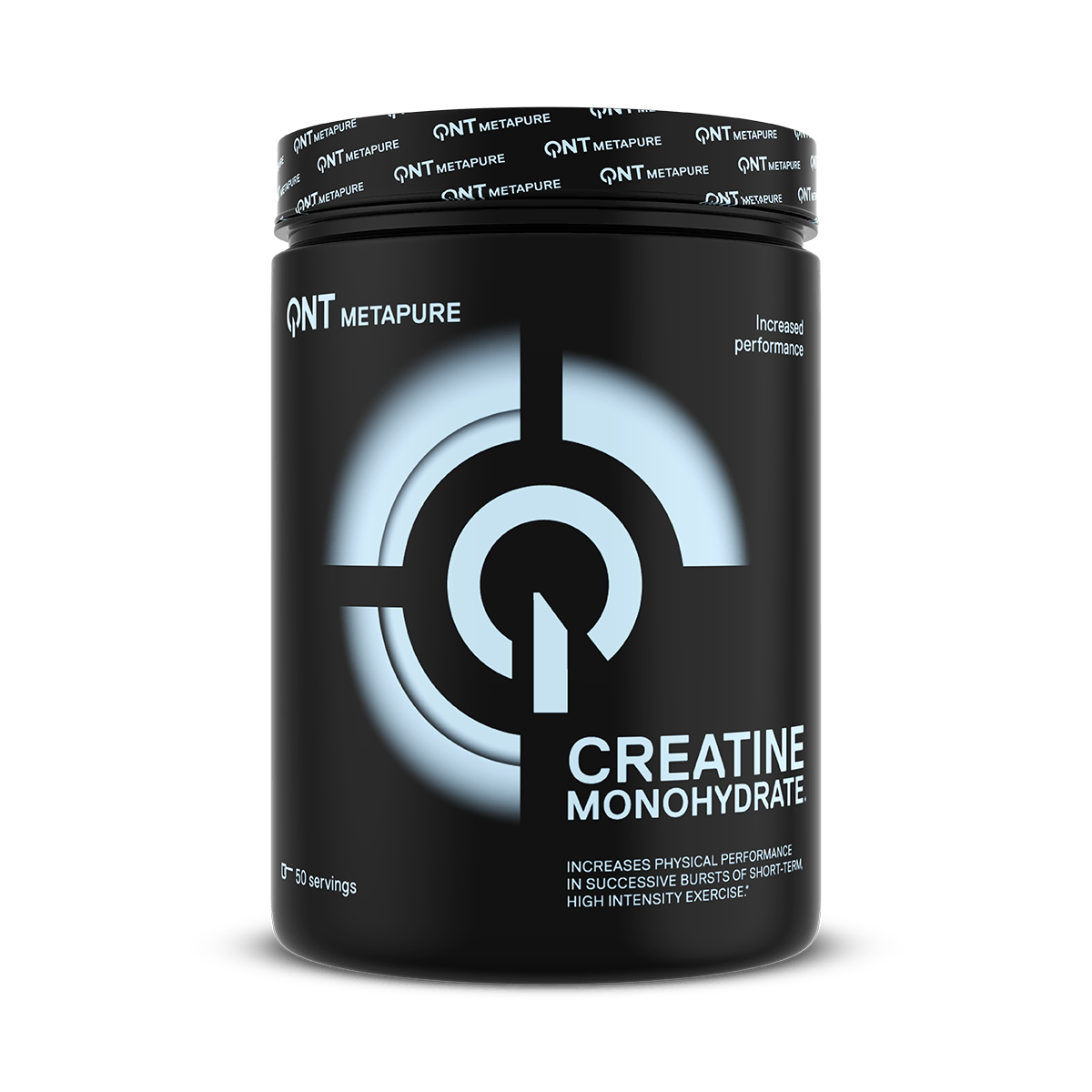
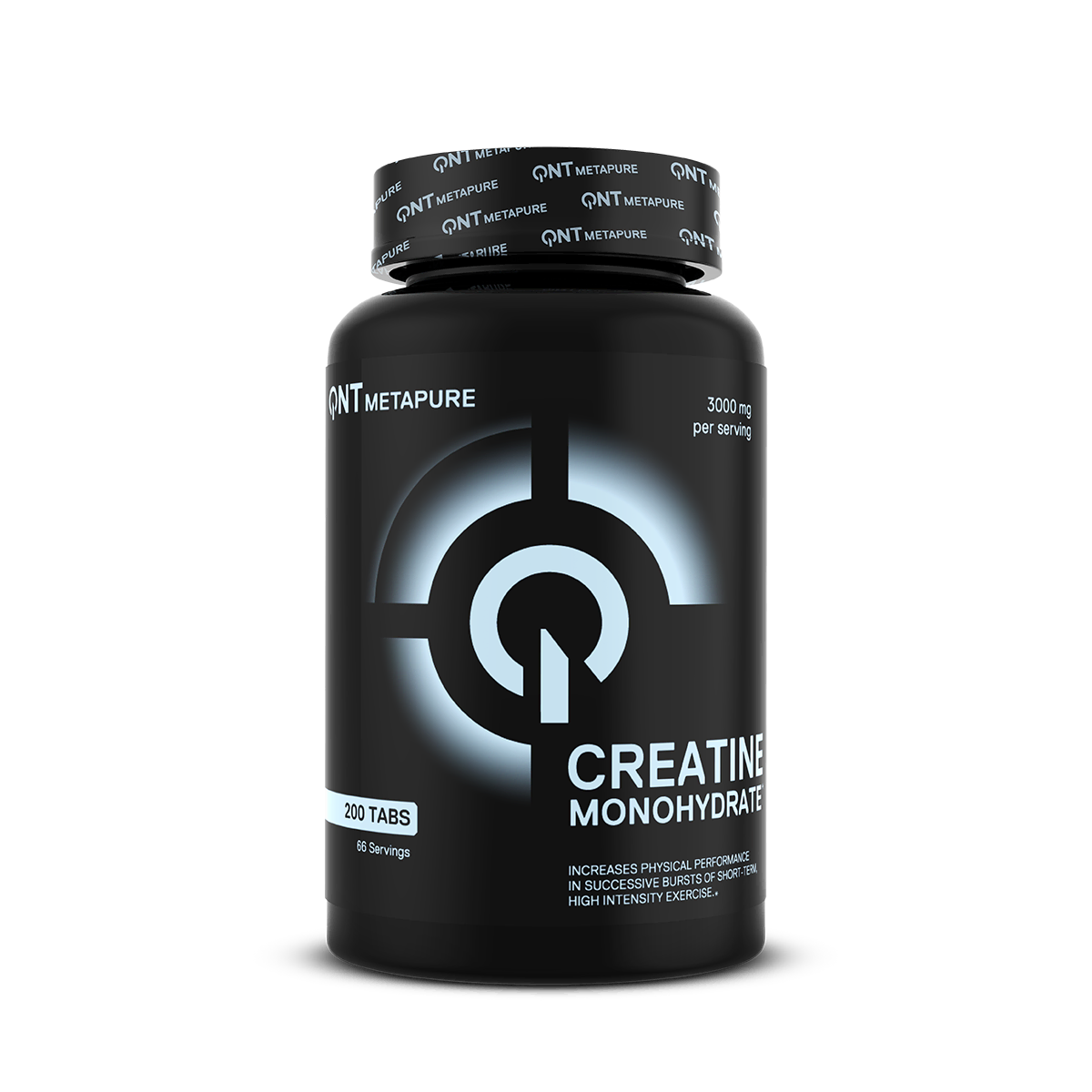
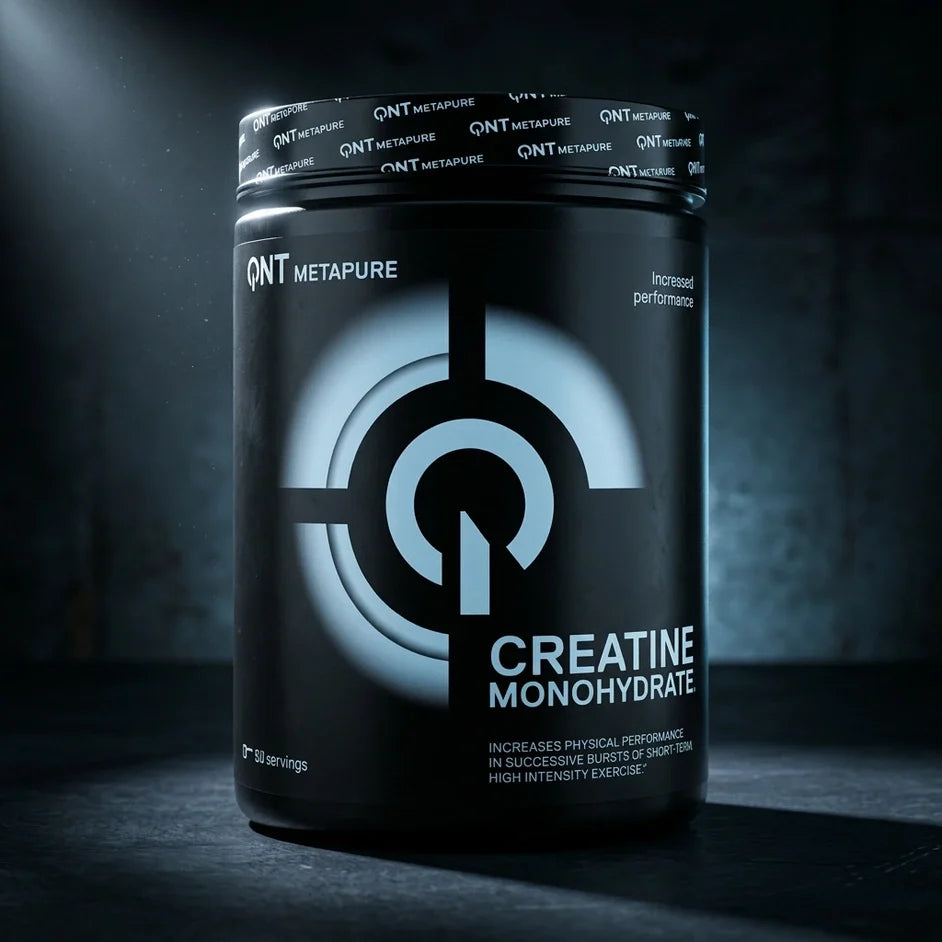
At QNT, Pure Creatine Monohydrate powder has creatine monohydrate as its only ingredient, with no flavouring, sweetener or bulking agent. Its label links the beneficial effect to an intake of 3 g per day. The Creatine Monohydrate 3000 mg tablets provide 3 g of creatine monohydrate in three tablets, with the bulking and coating agents that the tablet form requires.
The vegan or vegetarian athlete
In a vegan, dietary creatine intake is virtually nil and turnover relies on endogenous synthesis. Muscle stores are lower on average, as shown by the cross-sectional comparison of Burke et al. (2003) and later by the intervention trial of Blancquaert et al. (2018).
The effects of supplementation in this population are better documented than its relative advantage. The systematic review by Kaviani et al. (2020), which brings together nine studies in vegetarians, finds increases in muscle, plasma and red blood cell creatine, along with gains in lean mass and strength. On the question of whether performance improves more than in omnivores, however, its authors conclude that the studies are mixed, and they rate the risk of bias of the included trials as moderate to high.
The trial by Burke et al. (2003) remains the most favourable to an advantage for vegetarians, with greater gains in muscle creatine, lean mass and total work in supplemented vegetarians. Its authors see this as a sign that lower starting stores favour a stronger response, which remains a plausible hypothesis rather than an established conclusion, given the mixed results identified by Kaviani et al. (2020).
As for composition, creatine monohydrate obtained through the synthesis route described above uses no raw material of animal origin. QNT's Pure Creatine Monohydrate contains no other ingredient.
Safety: what the assessments say
Three levels of reading coexist, and it helps not to confuse them. EFSA concluded in 2004 that an intake of 3 g per day was unlikely to raise safety concerns in adults within the conditions of use examined (EFSA, 2004). This is the same dose that EU legislation sets as the condition of use for the claim on performance in successive bursts of very high-intensity exercise (Regulation (EU) No 432/2012), and later for the claim on muscle strength in adults over 55 (Implementing Regulation (EU) 2017/672).
The scientific literature also covers higher doses, which the ISSN position stand summarises. It concludes that short- and long-term supplementation is well tolerated in healthy people and in several patient populations, the highest intakes, up to 30 g per day for five years, coming from studies in patients. It also notes the absence of compelling evidence of impaired kidney function in healthy or clinical populations (Kreider et al., 2017).
This text remains a position stand from a scientific society, with no regulatory standing in the European Union. It was prepared at the request of a dietary supplement industry trade association and of the ISSN, and its first author declares ties with industry. The gap between the doses it examines and the 3 g per day of the EFSA opinion stems first from the nature of the two texts, since EFSA was assessing the safety of a defined use whereas the ISSN summarises trials conducted at a range of doses.
For the side effects that are often mentioned, our complete guide to creatine side effects goes through the question point by point.
What to do with this information
With the origin clarified, the practical questions become easier to address, and each has its own guide.
- The overall picture is in our complete guide to creatine monohydrate.
- On timing, see creatine before or after workout?.
- On hydration, see how much water to drink with creatine.
- On choosing a pure powder, see QNT's Metapure creatine.
Conclusion
The body's creatine comes from its own synthesis and from diet, whereas the creatine in supplements is produced by chemical synthesis from sarcosine and cyanamide. Knowing where creatine comes from helps place the contribution of a supplement, whose best-documented effect is to raise muscle stores towards a ceiling that a typical diet does not reach. This margin is wider on average in vegetarians, which could contribute to the differences in response seen in some studies, although this link has not been consistently established.
Explore our creatine monohydrate range.
Sources
- Blancquaert, L., Baguet, A., Bex, T. et al. (2018). Changing to a vegetarian diet reduces the body creatine pool in omnivorous women, but appears not to affect carnitine and carnosine homeostasis: a randomised trial. British Journal of Nutrition, 119(7), 759-770. https://doi.org/10.1017/S000711451800017X
- Brosnan, J.T., da Silva, R.P. & Brosnan, M.E. (2011). The metabolic burden of creatine synthesis. Amino Acids, 40(5), 1325-1331. https://doi.org/10.1007/s00726-011-0853-y
- Burke, D.G., Chilibeck, P.D., Parise, G. et al. (2003). Effect of creatine and weight training on muscle creatine and performance in vegetarians. Medicine & Science in Sports & Exercise, 35(11), 1946-1955. https://doi.org/10.1249/01.MSS.0000093614.17517.79
- da Silva, R.P., Nissim, I., Brosnan, M.E. & Brosnan, J.T. (2009). Creatine synthesis: hepatic metabolism of guanidinoacetate and creatine in the rat in vitro and in vivo. American Journal of Physiology-Endocrinology and Metabolism, 296(2), E256-E261. https://doi.org/10.1152/ajpendo.90547.2008
- EFSA (2004). Opinion of the Scientific Panel on food additives, flavourings, processing aids and materials in contact with food (AFC) on a request from the Commission related to creatine monohydrate for use in foods for particular nutritional uses. EFSA Journal, 36, 1-6. https://doi.org/10.2903/j.efsa.2004.36
- Harris, R.C., Lowe, J.A., Warnes, K. & Orme, C.E. (1997). The concentration of creatine in meat, offal and commercial dog food. Research in Veterinary Science, 62(1), 58-62. https://doi.org/10.1016/S0034-5288(97)90181-8
- Kaviani, M., Shaw, K. & Chilibeck, P.D. (2020). Benefits of creatine supplementation for vegetarians compared to omnivorous athletes: a systematic review. International Journal of Environmental Research and Public Health, 17(9), 3041. https://doi.org/10.3390/ijerph17093041
- Kreider, R.B., Kalman, D.S., Antonio, J. et al. (2017). International Society of Sports Nutrition position stand: safety and efficacy of creatine supplementation in exercise, sport, and medicine. Journal of the International Society of Sports Nutrition, 14, 18. https://doi.org/10.1186/s12970-017-0173-z
- Persky, A.M., Brazeau, G.A. & Hochhaus, G. (2003). Pharmacokinetics of the dietary supplement creatine. Clinical Pharmacokinetics, 42(6), 557-574. https://doi.org/10.2165/00003088-200342060-00005
- Peters, B.A., Hall, M.N., Liu, X. et al. (2015). Low-dose creatine supplementation lowers plasma guanidinoacetate, but not plasma homocysteine, in a double-blind, randomized, placebo-controlled trial. The Journal of Nutrition, 145(10), 2245-2252. https://doi.org/10.3945/jn.115.216739
- Règlement (UE) n° 432/2012 de la Commission (2012). Liste des allégations de santé autorisées portant sur les denrées alimentaires. Allégation relative à la créatine et aux performances physiques lors d'exercices successifs de très haute intensité, conditions d'emploi de 3 g par jour. https://eur-lex.europa.eu/legal-content/FR/TXT/?uri=CELEX%3A32012R0432
- Règlement d'exécution (UE) 2017/672 de la Commission (2017). Autorisation de l'allégation relative à la créatine et à l'amélioration de la force musculaire chez les adultes de plus de 55 ans pratiquant un entraînement contre résistance. https://eur-lex.europa.eu/legal-content/FR/TXT/?uri=CELEX%3A32017R0672
- Thalhammer, F. & Gastner, T. (2013). Process for preparing creatine, creatine monohydrate or guanidinoacetic acid. Brevet européen EP 2 001 837 B1, AlzChem AG. https://patents.google.com/patent/EP2001837B1/en
- Weiss, S. & Krommer, H. (1998). Process for the preparation of a creatine or creatine monohydrate. US Patent 5,719,319, SKW Trostberg AG. https://patents.google.com/patent/US5719319A/en
- Wyss, M. & Kaddurah-Daouk, R. (2000). Creatine and creatinine metabolism. Physiological Reviews, 80(3), 1107-1213. https://doi.org/10.1152/physrev.2000.80.3.1107
Last updated on 30 September 2026.
Frequently asked questions
Where does the creatine my body makes come from?
Which food contains the most creatine?
Is creatine powder made from meat?
Why do vegans have less muscle creatine?
What is Creapure?
Does cooking destroy creatine?
Is synthetic creatine as effective as dietary creatine?
Keep reading
 Improve Performance
Creatine monohydrate: complete guide to boosting your performance
Everything you need to know about creatine monohydrate: effects, dosage, timing and safety. Science-backed guide by QNT Sport, over 30 years of Bel...
 Training
Creatine side effects: myths vs science. What 500+ studies reveal
Is creatine dangerous? 500+ studies analyzed.
 Improve Performance
Creatine before or after workout? Optimal timing guide
When should you take creatine, before or after your workout? Science-backed timing guide with rest day protocol and absorption tips.
 Improve Performance
Metapure creatine monohydrate: explosive performance, pure formula
Discover QNT Metapure Creatine Monohydrate: 100% pure, no fillers, Metapure certified. Just 3g per day for explosive performance. Over 30 years of ...


