







Creatine without exercise: what does it do for your body and brain?
Table of Content
- Can you take creatine without exercise?
- What are the effects on the body without training?
- Creatine and the brain: what the science says
- What the science does not yet tell us
- Who might find creatine without exercise worthwhile?
- Does creatine without exercise make you gain weight?
- How much creatine should you take without exercise?
- In short
- Sources

Creatine is best known for one thing: helping muscles produce energy during short, intense efforts. That is also why it has become one of the most studied supplements in sport.
But do you have to exercise to take it?
The question is coming up more and more often, especially among people interested in its potential effects on the brain, memory or concentration. And on that front, things are less simple than you might think.
Is there any point in taking creatine without exercise? Can you take it safely? And what can you really expect from it?
Studies can now answer some of these questions. For the rest, they mainly call for caution.
Can you take creatine without exercise?
Yes. You do not need to train to take creatine, and the available data on its safety in healthy adults are reassuring.
However, two things need to be kept apart: taking creatine without exercise is possible, but that does not mean it will have the same effects.
The best-established benefits of creatine concern muscle when it is being worked. Without training, you should therefore not expect a notable gain in muscle mass or strength.
Creatine is not, in fact, a substance foreign to the body. The body makes it itself, mainly in the liver and kidneys, and it is also found in meat and fish. Diet provides about half of the 1 to 3 g the body needs to replace each day, while nearly 95% of its stores are in the muscles (Kreider et al., 2017).
Once stored as phosphocreatine, it forms an energy reserve that can be drawn on quickly when demand rises suddenly. The brain also has its own stores of creatine and phosphocreatine.

Well tolerated in healthy adults
On safety, the position of the International Society of Sports Nutrition (ISSN) is reassuring: creatine is considered well tolerated in healthy people, whether trained or not and whatever their age, as well as in several patient populations (Kreider et al., 2017).
The studies reviewed by the ISSN even went as far as 30 g a day for five years. Bear in mind, however, that these protocols are doses studied in a research setting, not recommendations for use.
A more recent analysis of 685 clinical trials and nearly 13,000 participants taking creatine found no higher rate of side effects than with a placebo (Kreider et al., 2025).
One of the major trials on cognitive effects nevertheless adds an interesting nuance: side effects were reported in 17% of participants taking creatine, compared with 4% on placebo (Sandkühler et al., 2023). Digestive problems were the most common, and none of the side effects led anyone to drop out of the trial.
Our creatine side effects guide looks in more detail at the reported effects and the most common misconceptions.
What are the effects on the body without training?
To understand what creatine can offer without exercise, we need to go back to what the studies actually show.
In the European Union, the two authorised health claims for creatine both assume physical activity. The first concerns improved physical performance during short, intense, repeated efforts. The second, which is restricted to adults over 55, concerns enhancing the effect of resistance training on muscle strength.
Both claims are based on an intake of 3 g of creatine a day, in accordance with EU Regulations No 432/2012 and 2017/672.
Without training, creatine does increase muscle stores. However, this is not enough to produce the same adaptations as those seen when the muscle is worked regularly.
In older people, some studies suggest that it may improve certain measures of muscle fatigue, but most trials show no notable gain in lean mass or strength in the absence of training (Antonio et al., 2021).
In other words, creatine can fill muscle stores without exercise, but that does not turn those stores into muscle gain.
Creatine and the brain: what the science says
This is where the question becomes particularly interesting.
The brain accounts for only about 2% of body weight, but it uses nearly 20% of the energy the body spends at rest (Forbes et al., 2022). Like muscle, it uses phosphocreatine to regenerate its energy quickly.
The hypothesis is therefore fairly intuitive: if creatine plays a part in managing the brain's energy, could increasing its stores improve certain cognitive functions?
For now, the answer is far from being as clear-cut as the hypothesis.
Supplementation does increase the amount of creatine in the brain, but this increase remains modest. In six young volunteers, four weeks at 20 g a day raised brain creatine by about 9% on average, with large variations between individuals, from 3.5 to 13.3% (Dechent et al., 1999).
This is because the brain makes some of its own creatine and has specific mechanisms for transporting and regulating it. This helps explain why supplementation raises its stores less than those of muscle (Forbes et al., 2022).
Memory: a possible but fragile effect
Memory is probably the cognitive function on which creatine has been studied the most.
A meta-analysis published in Nutrition Reviews examined ten randomised trials in healthy people, excluding vegetarians (Prokopidis et al., 2023). It concluded that memory improved, but this effect was mainly driven by the two trials in people aged 66 to 76. It was not found in participants aged 11 to 31.
A second meta-analysis, pooling 16 trials and 492 adults, some of whom had a medical condition, also pointed towards a benefit (Xu et al., 2024).
But these results deserve a closer look.
Both meta-analyses have a methodological problem: several tests taken by the same participants were treated as independent results. This can make the effect look more robust than it really is.
In fact, after a letter of criticism, the authors of the 2023 meta-analysis recalculated their results. The overall effect then disappears and persists only in the older participants (Citherlet, 2026).
The European Food Safety Authority (EFSA) also identified methodological problems in the 2024 meta-analysis and considers that no conclusion can be drawn from it on the cognitive effect of creatine (EFSA, 2024).
Another trial is particularly useful for putting these results into perspective. It followed 123 adults, about half of them vegetarians, for six weeks with 5 g of creatine a day. The authors observed at best a small effect, which did not reach statistical significance on the two main cognitive outcomes: working memory and reasoning (Sandkühler et al., 2023).
Memory therefore remains an interesting lead, but not an effect that can be considered established today.
Attention and mental fatigue: conflicting results
For other cognitive functions, the results are even more uncertain.
The 2024 meta-analysis reports slightly shorter response times in tests of attention and processing speed. But here again, the authors rate the level of evidence as low (Xu et al., 2024).
A systematic review of six trials involving 281 healthy people had already produced conflicting results for attention and mental fatigue. No effect was found in young adults (Avgerinos et al., 2018).
One trial looked directly at mental fatigue. Fourteen young adults performed 90 minutes of a cognitive task designed to induce this kind of fatigue. After seven days at 20 g of creatine a day, the fatigue-related drop in performance was not reduced (EFSA, 2024).
For now, then, there is no solid evidence for presenting creatine as a supplement against mental fatigue.
Lack of sleep: a clearer effect, but at a high dose
This is probably the situation in which the results are most interesting.
In 2024, a study published in Scientific Reports gave a single dose of creatine to 15 young adults who had been deprived of sleep for one night (Gordji-Nejad et al., 2024).
The dose was particularly high: 0.35 g per kilo of body weight, or about 25 g for someone weighing 70 kg.
According to the authors, the participants achieved better cognitive performance and faster processing speed than with the placebo. Changes in brain energy metabolism were also observed.
The result is interesting. But it is important to resist the temptation to draw too broad a conclusion from it.
This single dose is about eight times the reference daily dose of 3 g. The study covers only one night of sleep deprivation in a laboratory and cannot tell us whether the same effect holds over repeated short nights.
EFSA also notes an effect on working memory after 36 hours without sleep, with 20 g of creatine a day for seven days, but considers that the trial has major methodological limitations (EFSA, 2024).
Creatine could therefore be of particular interest when the brain faces significant energy stress, such as sleep deprivation. But we are still a long way from a practical recommendation.
What about neurodegenerative diseases?
The question is even more delicate when it comes to people with a disease.
A pilot trial published in 2025 gave 20 g of creatine a day for eight weeks to 20 patients with Alzheimer's disease (Smith et al., 2025).
The amount of creatine in their brains rose by about 11%, and some cognitive scores improved.
However, the study had no placebo group. The authors themselves therefore stress that a practice effect from repeated testing or a placebo effect cannot be ruled out.
Trials in other conditions, including fibromyalgia, bipolar depression and Huntington's disease, show no established effect on cognition (EFSA, 2024).
The data on neurodegenerative diseases therefore remain insufficient (Forbes et al., 2022).
Creatine is not a treatment for Alzheimer's disease or other neurodegenerative diseases. These results are interesting for research, but they remain exploratory.
What the science does not yet tell us
If there is one thing to take away from the current literature, it may be this: there are enough interesting signals to keep studying creatine and the brain, but not enough evidence to speak of a demonstrated cognitive effect.
In the European Union, no authorised health claim currently links creatine to memory or concentration.
Yet the question has been officially examined. In 2024, EFSA assessed an application from a creatine manufacturer that wanted to claim that an intake of 3 g a day contributed to improving cognitive function.
After reviewing around twenty trials, its opinion is clear: the cause-and-effect relationship has not been established (EFSA, 2024).
Why?
Three points stand out.
First, some effects on working memory appear with 20 g a day for five to seven days, but are not found with lower doses or with longer-term use.
Second, several positive results remain isolated and are not consistently replicated.
Finally, the mechanism that would explain a possible effect of creatine on cognition in healthy adults is still poorly established.
This does not mean that creatine cannot have an effect on the brain. It simply means that the available data do not yet allow us to say that it does.
Who might find creatine without exercise worthwhile?
At this stage, the potential benefit is therefore not the same for everyone.
1. Students and mentally demanding jobs
In young, well-rested adults, studies show no established effect on memory or reasoning (Avgerinos et al., 2018; Prokopidis et al., 2023).
The most interesting results concern situations of sleep deprivation instead, and at doses well above 3 g a day.
For anyone preparing for an exam, one conclusion stands out: creatine should not be seen as an alternative to sleep.
At most, the available results suggest a possible effect when a lack of sleep puts the brain under heavy strain. They do not show that it improves the performance of a properly rested student.
2. Vegetarians and vegans
The case of vegetarians is interesting, because their dietary intake of creatine is much lower.
In a study comparing 14 vegetarians with 14 omnivores, dietary intake was about 0.03 g a day in the former, compared with 1.3 g in the latter (Yazigi Solis et al., 2014).
Their muscles also contain less creatine (Kreider et al., 2017).
For the brain, however, the story is different: this study found no difference between the two groups. This suggests that the brain relies largely on its own creatine production.
A 2018 systematic review had noted a better memory response in vegetarians (Avgerinos et al., 2018). But this finding rested on a single trial comparing the two groups, which EFSA considers insufficient to demonstrate an effect of creatine compared with placebo (EFSA, 2024).
The large 2023 trial, which also included roughly as many vegetarians as omnivores, found no specific advantage in vegetarians (Sandkühler et al., 2023).
Supplementation can therefore increase muscle stores in vegetarians, but a specific benefit for the brain has not been demonstrated.
3. Adults over 65
It is in older adults that the memory signal is currently most interesting, even though it is still far from conclusive.
In the 2023 meta-analysis, the effect on memory was particularly visible between the ages of 66 and 76, and it is the only effect that survives the reanalysis (Prokopidis et al., 2023; Citherlet, 2026).
A systematic review published in 2026 in Nutrition Reviews also points towards a possible cognitive benefit in the over-55s. However, it includes only six studies, two of which are controlled trials, and half of the studies are judged to be of low methodological quality (Marshall et al., 2026).
And the results are not consistently positive: a 24-week trial in older women, for example, found no effect on cognition (EFSA, 2024).
For muscle, the situation is clearer: the claim authorised for adults over 55 concerns muscle strength in combination with resistance training.
Does creatine without exercise make you gain weight?
Not as fat.
Randomised trials lasting from one week to two years show no increase in fat mass linked to creatine supplementation (Antonio et al., 2021).
The number on the scales can go up, however.
The weight gain seen with creatine is mainly due to an increase in body water. It is particularly noticeable during a loading phase of 20 g a day, which can add about 1 to 3 kg in five to seven days.
So two things need to be kept apart: gaining weight does not necessarily mean gaining fat.
Over the longer term, the results are more mixed, and several trials lasting a few weeks found no increase in total body water.
Our creatine side effects guide looks at this question in more detail.
How much creatine should you take without exercise?
This is probably one of the most important points to clarify.
The doses used in brain studies are often very different from those used in everyday practice.
| Parameter | In brain studies | For everyday use |
|---|---|---|
| Daily dose | 2.2 to 20 g, often 20 g | 3 g |
| Duration | 5 days to 24 weeks, sometimes a single dose | as stated on the product label |
| Loading phase | common, at 20 g a day for 5 to 7 days | not needed |
| Form | monohydrate | monohydrate |
These two columns must not be confused.
The high doses used in some studies are experimental protocols designed, in particular, to increase the brain's creatine stores. They are not recommendations for use (Prokopidis et al., 2023; EFSA, 2024).
No dose has currently been established for an effect on the brain. The two trials that used 3 g a day or less showed no effect on the cognitive functions studied (EFSA, 2024).
For everyday use, the benchmark is therefore 3 g of creatine monohydrate a day, for example with a meal.
A loading phase is not necessary: without one, muscle stores simply increase more gradually (Antonio et al., 2021).
In all cases, it is best to follow the dose and duration of use stated on the product label.
QNT creatine products
If you want to use creatine, monohydrate is the reference form and the most studied one.
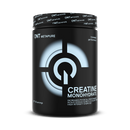
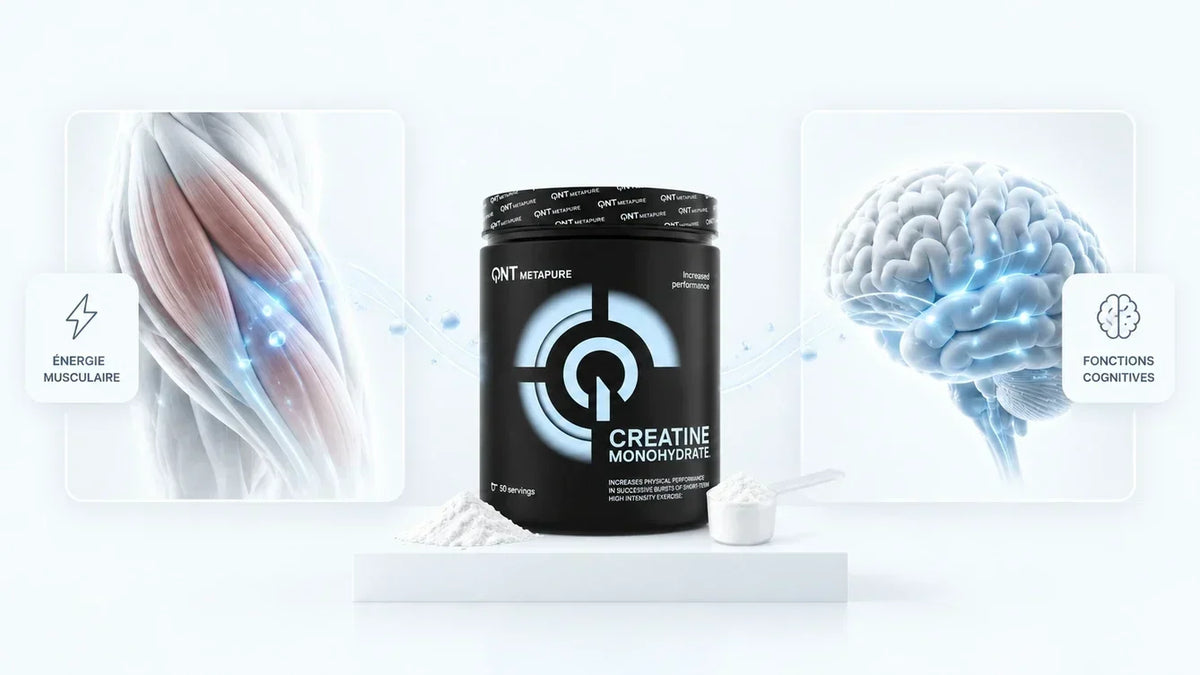
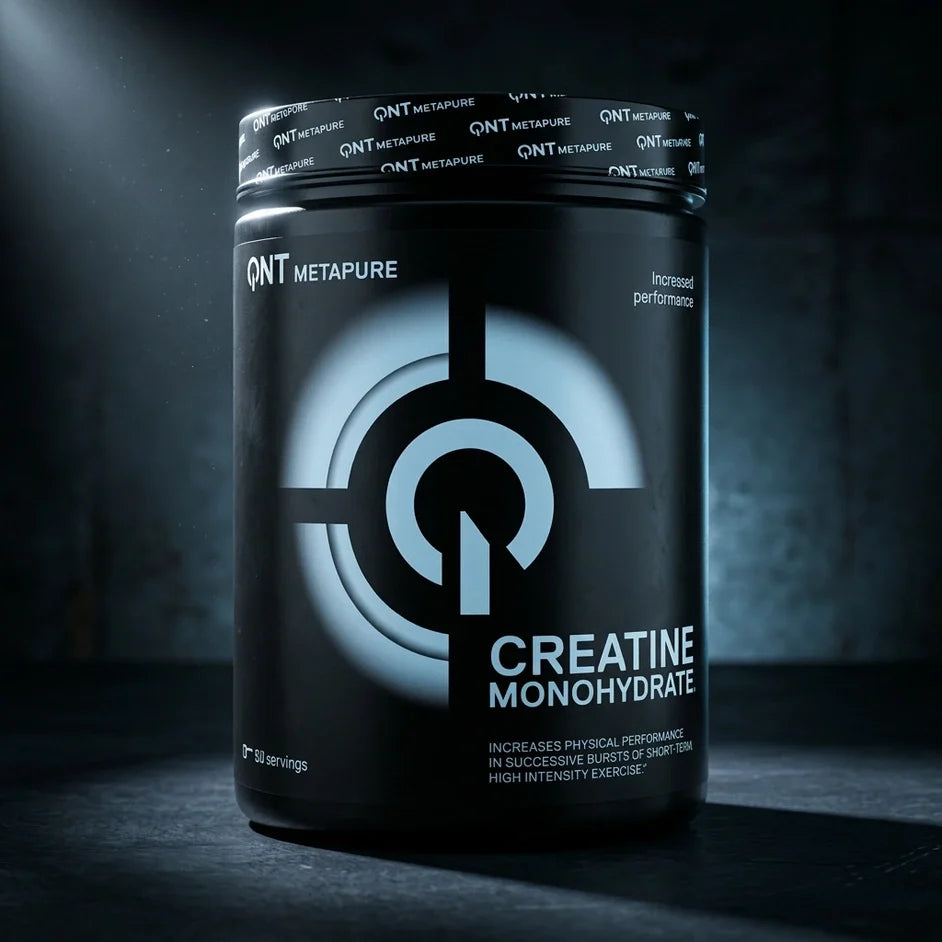
The pure creatine monohydrate powder contains only one ingredient, creatine monohydrate, with no flavouring or additives. It comes in 300 g and 800 g sizes and mixes easily with water or juice.
The creatine monohydrate 3000 mg tablets provide 3 g of creatine per three tablets, which is the daily dose stated on the label. They may suit you if you prefer a convenient format, without having to measure out a powder.
You will find our full creatine range in the shop.
And if you want to learn more about taking creatine and using it for sport, our complete creatine monohydrate guide sets out the main protocols.
In short
Creatine can be taken without exercise, and the safety data are reassuring in healthy adults. But its best-established benefits remain linked to physical activity.
For the brain, the results are more intriguing than conclusive.
Memory could be affected, especially in older people. Sleep deprivation is also a situation in which some studies have observed interesting effects. But the trials are often small, some use high doses, and several results are still debated on methodological grounds.
In 2026, creatine therefore cannot yet be presented as a supplement for improving memory or concentration.
If you nevertheless choose to take it, 3 g of creatine monohydrate a day is the usual benchmark, without counting on a demonstrated effect on cognitive function.
Food supplement. Not a substitute for a varied, balanced diet or a healthy lifestyle. If you have kidney disease, are pregnant or breastfeeding, or are receiving any medical treatment, ask a healthcare professional for advice before taking creatine.
Sources
- Antonio, J. et al. (2021). Common questions and misconceptions about creatine supplementation: what does the scientific evidence really show? Journal of the International Society of Sports Nutrition, 18, 13. https://doi.org/10.1186/s12970-021-00412-w
- Avgerinos, K. I. et al. (2018). Effects of creatine supplementation on cognitive function of healthy individuals: a systematic review of randomized controlled trials. Experimental Gerontology, 108, 166-173. https://doi.org/10.1016/j.exger.2018.04.013
- Citherlet, T. (2026). Commentary: The effects of creatine supplementation on cognitive function in adults: a systematic review and meta-analysis. Frontiers in Nutrition, 13, 1716285. https://doi.org/10.3389/fnut.2026.1716285
- Dechent, P. et al. (1999). Increase of total creatine in human brain after oral supplementation of creatine-monohydrate. American Journal of Physiology, 277(3), R698-R704. https://doi.org/10.1152/ajpregu.1999.277.3.R698
- EFSA Panel on Nutrition, Novel Foods and Food Allergens (2024). Creatine and improvement in cognitive function: evaluation of a health claim pursuant to Article 13(5) of Regulation (EC) No 1924/2006. EFSA Journal, 22(11), e9100. https://doi.org/10.2903/j.efsa.2024.9100
- Forbes, S. C. et al. (2022). Effects of creatine supplementation on brain function and health. Nutrients, 14(5), 921. https://doi.org/10.3390/nu14050921
- Gordji-Nejad, A. et al. (2024). Single dose creatine improves cognitive performance and induces changes in cerebral high energy phosphates during sleep deprivation. Scientific Reports, 14, 4937. https://doi.org/10.1038/s41598-024-54249-9
- Kreider, R. B. et al. (2017). International Society of Sports Nutrition position stand: safety and efficacy of creatine supplementation in exercise, sport, and medicine. Journal of the International Society of Sports Nutrition, 14, 18. https://doi.org/10.1186/s12970-017-0173-z
- Kreider, R. B. et al. (2025). Safety of creatine supplementation: analysis of the prevalence of reported side effects in clinical trials and adverse event reports. Journal of the International Society of Sports Nutrition, 22(sup1), 2488937. https://doi.org/10.1080/15502783.2025.2488937
- Marshall, S. et al. (2026). Creatine and cognition in aging: a systematic review of evidence in older adults. Nutrition Reviews, 84(2), 333-344. https://doi.org/10.1093/nutrit/nuaf135
- Prokopidis, K. et al. (2023). Effects of creatine supplementation on memory in healthy individuals: a systematic review and meta-analysis of randomized controlled trials. Nutrition Reviews, 81(4), 416-427. https://doi.org/10.1093/nutrit/nuac064
- Sandkühler, J. F. et al. (2023). The effects of creatine supplementation on cognitive performance: a randomised controlled study. BMC Medicine, 21, 440. https://doi.org/10.1186/s12916-023-03146-5
- Smith, A. N. et al. (2025). Creatine monohydrate pilot in Alzheimer's: feasibility, brain creatine, and cognition. Alzheimer's & Dementia: Translational Research & Clinical Interventions, 11(2), e70101. https://doi.org/10.1002/trc2.70101
- Xu, C. et al. (2024). The effects of creatine supplementation on cognitive function in adults: a systematic review and meta-analysis. Frontiers in Nutrition, 11, 1424972. https://doi.org/10.3389/fnut.2024.1424972
- Yazigi Solis, M. et al. (2014). Brain creatine depletion in vegetarians? A cross-sectional 1H-magnetic resonance spectroscopy (1H-MRS) study. British Journal of Nutrition, 111(7), 1272-1274. https://doi.org/10.1017/S0007114513003802
- Commission Regulation (EU) No 432/2012 of 16 May 2012 establishing a list of permitted health claims made on foods, other than those referring to the reduction of disease risk and to children's development and health. Official Journal of the European Union. https://eur-lex.europa.eu/eli/reg/2012/432/oj/eng
- Commission Implementing Regulation (EU) 2017/672 of 7 April 2017 authorising a health claim made on foods, other than those referring to the reduction of disease risk and to children's development and health and amending Regulation (EU) No 432/2012. Official Journal of the European Union. https://eur-lex.europa.eu/eli/reg_impl/2017/672/oj/eng
Last updated: 10 September 2026.
By Marius Grek, nutrition expert at QNT Sport, which has been manufacturing food supplements since 1992.
FAQ
Peut-on prendre de la créatine sans faire de sport ?
La créatine améliore-t-elle la mémoire ?
La créatine est-elle utile pour les étudiants ?
La créatine sans sport fait-elle grossir ?
La créatine est-elle plus efficace pour les végétariens ?
Quelle dose de créatine pour le cerveau ?
Read more
 Improve Performance
Creatine monohydrate: complete guide to boosting your performance
Everything you need to know about creatine monohydrate: effects, dosage, timing and safety. Science-backed guide by QNT Sport, 35 years of Belgian ...
 Training
Creatine side effects: myths vs science. What 500+ studies reveal
Is creatine dangerous? 500+ studies analyzed.
 Improve Performance
Metapure creatine monohydrate: explosive performance, pure formula
Discover QNT Metapure Creatine Monohydrate: 100% pure, no fillers, Metapure certified. Just 3g per day for explosive performance. 35 years of Belgi...


