














Winter Arc 2026: what is it and how do you make it work?
Table of contents

The Winter Arc is a personal challenge that involves making the most of the last three months of the year, from 1 October to 31 December, to build new habits before New Year's resolutions. Popularised on social media, the challenge lets everyone set their own goals, which makes it both flexible and difficult.
This guide first explains what the trend involves and why it is not too late to start at the end of October. It then suggests rules to follow until 31 December, a three-phase workout plan and diet advice tailored to winter.
Key points in 30 seconds
• The Winter Arc 2026 ends on 31 December, but it can start at any point in the autumn.
• A commitment to adopt a new habit seems easier to keep than a commitment to stop a behaviour.
• Two to three strength training sessions a week, plus at least 150 minutes of moderate endurance activity, meet the minimum recommended by the WHO.
• An intake of 1.4 to 2 g of protein per kilo per day covers the needs of most people who train.
What is the Winter Arc, and what does it mean?
The Winter Arc is a trend popularised on TikTok that involves setting goals for the end of the year. Its name refers to the story arc of a fictional character, meaning the period during which the character undergoes a transformation. The goals shown in the videos often focus on fitness, such as training regularly, eating better or sleeping more, but sometimes also involve more personal habits.
Contrary to what some videos suggest, a successful Winter Arc does not require you to cut yourself off from family and friends or to be perfect every day. What matters is staying consistent rather than having one perfect week and then giving up altogether.
When does the Winter Arc 2026 start, and is it too late to begin?
The Winter Arc 2026 started on Thursday 1 October and ends on Thursday 31 December, a period of 92 days. These dates are simply a convention, so starting at the end of October or in early November still makes perfect sense.
That leaves eight to nine weeks to start building a routine. In a 12-week study, 96 volunteers repeated a new eating or physical activity behaviour every day [1]. Among those whose progress could be modelled, the estimated time for this behaviour to become almost automatic ranged from 18 to 254 days [1]. Missing a single opportunity did not noticeably slow this process [1].
As this period often exceeded nine weeks in the study [1], 31 December marks a milestone rather than a finish line.
What rules should you set for a successful Winter Arc?
As there is no official rulebook, everyone chooses their own commitments. To stick to them until 31 December, it is best to limit their number and choose goals that are easy to check. It also seems better to frame them as actions to take rather than behaviours to avoid.
This observation is based on a Swedish study of 1,066 volunteers who had made New Year's resolutions [2]. One year later, 55% of those who responded to the follow-up felt they had kept their resolutions [2]. Participants who aimed to achieve a goal reported success more often than those who wanted to avoid a behaviour, at 58.9% versus 47.1% [2].
Sleep also deserves a place among these commitments, especially as its duration is easy to track. Two American scientific societies specialising in sleep recommend that adults regularly sleep at least 7 hours a night [3].

Figure 1. Four measurable commitments for a Winter Arc.
Each card links an area to a specific goal, so you can check at the end of the week whether you kept the commitment. These four commitments provide a starting point to which you can add a more personal habit, such as reading or walking.
What workout plan should you follow during the Winter Arc?
A good Winter Arc workout plan combines at least two strength training sessions a week with endurance activity. This combination matches the minimum recommendations of the World Health Organization (WHO) for adults [4]. The WHO also recommends 150 to 300 minutes of moderate-intensity endurance activity a week, or 75 to 150 minutes at vigorous intensity [4].
For building muscle, the number of sessions per muscle matters little, as long as the weekly training volume stays the same. A review of 25 studies found no notable difference between one, two or three sessions per muscle per week when volume was equal [5]. You can therefore adapt the number of sessions to your schedule.
Over the eight to nine weeks that remain, a three-phase plan helps you progress without getting discouraged.

Figure 2. The Winter Arc in three phases, from the first session to the end-of-year review.
The timeline reads from left to right. Each phase changes only one variable, so the difficulty increases gradually once the routine is in place.
When time is short, the complete guide to supersets shows how to perform two exercises back to back without rest, so you keep the same training volume in a shorter session.
Winter Arc diet: what should you eat?
During the Winter Arc, the priority is to eat enough protein every day, then adjust your calorie intake to your goal, whether that is building muscle or losing body fat. The International Society of Sports Nutrition (ISSN), a scientific society specialising in sports nutrition, states that 1.4 to 2 g of protein per kilo of body weight per day is enough for most people who train [6].
For a person weighing 75 kg, this means about 105 to 150 g of protein a day. The ISSN advises spreading it across servings of 20 to 40 g every three to four hours [6]. The guide on when to take whey protein covers the possible times, while the guide on choosing the right protein compares the different powders.
Winter also raises the question of vitamin D, which the skin produces when exposed to sunlight. In one study, skin samples exposed to sunlight in Edmonton, Canada, produced no vitamin D precursor from October to March, even on clear days [7]. Edmonton lies a little further north than Belgium, where this period without synthesis may be slightly shorter [7]. Oily fish and eggs are among the few foods that contain vitamin D.
For sessions after work, the guide on what to eat before a workout explains what to plan depending on how much time you have before training.
Practical implications
• You can note each evening which commitments you kept to make the end-of-week review easier.
• After a missed session, it seems reasonable to resume at the next one, without trying to make up for it.
• You can track the weights you lift in three basic exercises rather than just the figure on the scales, which reflects fat mass, muscle and water at the same time.
The QNT selection
QNT offers several products that can complement your diet during a Winter Arc.
- To top up your protein intake: Prime Whey Protein, a blend of whey concentrate and whey isolate, in 30 g servings according to the label. Protein contributes to a growth in muscle mass [8].
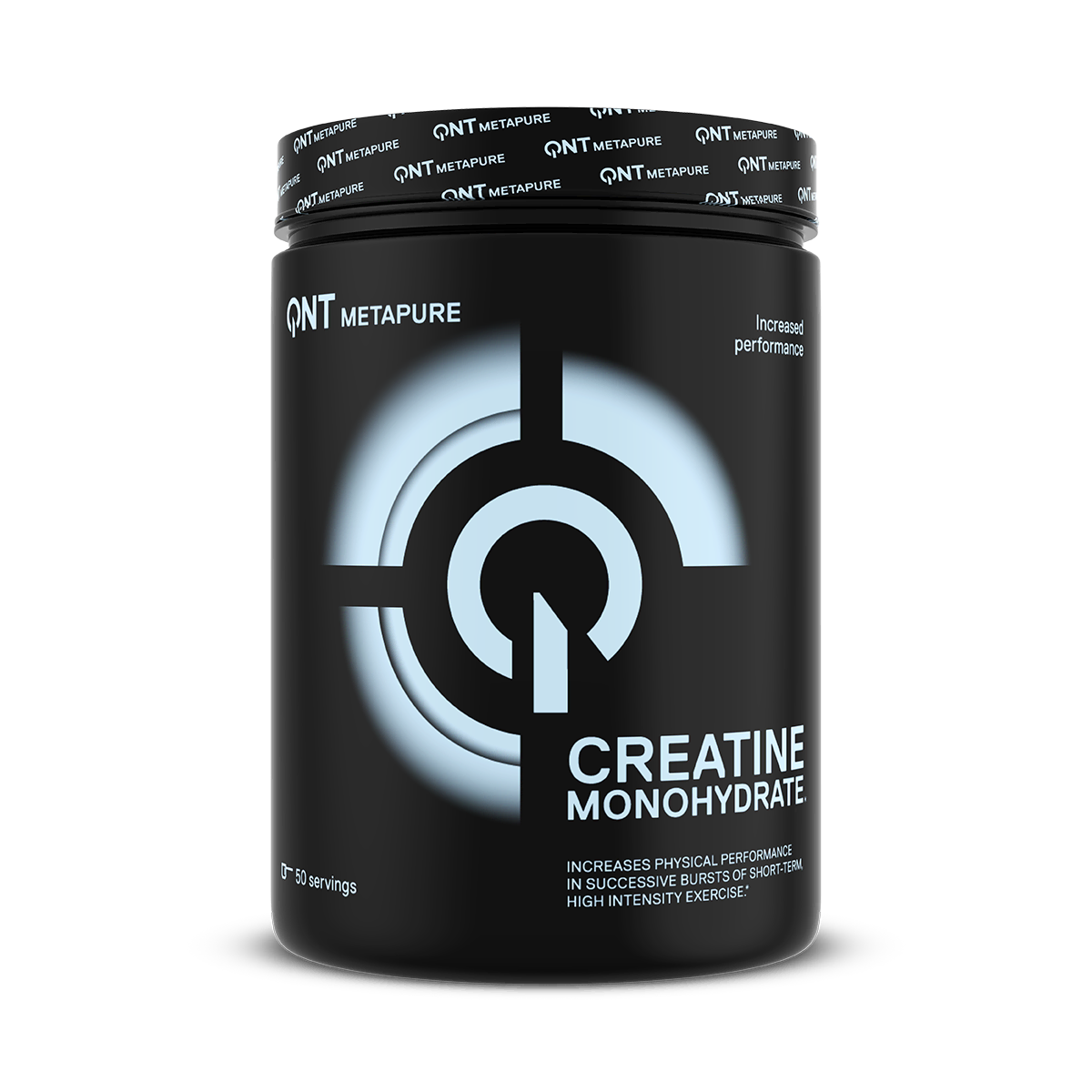
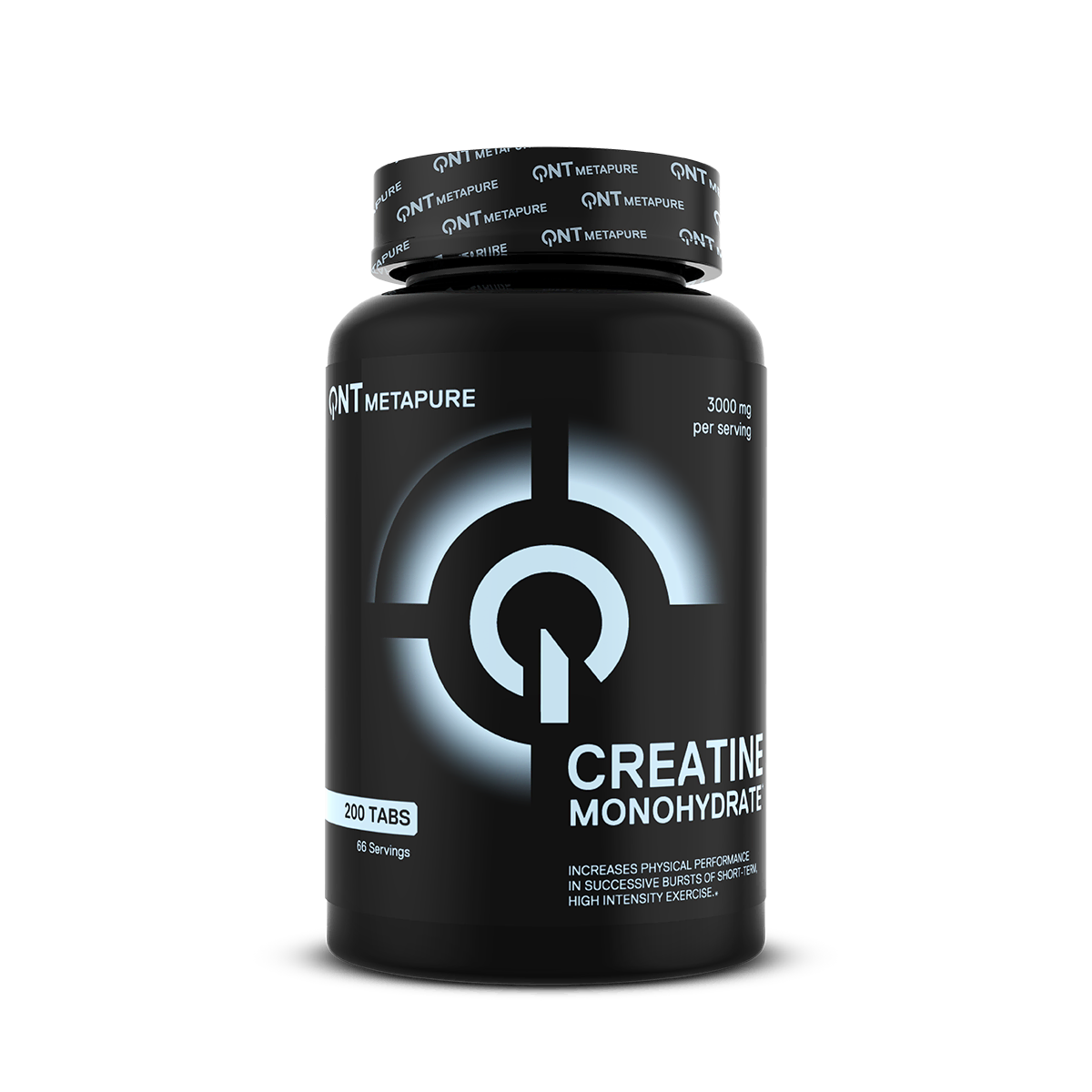
- For intense sessions: Pure Creatine Monohydrate, to be taken according to the directions for use on the label. Creatine increases physical performance in successive bursts of short-term, high intensity exercise [8]. The beneficial effect is obtained with a daily intake of 3 g of creatine, in adults performing high intensity exercise [8]. The creatine monohydrate guide explains how to take it.
- To top up your vitamin D intake: Vitamin D3 3000 IU, one 75 µg capsule a day with a meal. Vitamin D contributes to the maintenance of normal muscle function [8]. According to its label, this product must not be used during pregnancy or breastfeeding.
Conclusion
A successful Winter Arc depends less on its start date than on consistency in the weeks that follow. A few commitments kept every week, especially strength training sessions and enough protein, help to build that consistency. These habits can then continue well beyond 31 December.
Sources
- Lally P, van Jaarsveld CHM, Potts HWW, et al. (2010). How are habits formed: Modelling habit formation in the real world. European Journal of Social Psychology, 40(6), 998-1009. https://doi.org/10.1002/ejsp.674
- Oscarsson M, Carlbring P, Andersson G, et al. (2020). A large-scale experiment on New Year's resolutions: Approach-oriented goals are more successful than avoidance-oriented goals. PLOS ONE, 15(12), e0234097. https://doi.org/10.1371/journal.pone.0234097
- Watson NF, Badr MS, Belenky G, et al. (2015). Recommended Amount of Sleep for a Healthy Adult: A Joint Consensus Statement of the American Academy of Sleep Medicine and Sleep Research Society. Journal of Clinical Sleep Medicine, 11(6), 591-592. https://doi.org/10.5664/jcsm.4758
- Bull FC, Al-Ansari SS, Biddle S, et al. (2020). World Health Organization 2020 guidelines on physical activity and sedentary behaviour. British Journal of Sports Medicine, 54(24), 1451-1462. https://doi.org/10.1136/bjsports-2020-102955
- Schoenfeld BJ, Grgic J, Krieger J (2019). How many times per week should a muscle be trained to maximize muscle hypertrophy? A systematic review and meta-analysis of studies examining the effects of resistance training frequency. Journal of Sports Sciences, 37(11), 1286-1295. https://doi.org/10.1080/02640414.2018.1555906
- Jäger R, Kerksick CM, Campbell BI, et al. (2017). International Society of Sports Nutrition Position Stand: protein and exercise. Journal of the International Society of Sports Nutrition, 14, 20. https://doi.org/10.1186/s12970-017-0177-8
- Webb AR, Kline L, Holick MF (1988). Influence of season and latitude on the cutaneous synthesis of vitamin D3: exposure to winter sunlight in Boston and Edmonton will not promote vitamin D3 synthesis in human skin. The Journal of Clinical Endocrinology & Metabolism, 67(2), 373-378. https://doi.org/10.1210/jcem-67-2-373
- Règlement (UE) n° 432/2012 de la Commission du 16 mai 2012 établissant une liste des allégations de santé autorisées portant sur les denrées alimentaires, autres que celles faisant référence à la réduction du risque de maladie ainsi qu'au développement et à la santé infantiles. Journal officiel de l'Union européenne, L 136, 1-40. http://data.europa.eu/eli/reg/2012/432/oj
Updated 26 October 2026


Frequently asked questions
How long does the Winter Arc last?
Winter Arc: bulking or cutting?
Do you need a gym to do a Winter Arc?
Winter Arc or 75 Hard: what is the difference?
What should you do after 31 December?
Keep reading
 Improve Performance
Creatine monohydrate: what does it do and how should you take it?
Creatine monohydrate: how it works, its proven benefits, the right dose per day and what you should know about water retention and kidney health.

Superset workout: the complete guide to building muscle and saving time
What is a superset workout? Learn types, science-backed benefits, 3 complete programs and nutrition tips. Expert guide by QNT Sport, 30+ years expe...
 entrainement
What to eat before a workout? The pre-workout meal guide
What to eat before a workout? A meal, a pre-workout snack or a small bite depending on the time available, with simple examples and the right carbs.


