








How to choose the best protein to build muscle: interview with Florian Britto, PhD
Table of contents

Interview conducted by Marius Grek, nutrition expert at QNT Sport.
Quotes were translated from the original French.
In brief. Protein quality is assessed by its essential amino acid content, particularly leucine, and its digestibility, both of which are reflected in the DIAAS score. Dairy proteins, egg and soy have the best profiles, while most plant sources benefit from being combined.

Figure 1. From protein to muscle: the main steps linking training and amino acid intake to muscle protein synthesis, notably through the activation of the mTORC1 pathway by leucine.
The protein market has grown rapidly over the past decade or so, and many brands now use protein as a selling point. We are seeing a genuine boom in high-protein products, and this macronutrient is gradually becoming part of everyday eating habits. Long associated with bodybuilders, protein now appeals to recreational and professional athletes alike, as well as the general public. What explains this enthusiasm?
The idea that protein “builds muscle” has become commonplace in everyday language, although the physiological mechanisms behind this claim are not always well understood. Another equally important question is often overlooked, namely whether all proteins are equal. We tend to treat them as equivalent and focus solely on grams, even though their nutritional quality can vary. This depends in particular on their essential amino acid profile, leucine content and digestibility.
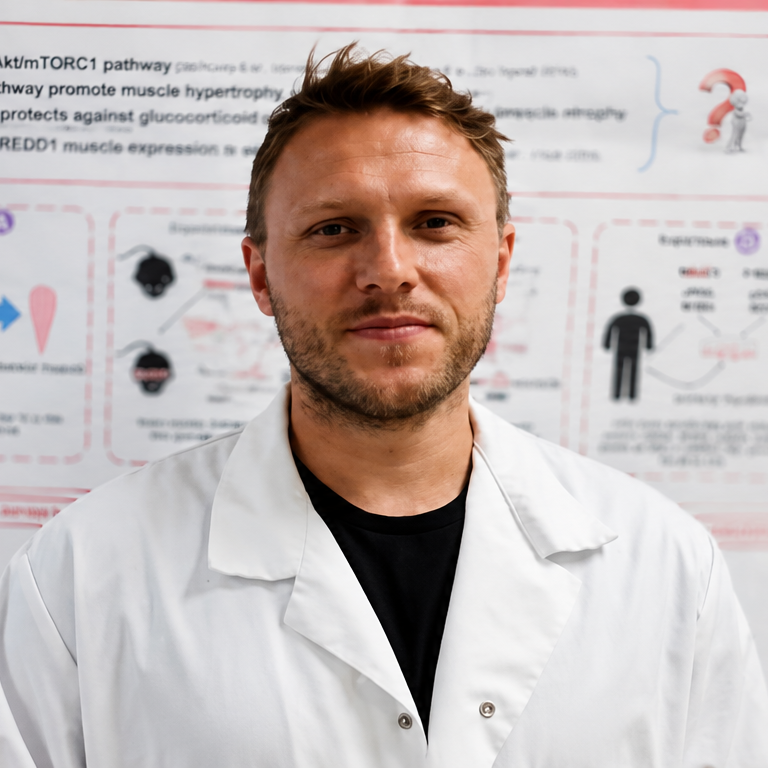
To answer these questions, the QNT team spoke to Florian Britto, PhD in skeletal muscle physiology, associate professor (HDR) at the UFR STAPS of Université Paris Cité and researcher at INSERM (Institut Cochin). This article covers the main questions discussed in the interview, aiming to distinguish scientific evidence from marketing claims and help athletes make more informed choices about the best protein to build muscle.
What makes a good protein?
A protein is more than just a number of grams, since its amino acid composition and digestibility determine what the body can actually do with it.
Video (in French): What makes a good protein? An excerpt from Marius Grek's interview with Florian Britto
A protein is made up of amino acids, rather like a string of beads in which each bead represents an amino acid. Around twenty different amino acids are used to build proteins in the human body, and the way they are arranged allows proteins to perform different functions.
One of the main differences between protein sources is their amino acid profile, particularly whether they contain sufficient amounts of the so-called essential amino acids. The body cannot produce these itself, so they must come from food, unlike non-essential amino acids, which the body can synthesise. If an essential amino acid is present in insufficient amounts, it can become the limiting factor for protein synthesis.
Not all amino acids play exactly the same role in protein synthesis. Leucine, for example, plays a key signalling role by helping to activate the mTORC1 pathway, which is involved in muscle protein synthesis.
A protein is described as “complete” when it provides all the essential amino acids in sufficient amounts. Animal proteins generally have a complete profile and good digestibility, whereas some plant proteins are limited in one or more essential amino acids. Soy, for instance, is an excellent source of plant protein. In a plant-based diet, varying your protein sources makes it easier to meet your full amino acid needs. For example, combining grains such as rice with legumes such as peas allows their respective amino acid profiles to complement each other. Among everyday foods, egg is often cited as a reference because of its good digestibility and complete essential amino acid profile, although dairy proteins achieve higher scores.
“What makes a protein good or not is first and foremost the variety of amino acids it contains, and above all the presence of essential amino acids.”
(Florian Britto)
What the science says. Protein quality is assessed by its essential amino acid content and digestibility, now evaluated using the DIAAS score (Digestible Indispensable Amino Acid Score). Animal proteins, particularly dairy proteins, along with soy, achieve the best profiles, whereas most plant sources, which are lower in leucine and less digestible, trigger a smaller protein synthesis response and benefit from being combined (Rutherfurd et al., 2015; Mathai et al., 2017; van Vliet et al., 2015).
Practical implications. It may be worth looking beyond the number of grams alone, since for the same quantity, a source rich in essential amino acids and leucine seems more useful for building muscle. On a plant-based diet, combining a grain and a legume seems a simple way to get closer to a complete profile.
Understanding the DIAAS score. Recommended by the FAO since 2013 as a replacement for the PDCAAS, the DIAAS takes into account the content of each essential amino acid and its true digestibility, measured at the end of the small intestine. It uses the lowest ratio observed, meaning that a single amino acid present in insufficient amounts caps the score of the entire protein source. Above 100, no amino acid is limiting, while below 75 no quality claim is permitted. There are two limitations to bear in mind when interpreting the score. It varies according to the reference profile used and provides no information about the speed of absorption, which explains why athletes favour whey even though casein achieves a higher score. The values in the figure below come from Herreman et al. (2020), using the reference profile for adolescents and adults.

Figure 2. DIAAS of ten protein sources, by animal or plant origin.
How is muscle really built?
The idea that protein builds muscle is correct, but the process involves a more subtle balance between protein synthesis and breakdown.
Skeletal muscle, once the water is removed, consists mainly of proteins, mostly contractile proteins. Our muscle proteins are constantly being renewed, and it is when synthesis exceeds breakdown that the protein balance becomes positive and muscle mass can increase.
Two main factors influence this balance. The first is nutrition, since eating enough protein supplies the amino acids needed to synthesise new proteins. Protein timing strategies can also be used, such as a protein intake after training or before bed, to stimulate muscle protein synthesis at key moments.
The second is training, which places mechanical tension on the muscles and triggers a series of cellular signals that stimulate protein synthesis and eventually promote hypertrophy, or muscle growth. Certain hormones, such as testosterone, and various growth factors also help regulate these processes. To promote muscle mass gain, it is therefore necessary to combine sufficiently challenging training with an appropriate protein and energy intake.
“To gain muscle mass, you need to create mechanical tension in the muscle and supply protein.”
(Florian Britto)
What the science says. Resistance training and protein intake act synergistically, as shown by a meta-analysis of 49 controlled trials which found that protein supplementation increases the gains in muscle mass and strength induced by resistance training, with a plateau at around 1.6 g/kg/day (Morton et al., 2018). The post-exercise “anabolic window”, once thought to be narrow, is now viewed with more nuance, with total protein intake across the day taking priority over timing (Aragon & Schoenfeld, 2013). The effectiveness of this protein intake also tends to decline with age, a form of anabolic resistance (Morton et al., 2018).
Practical implications. Relying on protein alone seems insufficient, since combining resistance training with an appropriate protein intake appears to maximise muscle mass gain. Timing (around training or before bed) can help, but it may play a secondary role compared with total protein intake across the day.
What happens inside the cell when we eat protein?
Behind the simple idea of “eating protein to build muscle” lies a remarkably precise cellular mechanism.
Everything starts with DNA, which is found in the cell's nucleus. You can think of it as a vast instruction manual containing the plans for all the proteins in the body. To make a particular protein, the cell reads the corresponding gene and creates a working copy called messenger RNA. This copy travels to the cytosol, where the machinery responsible for translating the instructions takes over. A structure called the ribosome then moves along the messenger RNA and adds the corresponding amino acid at each codon, building the chain one bead at a time.
The amino acids we consume act in two ways. First, they serve as building blocks, providing the raw materials for the chain. But they also act as signals, since cells have sensors that detect their presence. When amino acids arrive, they press on a molecular accelerator, the mTORC1 complex, which then signals to the ribosomes to read faster and produce more proteins. Conversely, when amino acids are absent, this complex goes into standby mode and protein synthesis slows down because both the raw materials and the signal are missing.
“The role of the amino acids we get from food is precisely to press on an accelerator, the mTORC1 complex.”
(Florian Britto)
What the science says. The mTORC1 complex acts as a sensor of amino acid availability, with leucine as a preferred trigger, detected in particular by the Sestrin2 protein; this detection lifts the inhibition of the pathway and accelerates translation, and therefore protein synthesis (Wolfson et al., 2016). This pathway is central to the interaction between nutrition and muscle building.
Practical implications. This dual role as a building block and a signal highlights a useful nuance. Total quantity is not enough on its own, and you also need to reach, at a given meal, the threshold of amino acids and leucine that effectively triggers this accelerator. Spreading protein intake throughout the day therefore seems preferable to consuming it all in one serving.
Protein: look at quality, not only quantity
A clear message emerges from this interview. Quantity is not the only factor that matters, and quality counts too. A quality protein source is characterised in particular by its essential amino acid profile, leucine content and digestibility. This explains why animal proteins and certain plant proteins, such as soy, generally have a particularly favourable profile, while combining different plant sources allows their amino acid profiles to complement each other.
Protein quality is particularly relevant to muscle building, which depends on a continuous balance between protein synthesis and breakdown. To promote a positive protein balance, two elements are essential: training that provides enough mechanical tension and an appropriate protein intake. At the cellular level, amino acids provide the raw materials needed for protein synthesis, while some, such as leucine, also act as signals by helping to activate the mTORC1 pathway.
The right approach is therefore to pay attention to protein quality and to how you spread your intake throughout the day, rather than simply consuming “more protein”, while combining it with appropriate training. Together, these factors create favourable conditions for muscle growth.
References
Aragon, A. A., & Schoenfeld, B. J. (2013). Nutrient timing revisited: Is there a post-exercise anabolic window? Journal of the International Society of Sports Nutrition, 10(1), 5. https://doi.org/10.1186/1550-2783-10-5
Herreman, L., Nommensen, P., Pennings, B., & Laus, M. C. (2020). Comprehensive overview of the quality of plant- and animal-sourced proteins based on the digestible indispensable amino acid score. Food Science & Nutrition, 8(10), 5379-5391. https://doi.org/10.1002/fsn3.1809
Mathai, J. K., Liu, Y., & Stein, H. H. (2017). Values for digestible indispensable amino acid scores (DIAAS) for some dairy and plant proteins may better describe protein quality than values calculated using the concept for protein digestibility-corrected amino acid scores (PDCAAS). British Journal of Nutrition, 117(4), 490-499. https://doi.org/10.1017/S0007114517000125
Morton, R. W., Murphy, K. T., McKellar, S. R., Schoenfeld, B. J., Henselmans, M., Helms, E., Aragon, A. A., Devries, M. C., Banfield, L., Krieger, J. W., & Phillips, S. M. (2018). A systematic review, meta-analysis and meta-regression of the effect of protein supplementation on resistance training-induced gains in muscle mass and strength in healthy adults. British Journal of Sports Medicine, 52(6), 376-384. https://doi.org/10.1136/bjsports-2017-097608
Oikawa, S. Y., Kamal, M. J., Webb, E. K., McGlory, C., Baker, S. K., & Phillips, S. M. (2020). Whey protein but not collagen peptides stimulate acute and longer-term muscle protein synthesis with and without resistance exercise in healthy older women: A randomized controlled trial. The American Journal of Clinical Nutrition, 111(3), 708-718. https://doi.org/10.1093/ajcn/nqz332
Rutherfurd, S. M., Fanning, A. C., Miller, B. J., & Moughan, P. J. (2015). Protein digestibility-corrected amino acid scores and digestible indispensable amino acid scores differentially describe protein quality in growing male rats. The Journal of Nutrition, 145(2), 372-379. https://doi.org/10.3945/jn.114.195438
van Vliet, S., Burd, N. A., & van Loon, L. J. C. (2015). The skeletal muscle anabolic response to plant- versus animal-based protein consumption. The Journal of Nutrition, 145(9), 1981-1991. https://doi.org/10.3945/jn.114.204305
Wolfson, R. L., Chantranupong, L., Saxton, R. A., Shen, K., Scaria, S. M., Cantor, J. R., & Sabatini, D. M. (2016). Sestrin2 is a leucine sensor for the mTORC1 pathway. Science, 351(6268), 43-48. https://doi.org/10.1126/science.aab2674

Frequently asked questions
What is a “complete” protein?
Which protein is best for building muscle?
Plant or animal protein?
How much protein per day for muscle mass?
Do you need to take your protein right after training?
What is leucine, and why does it matter?
Does collagen help build muscle?
Keep reading
 Gain Muscle
How to Choose Protein Powder: The Ultimate 2026 Guide
Whey, isolate, casein or vegan? Learn how to choose protein powder for your goal, with a comparison table, the amino acid profile that actually mat...

Best time to take whey protein: the complete science-backed guide
When should you take whey protein? Morning, post-workout or before bed: discover the optimal timing backed by 6 studies. Expert guide by QNT Sport.
Best Plant-Based Protein Sources: The Complete Guide for Muscle
What are the best plant-based protein sources for muscle? Foods, DIAAS scores, dosing and the pea + rice blend, explained by science. Guide by QNT ...
 Improve Performance
Vegan protein for muscle building: complete guide 2026
Can you build muscle on plant protein? Studies, whey vs vegan comparison, dosage, and expert tips. Science-backed guide by QNT Sport.

Protein Drinks: How to Choose Between Water, Shake and Powder
Protein water, ready to drink shake or powder: this guide compares protein, sugars and calories per serving to pick your protein drink. Made in Bel...


